Vigna — 24 species
Botanical species in the genus Vigna recorded in the PlantPeers database.

Vigna aconitifolia
Vigna aconitifolia
Family: Fabaceae
Cultivation
A plant of drier areas in the lowland tropics, where it can be found at elevations from sea level to 1,500 metres. The plant grows best in areas where the mean annual temperature is within the range 24 - 32°c, though it can tolerate 13 - 45°c. It prefers a mean annual rainfall in the range 500 - 900mm, tolerating 400 - 2,500mm.
Full cultivation guide →
Vigna adenantha
Vigna adenantha
Family: Fabaceae
Cultivation
A plant of the tropics and subtropics, it is found from around sea level to elevations of over 1,200 metres in the tropics. Requires a sunny position. Acid light soils favour its not very deep rooting system.
Full cultivation guide →
Vigna angularis
Vigna angularis
Family: Fabaceae
Cultivation
Adzuki bean is a plant of the subtropics, and is widely cultivated from the temperate zone to higher elevations in the tropics, where it is can be grown at elevations from 420 - 1,500 metres. It grows best in areas where annual daytime temperatures are within the range 15 - 30°c, but can tolerate 5 - 36°c. The plant cannot tolerate frost.
Full cultivation guide →
Vigna dalzelliana
Vigna dalzelliana
Family: Fabaceae
Cultivation
The plant often has a creeping habit and can form new roots from stem nodes. This species is considered to be a crop wild relative of green gram (Vigna radiata) and black gram (Vigna mungo). This species has a symbiotic relationship with certain soil bacteria; these bacteria form nodules on the roots and fix atmospheric nitrogen.
Full cultivation guide →Vigna frutescens
Vigna frutescens
Family: Fabaceae
Cultivation
This species has a symbiotic relationship with certain soil bacteria; these bacteria form nodules on the roots and fix atmospheric nitrogen. Some of this nitrogen is utilized by the growing plant but some can also be used by other plants growing nearby.
Full cultivation guide →
Vigna hosei
Vigna hosei
Family: Fabaceae
Cultivation
A plant of the wet tropics, where it is found at elevations up to 1,100 metres. It grows best in areas where annual daytime temperatures are within the range 22 - 30°c, but can tolerate 15 - 35°c. It does not tolerate frosts.
Full cultivation guide →Vigna khandalensis
Vigna khandalensis
Family: Fabaceae
Cultivation
This species has a symbiotic relationship with certain soil bacteria; these bacteria form nodules on the roots and fix atmospheric nitrogen. Some of this nitrogen is utilized by the growing plant but some can also be used by other plants growing nearby.
Full cultivation guide →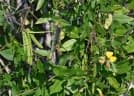
Vigna luteola
Vigna luteola
Family: Fabaceae
Cultivation
Vigna luteola is found over a diverse range of temperature environments, succeeding as an annual in the temperate zone and growing as a perennial in the tropics from sea level to over 2,000 metres. The average annual temperature in these areas ranges from as low as 13°c up to about 26°c. The optimum temperature for growth is in the range of 20 - 30°c.
Full cultivation guide →
Vigna marina
Vigna marina
Family: Fabaceae
Cultivation
Found in coastal areas through much of the tropics, it requires an annual rainfall of at least 500mm annual to survive. The plant is very frost-sensitive. Grows well on wet and poorly drained soils.
Full cultivation guide →Vigna membranacea
Vigna membranacea
Family: Fabaceae
Cultivation
This species has a symbiotic relationship with certain soil bacteria; these bacteria form nodules on the roots and fix atmospheric nitrogen. Some of this nitrogen is utilized by the growing plant but some can also be used by other plants growing nearby.
Full cultivation guide →Vigna minima
Vigna minima
Family: Fabaceae
Cultivation
This species has a symbiotic relationship with certain soil bacteria; these bacteria form nodules on the roots and fix atmospheric nitrogen. Some of this nitrogen is utilized by the growing plant but some can also be used by other plants growing nearby.
Full cultivation guide →
Vigna mungo
Vigna mungo
Family: Fabaceae
Cultivation
A plant of the drier tropics, where it is found at elevations up to 2,000 metres. It grows best in areas where annual daytime temperatures are within the range 22 - 35°c, but can tolerate 8 - 40°c. The plant does not tolerate frost.
Full cultivation guide →
Vigna radiata
Vigna radiata
Family: Fabaceae
Cultivation
A plant of the drier tropics, where it is found at elevations up to 2,000 metres. It grows best in areas where annual daytime temperatures are within the range 21 - 36°c, but can tolerate 8 - 40°c. The plant does not tolerate frost.
Full cultivation guide →Vigna radiata sublobata
Vigna radiata sublobata
Family: Fabaceae
Cultivation
A plant of the drier tropics, where it is found at elevations up to 2,000 metres. It grows best in areas where annual daytime temperatures are within the range 21 - 36°c, but can tolerate 8 - 40°c. The plant does not tolerate frost.
Full cultivation guide →
Vigna subterranea
Vigna subterranea
Family: Fabaceae
Cultivation
Succeeds in lowland tropical areas and up to an elevation of around 1,500 metres. Adapted to growing in areas with relatively high temperatures up to 30°c. Prefers an evenly distributed annual precipitation in the range 600 - 1,000mm, though satisfactory yields can be obtained in areas with a pronounced dry season.
Full cultivation guide →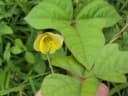
Vigna trilobata
Vigna trilobata
Family: Fabaceae
Cultivation
A plant of the drier tropics, where it is found at elevations up to 2,100 metres. It grows best in areas where annual daytime temperatures are within the range 22 - 31°c, but can tolerate 18 - 35°c. The plant can survive temperatures down to about -1°c.
Full cultivation guide →
Vigna umbellata
Vigna umbellata
Family: Fabaceae
Cultivation
A plant of the tropics, where it is found at elevations up to 2,000 metres. It grows best in areas where annual daytime temperatures are within the range 18 - 30°c, but can tolerate 10 - 40°c. It prefers a mean annual rainfall in the range 700 - 1,500mm, but tolerates 300 - 2,000mm.
Full cultivation guide →
Vigna unguiculata cylindrica
Vigna unguiculata cylindrica
Family: Fabaceae
Cultivation
A plant of the tropics and subtropics, and cultivated in the warmer regions of the temperate zone, it is found at elevations up to 2,000metres in the tropics. It grows best in areas where annual daytime temperatures are within the range 25 - 35°c, but can tolerate 15 - 40°c. It can be killed by temperatures of -1°c or lower.
Full cultivation guide →
Vigna unguiculata sesquipedalis
Vigna unguiculata sesquipedalis
Family: Fabaceae
Cultivation
Asparagus beans grow well in lowland tropical areas, and can also be cultivated at elevations up to 1,000 metres. They prefer a daytime temperature in the range 20 - 30°c, can tolerate 14 - 38°c. They grow badly at temperatures above 35°c and will be killed if temperatures fall to 4°c.
Full cultivation guide →
Vigna unguiculata stenophylla
Vigna unguiculata stenophylla
Family: Fabaceae
Cultivation
This species has a symbiotic relationship with certain soil bacteria; these bacteria form nodules on the roots and fix atmospheric nitrogen. Some of this nitrogen is utilized by the growing plant but some can also be used by other plants growing nearby.
Full cultivation guide →
Vigna unguiculata unguiculata
Vigna unguiculata unguiculata
Family: Fabaceae
Cultivation
A plant of the lowland tropics, where it can also be cultivated at elevations up to 1,500 metres. It grows best in areas where annual daytime temperatures are within the range 20 - 35°c, but can tolerate 10 - 40°c. The plant cannot tolerate frost It prefers a mean annual rainfall in the range 600 - 1,500mm, but tolerates 400 - 4,100mm.
Full cultivation guide →
Vigna vexillata
Vigna vexillata
Family: Fabaceae
Cultivation
A plant of the moist to humid tropics, where it is found from sea level to elevations of 1,500 metres. It grows best in areas where the mean annual temperature is within the range 20 - 28°c, but is tolerant of 15 - 32°c. It prefers a mean annual rainfall in the range 1,300 - 2,100mm, tolerating 650 - 4,200mm.
Full cultivation guide →