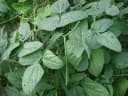
Vigna unguiculata cylindrica
Vigna unguiculata cylindrica
Safety & Hazards
None known
Cultivation Details
A plant of the tropics and subtropics, and cultivated in the warmer regions of the temperate zone, it is found at elevations up to 2,000metres in the tropics. It grows best in areas where annual daytime temperatures are within the range 25 - 35°c, but can tolerate 15 - 40°c[1]. It can be killed by temperatures of -1°c or lower[1]. It prefers a mean annual rainfall in the range 500 - 1,500mm, but tolerates 300 - 4,100mm[1]. Succeeds in full sun and in light shade[1]. Plants can grow in a wide range of moist but well drained soils[1]. Prefers a pH in the range 5.5 - 7.5, tolerating 4 - 8.8[1]. Established plant are moderately drought tolerant[1]. Plants have given reasonable yields for the past 3 years on our trial grounds in Cornwall (1993)[PFAF]. This species has a symbiotic relationship with certain soil bacteria, these bacteria form nodules on the roots and fix atmospheric nitrogen. Some of this nitrogen is utilized by the growing plant but some can also be used by other plants growing nearby[2]. When removing plant remains at the end of the growing season, it is best to only remove the aerial parts of the plant, leaving the roots in the ground to decay and release their nitrogen.
Propagation
Pre-soak the seed for 12 hours in warm water and sow in trays in early to mid spring in a greenhouse. Germination should take place within 10 days. Grow the plants on fast and plant them out after the last expected frosts. Consider giving them the protection of a cloche for their first few weeks outdoors to ensure that they do not suffer a check to their growth. An outdoor sowing in situ in late spring may succeed in a warm summer, though it is much more likely to be a disappointment in temperate regions. Cite as: Temperate Plants Database, Ken Fern. temperate.theferns.info. 2026-02-21. <temperate.theferns.info/plant/Vigna+unguiculata+cylindrica>
Pollinators
Insects
References
- [1]Ecocrop — http://ecocrop.fao.org/ecocrop/srv/en/home ↩︎Basic information on a wide range of useful plants, plus details of environmental needs where available.
- [2]The New RHS Dictionary of Gardening. 1992. — Huxley. A. · MacMillan Press · 1992 · ISBN 0-333-47494-5 ↩︎Excellent and very comprehensive, though it contains a number of silly mistakes. Readable yet also very detailed.
- [3]Tropical Food Gardens — Norrington. L. · Bloomings Books (Melbourne) · 2001 · ISBN 1-876473-41-x ↩︎Excellent little book giving some basic information on a range of plants.
- [4]Sturtevant's Edible Plants of the World. — Hedrick. U. P. · Dover Publications · 1972 · ISBN 0-486-20459-6 ↩︎Lots of entries, quite a lot of information in most entries and references.
- [5]Plants for Human Consumption. — Kunkel. G. · Koeltz Scientific Books · 1984 · ISBN 3874292169 ↩︎An excellent book for the dedicated. A comprehensive listing of Latin names with a brief list of edible parts.
- [6]Edible Leaves of the Tropics — Martin. F. W.; Ruberte. R. M. & Meitzner. L. S. · Echo. USA. · 1998 · ISBN 0-9653360-1-8 ↩︎A terse guide, giving reasonable detail on the more common leaf crops and brief information on a wide range of lesser known plants.
- [7]Cornucopia - A Source Book of Edible Plants. — Facciola. S. · Kampong Publications · 1990 · ISBN 0-9628087-0-9 ↩︎Excellent. Contains a very wide range of conventional and unconventional food plants (including tropical) and where they can be obtained (mainly N. American nurseries but also research institutes and a lot of other nurseries from around the world.
- [8]Cornucopia II — Facciola. S. · Kampong Publications, California. · 1998 · ISBN 0-9628087-2-5 ↩︎The second edition of an excellent guide to the edible uses of plants, though it does not give any details of cultivation etc.
- [9]Glossary of Indian Medicinal Plants (Including the Supplement). — Chopra. R. N., Nayar. S. L. and Chopra. I. C. · Council of Scientific and Industrial Research, New Delhi. · 1986 · ISBN - ↩︎Very terse details of medicinal uses of plants with a wide range of references and details of research into the plants chemistry. Not for the casual reader.
- [10]Medicinal Plants of the Guianas — DeFilipps, R. A.; Maina, S. L.; & Crepin, J. · Smithsonian Museum · http://botany.si.edu/bdg/medicinal/index.html ↩︎A down-loadable PDF document of a book in pre-publication awaiting illustration. An excellent, if rather terse, guide to the traditional medicinal uses of the plants of the region
- [PFAF]Plants for a Future — pfaf.org ↩︎