Garcinia — 82 species
Botanical species in the genus Garcinia recorded in the PlantPeers database.

Garcinia acuminata
Garcinia acuminata
Family: Clusiaceae
Cultivation
Prefers a position in full sun or light shade. Plants can tolerate at least some inundation. Newly planted young trees establish and grow away moderately well.
Full cultivation guide →Garcinia adinantha
Garcinia adinantha
Family: Clusiaceae
Cultivation
A dioecious species, both male and female forms would usually need to be grown if fruit and seed are required. At least some dioecious Garcinia species, however, are able to produce fertile seed even in the absence of fertilization (asexual reproduction). Such seeds would be expected to be genetically identical to the parent
Full cultivation guide →Garcinia afzelii
Garcinia afzelii
Family: Clusiaceae
Cultivation
A dioecious species, both male and female forms usually need to be grown if fruit and seed are required. At least some dioecious Garcinia species, however, are able to produce fertile seed even in the absence of fertilization (asexual reproduction). Such seeds would be expected to be genetically identical to the parent
Full cultivation guide →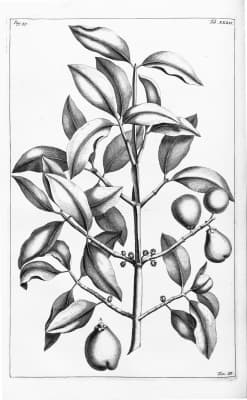

Garcinia atroviridis
Garcinia atroviridis
Family: Clusiaceae
Cultivation
The plant is easily grown with almost no pest and disease problems and requires very little care.
Full cultivation guide →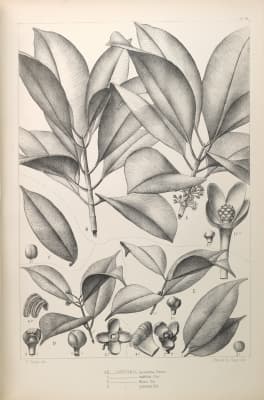

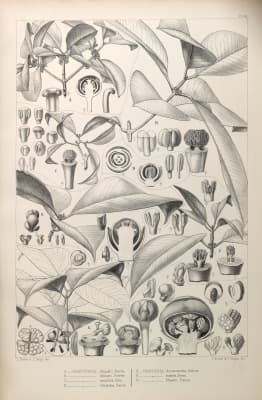

Garcinia brasiliensis
Garcinia brasiliensis
Family: Clusiaceae
Cultivation
A plant of the moist tropics. Succeeds in full sun or light shade. Plants can tolerate at least some inundation.
Full cultivation guide →Garcinia buchananii
Garcinia buchananii
Family: Clusiaceae
Cultivation
A plant of the moist tropics, it grows in Tanzania in areas where the mean annual rainfall is in the range 800 - 1,800mm. Thrives well on sandy loams. A dioecious species, both male and female forms usually need to be grown if fruit and seed are required.
Full cultivation guide →
Garcinia celebica
Garcinia celebica
Family: Clusiaceae
Cultivation
Grows well in dappled shade. The tree resembles the mangosteen (Garcinia mangostana), but its latex is white and the flowers are smaller. This species has been suggested for breeding with other members of the genus in order to improve their fruiting qualities.
Full cultivation guide →
Garcinia cowa
Garcinia cowa
Family: Clusiaceae
Cultivation
A dioecious species, both male and female forms usually need to be grown if fruit and seed are required. At least some dioecious Garcinia species, however, are able to produce fertile seed even in the absence of fertilization (asexual reproduction). Such seeds would be expected to be genetically identical to the parent
Full cultivation guide →Garcinia dauphinensis
Garcinia dauphinensis
Family: Clusiaceae
Cultivation
A dioecious species, both male and female forms usually need to be grown if fruit and seed are required. At least some dioecious Garcinia species, however, are able to produce fertile seed even in the absence of fertilization (asexual reproduction). Such seeds would be expected to be genetically identical to the parent
Full cultivation guide →

Garcinia dulcis
Garcinia dulcis
Family: Clusiaceae
Cultivation
A plant of the hot, wet tropics. It grows best in areas where annual daytime temperatures are within the range 22 - 30°c, but can tolerate 16 - 38°c. It prefers a mean annual rainfall in the range 1,500 - 3,000mm, but tolerates 1,100 - 4,000mm.
Full cultivation guide →Garcinia echinocarpa
Garcinia echinocarpa
Family: Clusiaceae
Cultivation
A dioecious species, both male and female forms usually need to be grown if fruit and seed are required. At least some dioecious Garcinia species, however, are able to produce fertile seed even in the absence of fertilization (asexual reproduction). Such seeds would be expected to be genetically identical to the parent
Full cultivation guide →Garcinia elliotii
Garcinia elliotii
Family: Clusiaceae
Cultivation
A dioecious species, both male and female forms usually need to be grown if fruit and seed are required. At least some dioecious Garcinia species, however, are able to produce fertile seed even in the absence of fertilization (asexual reproduction). Such seeds would be expected to be genetically identical to the parent
Full cultivation guide →
Garcinia epunctata
Garcinia epunctata
Family: Clusiaceae
Cultivation
A dioecious species, both male and female forms usually need to be grown if fruit and seed are required. At least some dioecious Garcinia species, however, are able to produce fertile seed even in the absence of fertilization (asexual reproduction). Such seeds would be expected to be genetically identical to the parent
Full cultivation guide →Garcinia esculenta
Garcinia esculenta
Family: Clusiaceae
Cultivation
A dioecious species, both male and female forms usually need to be grown if fruit and seed are required. At least some dioecious Garcinia species, however, are able to produce fertile seed even in the absence of fertilization (asexual reproduction). Such seeds would be expected to be genetically identical to the parent
Full cultivation guide →
Garcinia gardneriana
Garcinia gardneriana
Family: Clusiaceae
Cultivation
Although in nature the tree grows in the shade of the rainforest, it produces more fruit when growing in a sunny position. Trees can withstand periodic inundation. Newly planted young trees are slow to establish and grow away.
Full cultivation guide →

Garcinia gummi-gutta
Garcinia gummi-gutta
Family: Clusiaceae
Cultivation
A plant of hot, wet, tropical climates. It grows best in areas where the mean annual temperature is in the range 15 - 30°c and the mean annual rainfall is 1,500 - 4,000mm. Succeeds in both dry or occasionally inundated soils.
Full cultivation guide →
Garcinia hanburyi
Garcinia hanburyi
Family: Clusiaceae
Cultivation
A plant of the moist, lowland tropics, where it grows at elevations up to 800 metres. It is found in areas where the annual rainfall is up to 2,500 mm. Trees are not usually tapped before they are 20 years old, when the trunk has attained a diameter of about 15 cm.
Full cultivation guide →


Garcinia indica
Garcinia indica
Family: Clusiaceae
Cultivation
Garcinia indica requires a warm and humid tropical climate. It thrives well in coastal areas receiving over 2,500mm of rainfall, though can tolerate somewhat drier conditions. The plant is found wild in lateritic, alluvial soils having depth of around 100cm, and a pH of around 6.7.
Full cultivation guide →
Garcinia intermedia
Garcinia intermedia
Family: Clusiaceae
Cultivation
A plant of the warm, humid tropics at elevations up to 1,200 metres. Succeeds in full sun or partial shade. A fairly fast-growing plant, it can commence flowering and fruiting when only 2 - 3 years old from seed.
Full cultivation guide →
Garcinia kingaensis
Garcinia kingaensis
Family: Clusiaceae
Cultivation
A dioecious species, both male and female forms usually need to be grown if fruit and seed are required308. At least some dioecious Garcinia species, however, are able to produce fertile seed even in the absence of fertilization (asexual reproduction). Such seeds would be expected to be genetically identical to the parent
Full cultivation guide →
Garcinia kola
Garcinia kola
Family: Clusiaceae
Cultivation
Plantation cultivation can be successfully carried out: three year old stump-planting under shade is recommended, but sowing the seed in situ by a stake is possible. A dioecious species, both male and female forms usually need to be grown if fruit and seed are required. At least some dioecious Garcinia species, however, are able to produce fertile seed even in the absence of fertilization (asexual reproduction).
Full cultivation guide →

Garcinia livingstonei
Garcinia livingstonei
Family: Clusiaceae
Cultivation
A plant of low to medium elevations in hot, dry, tropical climates, it also succeeds in more humid areas. In Tanzania, the plant is found growing in areas where the mean annual rainfall is in the range 800 - 1,800mm. Succeeds in both full sun and partial shade.
Full cultivation guide →
Garcinia macrophylla
Garcinia macrophylla
Family: Clusiaceae
Cultivation
A plant of the humid tropics. Young specimens have been killed by drops in temperature to -1°c. Older trees have been little harmed by temperatures down to -3°c.
Full cultivation guide →
Garcinia madruno
Garcinia madruno
Family: Clusiaceae
Cultivation
A plant of the hot, humid tropical lowlands. Succeeds in full sun or light shade. Plants are tolerant of occasional inundation.
Full cultivation guide →
Garcinia mangostana
Garcinia mangostana
Family: Clusiaceae
Cultivation
The mangosteen is an ultra-tropical plant, usually only grown in areas without a dry season and within 10 degrees of the equator. It is usually grown from sea level up to 1,000 metres elevation, but the growth rate is higher in lowland areas. It grows best in areas where annual daytime temperatures are within the range 20 - 30°c, but can tolerate 15 - 40°c.
Full cultivation guide →
Garcinia merguensis
Garcinia merguensis
Family: Clusiaceae
Cultivation
A dioecious species, both male and female forms usually need to be grown if fruit and seed are required. At least some dioecious Garcinia species, however, are able to produce fertile seed even in the absence of fertilization (asexual reproduction). Such seeds would be expected to be genetically identical to the parent
Full cultivation guide →

Garcinia morella
Garcinia morella
Family: Clusiaceae
Cultivation
Plants resent root disturbance. A dioecious species, both male and female plants usually need to be grown if fruit and seed are required. At least some dioecious Garcinia species, however, are able to produce fertile seed even in the absence of fertilization (asexual reproduction).
Full cultivation guide →
Garcinia multiflora
Garcinia multiflora
Family: Clusiaceae
Cultivation
A plant of the moist tropics and subtropics, where it is found at elevations up to 1,900 metres. It grows best in areas where annual daytime temperatures are within the range 21 - 28°c, but can tolerate 15 - 36°c. It prefers a mean annual rainfall in the range 1,500 - 1,800mm, but tolerates 1,100 - 2,500mm.
Full cultivation guide →Garcinia myrtifolia
Garcinia myrtifolia
Family: Clusiaceae
Cultivation
A dioecious species, both male and female forms usually need to be grown if fruit and seed are required. At least some dioecious Garcinia species, however, are able to produce fertile seed even in the absence of fertilization (asexual reproduction). Such seeds would be expected to be genetically identical to the parent
Full cultivation guide →

Garcinia oblongifolia
Garcinia oblongifolia
Family: Clusiaceae
Cultivation
A dioecious species, both male and female forms usually need to be grown if fruit and seed are required. At least some dioecious Garcinia species, however, are able to produce fertile seed even in the absence of fertilization (asexual reproduction). Such seeds would be expected to be genetically identical to the parent
Full cultivation guide →
Garcinia ovalifolia
Garcinia ovalifolia
Family: Clusiaceae
Cultivation
A dioecious species, both male and female forms usually need to be grown if fruit and seed are required. At least some dioecious Garcinia species, however, are able to produce fertile seed even in the absence of fertilization (asexual reproduction). Such seeds would be expected to be genetically identical to the parent
Full cultivation guide →

Garcinia pedunculata
Garcinia pedunculata
Family: Clusiaceae
Cultivation
A dioecious species, both male and female forms usually need to be grown if fruit and seed are required. At least some dioecious Garcinia species, however, are able to produce fertile seed even in the absence of fertilization (asexual reproduction). Such seeds would be expected to be genetically identical to the parent
Full cultivation guide →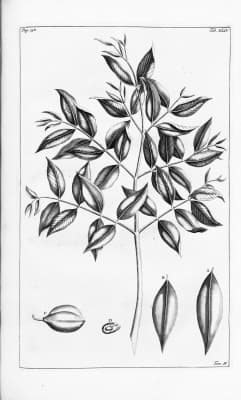
Garcinia pictoria
Garcinia pictoria
Family: Clusiaceae
Cultivation
A dioecious species, both male and female forms must usually be grown if fruit and seed are required. At least some dioecious Garcinia species, however, are able to produce fertile seed even in the absence of fertilization (asexual reproduction). Such seeds would be expected to be genetically identical to the parent
Full cultivation guide →
Garcinia portoricensis
Garcinia portoricensis
Family: Clusiaceae
Cultivation
Individual flowers on a tree can be bisexual or either male or female. In addition, distinctly male and female flowers can either both be on the same tree (monoecious) or on different trees (dioecious). At least some dioecious Garcinia species are able to produce fertile seed even in the absence of fertilization (asexual reproduction).
Full cultivation guide →
Garcinia prainiana
Garcinia prainiana
Family: Clusiaceae
Cultivation
A very slow-growing, but long-lived species. Plants can commence fruiting when less than 1 metre tall. This species is dioecious, both male and female forms usually need to be grown if fruits and seed are required.
Full cultivation guide →
Garcinia pseudoguttifera
Garcinia pseudoguttifera
Family: Clusiaceae
Cultivation
Plants can flower and produce fruit all year round. A dioecious species, both male and female forms usually need to be grown if fruit and seed are required. At least some dioecious Garcinia species, however, are able to produce fertile seed even in the absence of fertilization (asexual reproduction).
Full cultivation guide →Garcinia punctata
Garcinia punctata
Family: Clusiaceae
Cultivation
A dioecious species, both male and female forms usually need to be grown if fruit and seed are required. At least some dioecious Garcinia species, however, are able to produce fertile seed even in the absence of fertilization (asexual reproduction). Such seeds would be expected to be genetically identical to the parent
Full cultivation guide →Garcinia quadrifaria
Garcinia quadrifaria
Family: Clusiaceae
Cultivation
A dioecious species, both male and female forms usually need to be grown if fruit and seed are required. At least some dioecious Garcinia species, however, are able to produce fertile seed even in the absence of fertilization (asexual reproduction). Such seeds would be expected to be genetically identical to the parent
Full cultivation guide →Garcinia quaesita
Garcinia quaesita
Family: Clusiaceae
Cultivation
A plant of the hot, humid tropics. Young plants require some shade, although older plants are more tolerant of sunny positions. Succeeds in a range of soils.
Full cultivation guide →Garcinia rubroechinata
Garcinia rubroechinata
Family: Clusiaceae
Cultivation
A dioecious species, both male and female forms usually need to be grown if fruit and seed are required. At least some dioecious Garcinia species, however, are able to produce fertile seed even in the absence of fertilization (asexual reproduction). Such seeds would be expected to be genetically identical to the parent
Full cultivation guide →
Garcinia sessilis
Garcinia sessilis
Family: Clusiaceae
Cultivation
The plant can flower and produce fruit throughout the year. A dioecious species, both male and female forms usually need to be grown if fruit and seed are required. At least some dioecious Garcinia species, however, are able to produce fertile seed even in the absence of fertilization (asexual reproduction).
Full cultivation guide →

Garcinia smeathmannii
Garcinia smeathmannii
Family: Clusiaceae
Cultivation
A dioecious species, both male and female forms usually need to be grown if fruit and seed are required. At least some dioecious Garcinia species, however, are able to produce fertile seed even in the absence of fertilization (asexual reproduction). Such seeds would be expected to be genetically identical to the parent
Full cultivation guide →Garcinia spicata
Garcinia spicata
Family: Clusiaceae
Cultivation
A dioecious species, both male and female forms usually need to be grown if fruit and seed are required. At least some dioecious Garcinia species, however, are able to produce fertile seed even in the absence of fertilization (asexual reproduction). Such seeds would be expected to be genetically identical to the parent
Full cultivation guide →Garcinia stipulata
Garcinia stipulata
Family: Clusiaceae
Cultivation
A dioecious species, both male and female forms usually need to be grown if fruit and seed are required. At least some dioecious Garcinia species, however, are able to produce fertile seed even in the absence of fertilization (asexual reproduction). Such seeds would be expected to be genetically identical to the parent
Full cultivation guide →
Garcinia vitiensis
Garcinia vitiensis
Family: Clusiaceae
Cultivation
A dioecious species, both male and female forms usually need to be grown if fruit and seed are required. At least some dioecious Garcinia species, however, are able to produce fertile seed even in the absence of fertilization (asexual reproduction). Such seeds would be expected to be genetically identical to the parent
Full cultivation guide →Garcinia wightii
Garcinia wightii
Family: Clusiaceae
Cultivation
A dioecious species, both male and female forms must usually be grown if fruit and seed are required. At least some dioecious Garcinia species, however, are able to produce fertile seed even in the absence of fertilization (asexual reproduction). Such seeds would be expected to be genetically identical to the parent
Full cultivation guide →
Garcinia xanthochymus
Garcinia xanthochymus
Family: Clusiaceae
Cultivation
A plant of the hot, humid tropics, where it is found at elevations up to 1,000 metres. It grows best in areas where annual daytime temperatures are within the range 22 - 28°c, but can tolerate 16 - 36°c. Plants are tolerant of occasional light frosts.
Full cultivation guide →Garcinia yunnanensis
Garcinia yunnanensis
Family: Clusiaceae
Cultivation
A dioecious species, both male and female forms usually need to be grown if fruit and seed are required. At least some dioecious Garcinia species, however, are able to produce fertile seed even in the absence of fertilization (asexual reproduction). Such seeds would be expected to be genetically identical to the parent
Full cultivation guide →