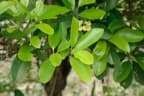
Garcinia multiflora
Garcinia multiflora
Safety & Hazards
None known
Cultivation Details
A plant of the moist tropics and subtropics, where it is found at elevations up to 1,900 metres. It grows best in areas where annual daytime temperatures are within the range 21 - 28°c, but can tolerate 15 - 36°c[1]. It prefers a mean annual rainfall in the range 1,500 - 1,800mm, but tolerates 1,100 - 2,500mm[1]. Succeeds in full sun and in dappled shade[1]. Succeeds in most well-drained soils of at least moderate fertility[1]. Prefers a pH in the range 7 - 7.5, tolerating 6.5 - 8[1]. Flowering usually occurs after a period of pronounced dry weather, and often happens twice a year[1].
Propagation
Seed - we have no specific information on this species, but the seed of most members of the genus can be slow to germinate, even if sown fresh, often taking 6 months or more[PFAF]. Cite as: Tropical Plants Database, Ken Fern. tropical.theferns.info. 2026-02-20. <tropical.theferns.info/viewtropical.php?id=Garcinia+multiflora>
Pollinators
Data unavailable
References
- [1]Ecocrop — http://ecocrop.fao.org/ecocrop/srv/en/home ↩︎Basic information on a wide range of useful plants, plus details of environmental needs where available.
- [2]Flora of China — Missouri Botanical Garden Press; St. Louis. · 1994 · http://flora.huh.harvard.edu/china/ ↩︎An excellent, comprehensive resource in 25 volumes. In addition to the botanical information the flora also gives basic information on habitat and some uses. An on-line version is also available.
- [3]Mansfeld's Database of Agricultural and Horticultural Plants — http://mansfeld.ipk-gatersleben.de/pls/htmldb_pgrc/f?p=185:3:4292127278597336 ↩︎Terse details of a huge range of useful plants.
- [4]IUCN Red List of Threatened Species — http://www.iucnredlist.org/ ↩︎A list of plants under threat and facing possible extinction, usually with brief details of the threats and information on habitat.
- [PFAF]Plants for a Future — pfaf.org ↩︎