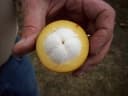
Garcinia macrophylla
Garcinia macrophylla
Safety & Hazards
None known
Cultivation Details
A plant of the humid tropics[1]. Young specimens have been killed by drops in temperature to -1°c[1]. Older trees have been little harmed by temperatures down to -3°c[1]. The tree is accustomed to light or moderate shade[1]. Plants can tolerate at least some inundation[2]. Newly planted young trees establish well and grow away fairly rapidly[2]. Some 15 - 20-year-old trees have produced 100 - 200 fruits when there have been no adverse weather conditions[1]. A dioecious species, both male and female forms usually need to be grown if fruit and seed are required[1]. At least some dioecious Garcinia species, however, are able to produce fertile seed even in the absence of fertilization (asexual reproduction). Such seeds would be expected to be genetically identical to the parent[3]
Propagation
Seed - they have remained viable for 2 to 3 weeks, but require several weeks to germinate[1]. Best sown as soon as they are ripe in a semi-shaded position in a nursery seedbed. Germination rates are usually low, with the seed not sprouting until more than 90 days have passed[2]. Cite as: Tropical Plants Database, Ken Fern. tropical.theferns.info. 2026-02-20. <tropical.theferns.info/viewtropical.php?id=Garcinia+macrophylla>
Pollinators
Data unavailable
References
- [1]Fruits of Warm Climates — Morton. J. · Florida Flair books, Florida. · 1987 · ISBN 0961018410 ↩︎A very well written guide to about 125 species.
- [2]Brazilian Trees. Volume 3. — Lorenzi. H. · Instituto Plantarum De Estudos Da Flora; Brazil. · 2009 · ISBN 85-86714-34-4 ↩︎Information on 350 species of Brazilian trees. Stunning photographs of each species, brief details on the plant, its uses and how to grow it from seed. A superb work, with the minor irritation that the translation from Portuguese is not of the best.
- [3]Taxonomic Revision of Garcinia Section Garcinia (Clusiaceae) — Nazre M., Newman M.F., Pennington R.T. & Middleton D.J. · 2018 · https://doi.org/10.11646/phytotaxa.373.1.1 · ISBN 1179-3155 ↩︎
- [4]Brazilian Fruits and Cultivated Exotics — Lorenzi. H.; Bacher. L.; Lacerda. M.; Sartori. S. · Instituto Plantarum De Estudos Da Flora LTDA; Brazil. · 2000 · ISBN 85-867174-24-0 ↩︎A superb book, giving information on several hundred fruit species. Each entry has a brief description of the plant and its uses, accompanied by one to many excellent quality photographs of the fruits.
- [5]IUCN Red List of Threatened Species — http://www.iucnredlist.org/ ↩︎A list of plants under threat and facing possible extinction, usually with brief details of the threats and information on habitat.
- [6]Dictionary of Economic Plants. — Uphof. J. C. Th. · Weinheim · 1959 · ISBN - ↩︎An excellent and very comprehensive guide but it only gives very short descriptions of the uses without any details of how to utilize the plants. Not for the casual reader.
- [7]Medicinal Plants of the Guianas — DeFilipps, R. A.; Maina, S. L.; & Crepin, J. · Smithsonian Museum · http://botany.si.edu/bdg/medicinal/index.html ↩︎A down-loadable PDF document of a book in pre-publication awaiting illustration. An excellent, if rather terse, guide to the traditional medicinal uses of the plants of the region
- [8]Tropical Timbers of the World. Ag. Handbook No. 607. — Chudnoff. Martin. · USDA Forest Service. Wisconsin. · 1984 ↩︎Terse details on the properties of the wood of almost 400 species of trees from the Tropics.