Chenopodium — 42 species
Botanical species in the genus Chenopodium recorded in the PlantPeers database.

Chenopodium acuminatum
Chenopodium acuminatum
Family: Amaranthaceae
Cultivation
We have very little information on this species and do not know how well it will grow in Britain, but it should succeed as a spring sown annual. The following notes are based on the general needs of the genus. An easily grown plant, succeeding in most soils but disliking shade.
Full cultivation guide →
Chenopodium album
Chenopodium album
Family: Amaranthaceae
Cultivation
Fat hen can be found in most regions of the world, from cold temperate to the tropics, where it normally grows at higher elevations. It has a broad tolerance of climates, succeeding in areas with average temperatures ranging from 5 - 30°, and is tolerant of night frosts. An easily grown plant, succeeding in most soils but disliking shade.
Full cultivation guide →Chenopodium auricomum
Chenopodium auricomum
Family: Amaranthaceae
Cultivation
We have very little information on this species and do not know how well it will grow in Britain, but it should succeed as a spring sown annual. This species was cultivated as a spinach in Britain in the 19th century, it is an excellent vegetable. The following notes are based on the general needs of the genus.
Full cultivation guide →
Chenopodium berlandieri
Chenopodium berlandieri
Family: Amaranthaceae
Cultivation
An extremely versatile plant, found from the cold temperate regions of the far north of N. America to moderate elevations in the tropical areas of C. America.
Full cultivation guide →Chenopodium bonus-henricus
Chenopodium bonus-henricus
Family: Amaranthaceae
Cultivation
Prefers a fertile humus rich soil in a sunny position. The plant produces a better quality harvest in the summer if it is grown in light shade. A very easily grown plant, it tolerates considerable neglect and succeeds in most soils and situations.
Full cultivation guide →Chenopodium botrys
Chenopodium botrys
Family: Amaranthaceae
Cultivation
An easily grown plant, succeeding in most soils but disliking shade. It prefers a moderately fertile soil. The Jerusalem oak is occasionally cultivated for its edible leaves, there is at least one named variety, developed in the Netherlands.
Full cultivation guide →Chenopodium bushianum
Chenopodium bushianum
Family: Amaranthaceae
Cultivation
We have very little information on this species and do not know how well it will grow in Britain, but it should succeed as a spring sown annual. It is very closely related to C. album. It is seen as a sub-species of Chenopodium berlandieri (as C. berlandieri bushianum) by the Flora of North America.
Full cultivation guide →Chenopodium californicum
Chenopodium californicum
Family: Amaranthaceae
Cultivation
We have very little information on this species and do not know if it will be hardy in Britain, though judging by its native range it could succeed outdoors in many parts of this country. It is likely to require a well-drained soil in a sunny position. The following notes are based on the general needs of the genus.
Full cultivation guide →Chenopodium canihua
Chenopodium canihua
Family: Amaranthaceae
Cultivation
We have very little information on this species and do not know how well it will grow in Britain, but it should succeed as a spring sown annual. The following notes are based on the general needs of the genus. An easily grown plant, succeeding in most soils but disliking shade.
Full cultivation guide →Chenopodium capitatum
Chenopodium capitatum
Family: Amaranthaceae
Cultivation
An easily grown plant, succeeding in most soils but disliking shade. It prefers a moderately fertile soil. A very ornamental plant, strawberry blite has at times been cultivated for its edible leaves.
Full cultivation guide →Chenopodium cristatum
Chenopodium cristatum
Family: Amaranthaceae
Cultivation
We have very little information on this species and do not know how well it will grow in Britain, but it could succeed as a spring sown annual. The following notes are based on the general needs of the genus. An easily grown plant, succeeding in most soils but disliking shade.
Full cultivation guide →Chenopodium ficifolium
Chenopodium ficifolium
Family: Amaranthaceae
Cultivation
An easily grown plant, succeeding in most soils but disliking shade. It prefers a moderately fertile soil.
Full cultivation guide →Chenopodium foliosum
Chenopodium foliosum
Family: Amaranthaceae
Cultivation
An easily grown plant, succeeding in most soils but disliking shade. It prefers a moderately fertile soil. Formerly cultivated for its edible leaves.
Full cultivation guide →Chenopodium fremontii
Chenopodium fremontii
Family: Amaranthaceae
Cultivation
We have very little information on this species and do not know how well it will grow in Britain, but it should succeed as a spring sown annual. The following notes are based on the general needs of the genus. An easily grown plant, succeeding in most soils but disliking shade.
Full cultivation guide →
Chenopodium giganteum
Chenopodium giganteum
Family: Amaranthaceae
Cultivation
An easily grown plant, succeeding in most soils but disliking shade. It prefers a moderately fertile soil. This species is closely related to C. album, and was probably derived from it through cultivation.
Full cultivation guide →Chenopodium glaucum
Chenopodium glaucum
Family: Amaranthaceae
Cultivation
An easily grown plant, succeeding in most soils but disliking shade. It prefers a moderately fertile soil.
Full cultivation guide →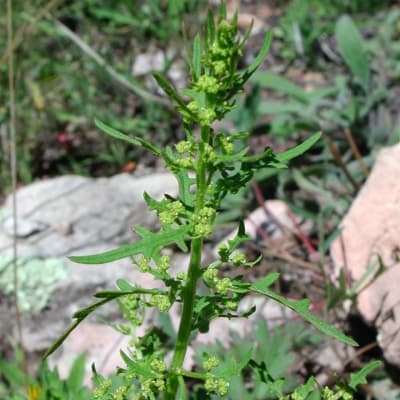
Chenopodium graveolens
Chenopodium graveolens
Family: Amaranthaceae
Cultivation
A plant mainly of the temperate to subtropical zones, extending into the tropics at elevations of 1,800 metres or more331. An easily grown plant, succeeding in most soils but disliking shade. It prefers a moderately fertile soil.
Full cultivation guide →Chenopodium hybridum
Chenopodium hybridum
Family: Amaranthaceae
Cultivation
We have very little information on this species and do not know how well it will grow in Britain, but it should succeed as a spring sown annual. The following notes are based on the general needs of the genus. An easily grown plant, succeeding in most soils but disliking shade.
Full cultivation guide →Chenopodium incanum
Chenopodium incanum
Family: Amaranthaceae
Cultivation
We have very little information on this species and do not know how well it will grow in Britain, but it should succeed as a spring sown annual. The following notes are based on the general needs of the genus. An easily grown plant, succeeding in most soils but disliking shade.
Full cultivation guide →Chenopodium leptophyllum
Chenopodium leptophyllum
Family: Amaranthaceae
Cultivation
We have very little information on this species and do not know how well it will grow in Britain, but it should succeed as a spring sown annual. The following notes are based on the general needs of the genus. An easily grown plant, succeeding in most soils but disliking shade.
Full cultivation guide →
Chenopodium murale
Chenopodium murale
Family: Amaranthaceae
Cultivation
A plant of temperate to subtropical regions, extending into the tropics as a weed of cultivation. An easily grown plant, succeeding in most soils but disliking shade. It prefers a moderately fertile soil.
Full cultivation guide →Chenopodium nutans
Chenopodium nutans
Family: Amaranthaceae
Cultivation
Chenopodium nutans is found mainly in warm temperate to subtropical climates, the plant also grows in the tropics. Requires a sunny position and a well-drained soil. In areas with cold winters, the plant can be grown as a spring-sown annual, flowering and setting seed in its first year.
Full cultivation guide →Chenopodium nuttalliae
Chenopodium nuttalliae
Family: Amaranthaceae
Cultivation
An easily grown plant, succeeding in most soils but disliking shade. It prefers a moderately fertile soil. Huauzontle was formerly commonly cultivated in Mexico for its edible seed and flowering shoots.
Full cultivation guide →
Chenopodium oahuense
Chenopodium oahuense
Family: Amaranthaceae
Cultivation
Requires a sunny position or light shade and a well-drained soil. Plants are very tolerant of corraline soils. The plant appears well adapted to tolerate drought by dying-back during periods of low moisture and then rapidly growing during periods of higher available moisture.
Full cultivation guide →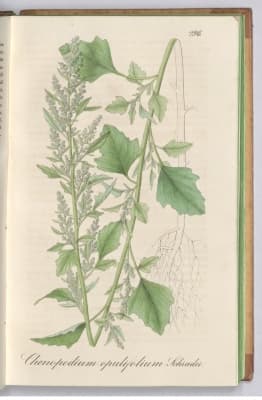
Chenopodium opulifolium
Chenopodium opulifolium
Family: Amaranthaceae
Cultivation
An annual plant found in a range of habitats from the temperate zone to the tropics. An easily grown plant, succeeding in most soils but disliking shade. It prefers a moderately fertile soil.
Full cultivation guide →Chenopodium overi
Chenopodium overi
Family: Amaranthaceae
Cultivation
We have very little information on this species and do not know how well it will grow in Britain, but it should succeed as a spring sown annual. According to some botanists this species is a part of C. capitatum. The following notes are based on the general needs of the genus.
Full cultivation guide →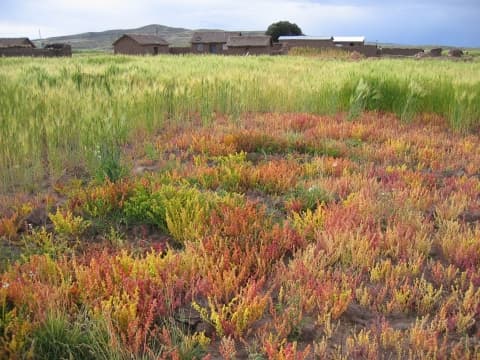
Chenopodium pallidicaule
Chenopodium pallidicaule
Family: Amaranthaceae
Cultivation
A plant of high elevations in the tropics where it can be found at elevations up to 4,000 metres. Adult plants are unaffected by night frosts in the growing season, the seed can germinate at a soil temperature of 5°c, whilst the plant will flower at 10°c and ripen its seed at 15°c. Succeeds on most soils, including shallow soils, but dislikes shade.
Full cultivation guide →Chenopodium parabolicum
Chenopodium parabolicum
Family: Amaranthaceae
Cultivation
Chenopodium parabolicum is a plant of semi-arid regions in the warm temperate and subtropical regions of Australia, where it is found at elevations up to 900 metres. It grows in areas with a mean annual rainfall in the range 200 - 850mm. It can tolerate occasional light frosts down to around -5°c.
Full cultivation guide →Chenopodium polyspermum
Chenopodium polyspermum
Family: Amaranthaceae
Cultivation
An easily grown plant, succeeding in most soils but disliking shade. It prefers a moderately fertile soil.
Full cultivation guide →Chenopodium pratericola
Chenopodium pratericola
Family: Amaranthaceae
Cultivation
We have very little information on this species, though it is a casual on rubbish tips here and should succeed as a spring sown annual. The following notes are based on the general needs of the genus. An easily grown plant, succeeding in most soils but disliking shade.
Full cultivation guide →
Chenopodium quinoa
Chenopodium quinoa
Family: Amaranthaceae
Cultivation
A plant of higher elevations in the tropics, it has also been successfully grown in the temperate and subtropical zones. Plants tolerate light frosts at any stage in their development except when flowering. An easily grown plant, it requires a rich moist well-drained soil and a warm position if it is to do really well, but it also succeeds in less than optimum conditions.
Full cultivation guide →Chenopodium rubrum
Chenopodium rubrum
Family: Amaranthaceae
Cultivation
An easily grown plant, succeeding in most soils but disliking shade. it prefers a moderately fertile soil.
Full cultivation guide →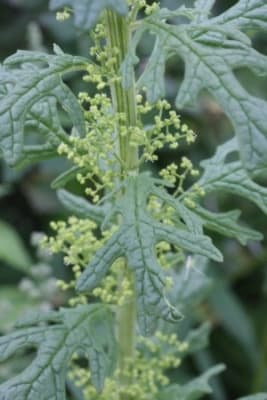
Chenopodium schraderianum
Chenopodium schraderianum
Family: Amaranthaceae
Cultivation
Succeeds from the temperate zone to moderate elevations in tropical climates. An easily grown plant, succeeding in most soils but disliking shade. It prefers a moderately fertile soil.
Full cultivation guide →Chenopodium simplex
Chenopodium simplex
Family: Amaranthaceae
Cultivation
We have very little information on this species and do not know how well it will grow in Britain, but it should succeed as a spring sown annual. It is part of C. hybridum according to some botanists, whilst others afford it specific status and say it is closely related to C. hybridum. The following notes are based on the general needs of the genus.
Full cultivation guide →Chenopodium spinescens
Chenopodium spinescens
Family: Amaranthaceae
Cultivation
Chenopodium spinescens is a plant of arid and semi-arid regions in the warm temperate and subtropical regions of Australia, where it is found at elevations up to 900 metres. It grows in areas with a mean annual rainfall in the range 100 - 900mm. It can tolerate occasional light frosts down to around -5°c.
Full cultivation guide →Chenopodium stenophyllum
Chenopodium stenophyllum
Family: Amaranthaceae
Cultivation
We have very little information on this species and do not know how well it will grow in Britain, but it should succeed as a spring sown annual. The following notes are based on the general needs of the genus. An easily grown plant, succeeding in most soils but disliking shade.
Full cultivation guide →Chenopodium suecicum
Chenopodium suecicum
Family: Amaranthaceae
Cultivation
An easily grown plant, succeeding in most soils but disliking shade. It prefers a moderately fertile soil.
Full cultivation guide →Chenopodium urbicum
Chenopodium urbicum
Family: Amaranthaceae
Cultivation
An easily grown plant, succeeding in most soils but disliking shade. It prefers a moderately fertile soil.
Full cultivation guide →Chenopodium virgatum
Chenopodium virgatum
Family: Amaranthaceae
Cultivation
We have very little information on this species and do not know how well it will grow in Britain, but it should succeed as a spring sown annual. This species is closely related to C. acuminatum and is seen as no more than a sub-species by many botanists. The following notes are based on the general needs of the genus.
Full cultivation guide →Chenopodium viride
Chenopodium viride
Family: Amaranthaceae
Cultivation
We have very little information on this species and do not know how well it will grow in Britain, but it should succeed as a spring sown annual. According to some botanists, this species is no more than a synonym for C. album. The following notes are based on the general needs of the genus.
Full cultivation guide →Chenopodium vulvaria
Chenopodium vulvaria
Family: Amaranthaceae
Cultivation
An easily grown plant, succeeding in most soils but disliking shade. It prefers a moderately fertile soil. The plant contains trimethylamine, and when touched it gives off the nauseous odour of stale salt fish.
Full cultivation guide →