Indigofera — 57 species
Botanical species in the genus Indigofera recorded in the PlantPeers database.

Indigofera arrecta
Indigofera arrecta
Family: Fabaceae
Cultivation
A plant of the moist tropics, where it is found at elevations from 300 - 2,700 metres. It grows best in areas where annual daytime temperatures are within the range 22 - 30°c, but can tolerate 16 - 36°c. It can be killed by temperatures of °c or lower.
Full cultivation guide →
Indigofera articulata
Indigofera articulata
Family: Fabaceae
Cultivation
Indigoera species generally grow best in a sunny position, preferring a well-drained but moist soil. Many of the species will also succeed in drier conditions and in poor soils. We have seen no specific information for this species, but most members of the genus have a symbiotic relationship with certain soil bacteria; these bacteria form nodules on the roots and fix atmospheric nitrogen.
Full cultivation guide →Indigofera aspalathoides
Indigofera aspalathoides
Family: Fabaceae
Cultivation
Indigofera species generally grow best in a sunny position, preferring a well-drained but moist soil. Many of the species will also succeed in drier conditions and in poor soils. We have no specific information for this species, but most species in the genus have a symbiotic relationship with certain soil bacteria; these bacteria form nodules on the roots and fix atmospheric nitrogen.
Full cultivation guide →Indigofera astragalina
Indigofera astragalina
Family: Fabaceae
Cultivation
Indigofera species generally grow best in a sunny position, preferring a well-drained but moist soil. Many of the species will also succeed in drier conditions and in poor soils. This species has a symbiotic relationship with certain soil bacteria; these bacteria form nodules on the roots and fix atmospheric nitrogen.
Full cultivation guide →Indigofera atropurpurea
Indigofera atropurpurea
Family: Fabaceae
Cultivation
Indigofera species generally grow best in a sunny position, preferring a well-drained but moist soil. Many of the species will also succeed in drier conditions and in poor soils. This species has a symbiotic relationship with certain soil bacteria; these bacteria form nodules on the roots and fix atmospheric nitrogen.
Full cultivation guide →Indigofera bungeana
Indigofera bungeana
Family: Fabaceae
Cultivation
Indigofera pseudotinctoria is a moderately hardy plant and, although top growth can be cut back by temperatures around -5 to -10°c, the rootstock is hardier and will usually be alright at temperatures down to about -20°c. Plants will usually resprout from the base if they are cut back by winter cold. Requires a light or medium well-drained soil and a sunny position.
Full cultivation guide →Indigofera capitata
Indigofera capitata
Family: Fabaceae
Cultivation
Indigofera species generally grow best in a sunny position, preferring a well-drained but moist soil. Many of the species will also succeed in drier conditions and in poor soils. This species has a symbiotic relationship with certain soil bacteria; these bacteria form nodules on the roots and fix atmospheric nitrogen.
Full cultivation guide →Indigofera caroliniana
Indigofera caroliniana
Family: Fabaceae
Cultivation
Indigo species generally grow best in a sunny position, preferring a well-drained but moist soil. Many of the species will also succeed in drier conditions and in poor soils. This species has a symbiotic relationship with certain soil bacteria; these bacteria form nodules on the roots and fix atmospheric nitrogen.
Full cultivation guide →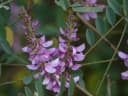
Indigofera cassioides
Indigofera cassioides
Family: Fabaceae
Cultivation
Indigofera cassioides is native to subtropical and tropical climates in southern Asia. It is not very cold-hardy, the stems tolerating occasional short-lived drops down to around -5°c when dormant. The rootstock is somewhat hardier, and plants are capable of regrowing from the base if they are cut back by winter cold - though we do not know at what temperature the roots of this plant are killed.
Full cultivation guide →Indigofera caudata
Indigofera caudata
Family: Fabaceae
Cultivation
Found in the wild on clay and loamy soils. Indigo species generally grow best in a sunny position, preferring a well-drained but moist soil. Many of the species will also succeed in drier conditions and in poor soils.
Full cultivation guide →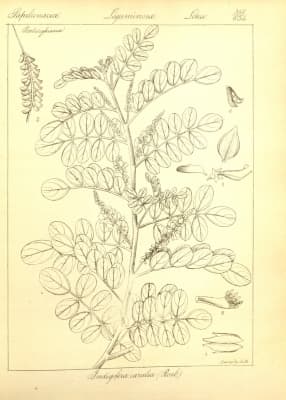
Indigofera coerulea
Indigofera coerulea
Family: Fabaceae
Cultivation
A plant of arid and semi-arid tropical and subtropical areas, where it is found at elevations from 200 - 2,700 metres. It can be found in areas where the mean annual rainfall is as low as 200 - 250mm. Indigofera species generally grow best in a sunny position, preferring a well-drained but moist soil.
Full cultivation guide →Indigofera colutea
Indigofera colutea
Family: Fabaceae
Cultivation
Indigoera species generally grow best in a sunny position, preferring a well-drained but moist soil. Many of the species will also succeed in drier conditions and in poor soils. There are viscid glands on the stems, making the plant strongly aromatic and sticky.
Full cultivation guide →Indigofera conjugata
Indigofera conjugata
Family: Fabaceae
Cultivation
Indigoera species generally grow best in a sunny position, preferring a well-drained but moist soil. Many of the species will also succeed in drier conditions and in poor soils. We have seen no specific information for this species, but most members of the genus have a symbiotic relationship with certain soil bacteria; these bacteria form nodules on the roots and fix atmospheric nitrogen.
Full cultivation guide →Indigofera cordifolia
Indigofera cordifolia
Family: Fabaceae
Cultivation
Indigofera species generally grow best in a sunny position, preferring a well-drained but moist soil. Many of the species will also succeed in drier conditions and in poor soils. This species has a symbiotic relationship with certain soil bacteria; these bacteria form nodules on the roots and fix atmospheric nitrogen.
Full cultivation guide →Indigofera daleoides
Indigofera daleoides
Family: Fabaceae
Cultivation
Indigofera species generally grow best in a sunny position, preferring a well-drained but moist soil. Many of the species will also succeed in drier conditions and in poor soils. This species has a symbiotic relationship with certain soil bacteria; these bacteria form nodules on the roots and fix atmospheric nitrogen.
Full cultivation guide →Indigofera decora
Indigofera decora
Family: Fabaceae
Cultivation
Indigofera decora is somewhat cold-hardy, the rootstock tolerating temperatures down to around -10°c when dormant. The top-growth is not so hardy however, the stems are often cut back by cold weather, though new shoots are generally produced from the rootstock in spring and these can flower in late summer of the same year. Requires a light or medium well-drained soil and a warm sunny position.
Full cultivation guide →Indigofera dendroides
Indigofera dendroides
Family: Fabaceae
Cultivation
Indigoera species generally grow best in a sunny position, preferring a well-drained but moist soil. Many of the species will also succeed in drier conditions and in poor soils. Indigofera dendroides is a very variable plant.
Full cultivation guide →
Indigofera diphylla
Indigofera diphylla
Family: Fabaceae
Cultivation
Indigoera species generally grow best in a sunny position, preferring a well-drained but moist soil. Many of the species will also succeed in drier conditions and in poor soils. We have seen no specific information for this species, but most members of the genus have a symbiotic relationship with certain soil bacteria; these bacteria form nodules on the roots and fix atmospheric nitrogen.
Full cultivation guide →Indigofera dosua
Indigofera dosua
Family: Fabaceae
Cultivation
Indigofera species generally grow best in a sunny position, preferring a well-drained but moist soil. Many of the species will also succeed in drier conditions and in poor soils. This species has a symbiotic relationship with certain soil bacteria; these bacteria form nodules on the roots and fix atmospheric nitrogen.
Full cultivation guide →Indigofera emarginella
Indigofera emarginella
Family: Fabaceae
Cultivation
Indigoera species generally grow best in a sunny position, preferring a well-drained but moist soil. Many of the species will also succeed in drier conditions and in poor soils. This species has a symbiotic relationship with certain soil bacteria; these bacteria form nodules on the roots and fix atmospheric nitrogen.
Full cultivation guide →Indigofera flavicans
Indigofera flavicans
Family: Fabaceae
Cultivation
Indigofera species generally grow best in a sunny position, preferring a well-drained but moist soil. Many of the species will also succeed in drier conditions and in poor soils. This species has a symbiotic relationship with certain soil bacteria; these bacteria form nodules on the roots and fix atmospheric nitrogen.
Full cultivation guide →Indigofera fulvopilosa
Indigofera fulvopilosa
Family: Fabaceae
Cultivation
Indigoera species generally grow best in a sunny position, preferring a well-drained but moist soil. Many of the species will also succeed in drier conditions and in poor soils. This species has a symbiotic relationship with certain soil bacteria; these bacteria form nodules on the roots and fix atmospheric nitrogen.
Full cultivation guide →Indigofera galegoides
Indigofera galegoides
Family: Fabaceae
Cultivation
Indigofera species generally grow best in a sunny position, preferring a well-drained but moist soil. Many of the species will also succeed in drier conditions and in poor soils. This species has a symbiotic relationship with certain soil bacteria; these bacteria form nodules on the roots and fix atmospheric nitrogen.
Full cultivation guide →Indigofera garckeana
Indigofera garckeana
Family: Fabaceae
Cultivation
Indigoera species generally grow best in a sunny position, preferring a well-drained but moist soil. Many of the species will also succeed in drier conditions and in poor soils. This species has a symbiotic relationship with certain soil bacteria; these bacteria form nodules on the roots and fix atmospheric nitrogen.
Full cultivation guide →Indigofera glabra
Indigofera glabra
Family: Fabaceae
Cultivation
Indigoera species generally grow best in a sunny position, preferring a well-drained but moist soil. Many of the species will also succeed in drier conditions and in poor soils. We have seen no specific information for this species, but most members of the genus have a symbiotic relationship with certain soil bacteria; these bacteria form nodules on the roots and fix atmospheric nitrogen.
Full cultivation guide →Indigofera glandulosa
Indigofera glandulosa
Family: Fabaceae
Cultivation
Indigofera species generally grow best in a sunny position, preferring a well-drained but moist soil. Many of the species will also succeed in drier conditions and in poor soils. This species has a symbiotic relationship with certain soil bacteria; these bacteria form nodules on the roots and fix atmospheric nitrogen.
Full cultivation guide →Indigofera hebepetala
Indigofera hebepetala
Family: Fabaceae
Cultivation
Indigofera hebepetala is somewhat cold-hardy, the rootstock tolerating temperatures down to around -10°c when dormant. The top-growth is not so hardy however, the stems are often cut back to the ground by cold weather, though new shoots are generally produced from the rootstock in spring and these can flower in late summer of the same year. Requires a light or medium well-drained soil and a sunny position.
Full cultivation guide →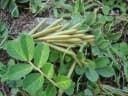
Indigofera hendecaphylla
Indigofera hendecaphylla
Family: Fabaceae
Cultivation
Indigofera hendecaphylla is a plant mainly of the tropical lowlands, where it thrives at elevations below 700 metres, though can also be found ascending to about 2,500 metres. It grows best in areas with a mean annual temperature of 16 - 27°c and a mean annual rainfall in the range 600 - 1,500mm, but may also be found in wetter locations receiving up to 4,000mm. In cultivation, the plant is fairly resistant to drought and shade.
Full cultivation guide →Indigofera heterantha
Indigofera heterantha
Family: Fabaceae
Cultivation
Indigofera heterantha is a moderately hardy plant and, although top growth can be cut back by temperatures around -5 to -10°c, the rootstock is rather hardier and will usually be alright at temperatures down to about -15°c. Plants will usually resprout from the base if they are cut back by winter cold. Plants grow best in hot seasons with abundant sunshine, not flowering so freely in cool climates.
Full cultivation guide →
Indigofera hirsuta
Indigofera hirsuta
Family: Fabaceae
Cultivation
A plant of the moist tropics, where it is found at elevations up to 1,350 metres. It grows best in areas where annual daytime temperatures are within the range 22 - 30°c, but can tolerate 13 - 34°c. It is intolerant of frost.
Full cultivation guide →Indigofera intricata
Indigofera intricata
Family: Fabaceae
Cultivation
Indigofera species generally grow best in a sunny position, preferring a well-drained but moist soil. Many of the species will also succeed in drier conditions and in poor soils. We have seen no specific information for this species, but most members of the genus have a symbiotic relationship with certain soil bacteria; these bacteria form nodules on the roots and fix atmospheric nitrogen.
Full cultivation guide →Indigofera kirilowii
Indigofera kirilowii
Family: Fabaceae
Cultivation
Indigofera kirilowii is a moderately hardy plant and, although top growth can be cut back by temperatures around -5 to -10°c, the rootstock is hardier and will usually be alright at temperatures down to about -20°c. Plants will usually resprout from the base if they are cut back by winter cold. Requires a light or medium well-drained soil and a sunny position.
Full cultivation guide →Indigofera leptoclada
Indigofera leptoclada
Family: Fabaceae
Cultivation
Indigoera species generally grow best in a sunny position, preferring a well-drained but moist soil. Many of the species will also succeed in drier conditions and in poor soils. We have seen no specific information for this species, but most members of the genus have a symbiotic relationship with certain soil bacteria; these bacteria form nodules on the roots and fix atmospheric nitrogen.
Full cultivation guide →
Indigofera lespedezioides
Indigofera lespedezioides
Family: Fabaceae
Cultivation
Indigofera species generally grow best in a sunny position, preferring a well-drained but moist soil. Many of the species will also succeed in drier conditions and in poor soils. There are conflicting reports on whether or not this tree has a symbiotic relationship with certain soil bacteria, so it is unclear as to whether this tree fixes atmospheric nitrogen.
Full cultivation guide →Indigofera leucoclada
Indigofera leucoclada
Family: Fabaceae
Cultivation
Found in the wild on sand or limestone soils and on inselbergs. Indigofera species generally grow best in a sunny position, preferring a well-drained but moist soil. Many of the species will also succeed in drier conditions and in poor soils.
Full cultivation guide →Indigofera linifolia
Indigofera linifolia
Family: Fabaceae
Cultivation
Indigofera species generally grow best in a sunny position, preferring a well-drained but moist soil. Many of the species will also succeed in drier conditions and in poor soils. The plant is considered to be an agricultural weed.
Full cultivation guide →Indigofera linnaei
Indigofera linnaei
Family: Fabaceae
Cultivation
Indigofera species generally grow best in a sunny position, preferring a well-drained but moist soil. Many of the species will also succeed in drier conditions and in poor soils. This species has a symbiotic relationship with certain soil bacteria; these bacteria form nodules on the roots and fix atmospheric nitrogen.
Full cultivation guide →Indigofera longiracemosa
Indigofera longiracemosa
Family: Fabaceae
Cultivation
A plant of lowland areas in the tropics, where it can be found wild at elevations up to 200 metres. In Indonesia it is cultivated at alevations around 1,650 metres because it is attacked by pests at lower elevations. The plant grows wild in areas where the mean annual rainfall is in the range 1,000 - 1,500mm.
Full cultivation guide →Indigofera macrocalyx
Indigofera macrocalyx
Family: Fabaceae
Cultivation
Indigoera species generally grow best in a sunny position, preferring a well-drained but moist soil. Many of the species will also succeed in drier conditions and in poor soils. We have seen no specific information for this species, but most members of the genus have a symbiotic relationship with certain soil bacteria; these bacteria form nodules on the roots and fix atmospheric nitrogen.
Full cultivation guide →Indigofera macrophylla
Indigofera macrophylla
Family: Fabaceae
Cultivation
Indigofera species generally grow best in a sunny position, preferring a well-drained but moist soil. Many of the species will also succeed in drier conditions and in poor soils. Unlike most species in this genus, this taxon does not fix atmospheric nitrogen.
Full cultivation guide →Indigofera microcarpa
Indigofera microcarpa
Family: Fabaceae
Cultivation
Indigoera species generally grow best in a sunny position, preferring a well-drained but moist soil. Many of the species will also succeed in drier conditions and in poor soils. This species has a symbiotic relationship with certain soil bacteria; these bacteria form nodules on the roots and fix atmospheric nitrogen.
Full cultivation guide →Indigofera nigritana
Indigofera nigritana
Family: Fabaceae
Cultivation
Indigoera species generally grow best in a sunny position, preferring a well-drained but moist soil. Many of the species will also succeed in drier conditions and in poor soils. We have seen no specific information for this species, but most members of the genus have a symbiotic relationship with certain soil bacteria; these bacteria form nodules on the roots and fix atmospheric nitrogen.
Full cultivation guide →Indigofera oblongifolia
Indigofera oblongifolia
Family: Fabaceae
Cultivation
Found on a variety of soils in the wild from black clays to sands. Indigofera species generally grow best in a sunny position, preferring a well-drained but moist soil. Many of the species will also succeed in drier conditions and in poor soils.
Full cultivation guide →Indigofera paniculata
Indigofera paniculata
Family: Fabaceae
Cultivation
Indigoera species generally grow best in a sunny position, preferring a well-drained but moist soil. Many of the species will also succeed in drier conditions and in poor soils. This species has a symbiotic relationship with certain soil bacteria; these bacteria form nodules on the roots and fix atmospheric nitrogen.
Full cultivation guide →Indigofera pulchra
Indigofera pulchra
Family: Fabaceae
Cultivation
Indigoera species generally grow best in a sunny position, preferring a well-drained but moist soil. Many of the species will also succeed in drier conditions and in poor soils. This species has a symbiotic relationship with certain soil bacteria; these bacteria form nodules on the roots and fix atmospheric nitrogen.
Full cultivation guide →Indigofera rhynchocarpa
Indigofera rhynchocarpa
Family: Fabaceae
Cultivation
Indigoera species generally grow best in a sunny position, preferring a well-drained but moist soil. Many of the species will also succeed in drier conditions and in poor soils. This species has a symbiotic relationship with certain soil bacteria; these bacteria form nodules on the roots and fix atmospheric nitrogen.
Full cultivation guide →Indigofera scarciesii
Indigofera scarciesii
Family: Fabaceae
Cultivation
Indigoera species generally grow best in a sunny position, preferring a well-drained but moist soil. Many of the species will also succeed in drier conditions and in poor soils. We have seen no specific information for this species, but most members of the genus have a symbiotic relationship with certain soil bacteria; these bacteria form nodules on the roots and fix atmospheric nitrogen.
Full cultivation guide →Indigofera spicata
Indigofera spicata
Family: Fabaceae
Cultivation
Indigofera spicata is widespread in the tropical regions of Africa, where it tends to avoid areas of higher rainfall; it can be found at elevations up to 2,700 metres. It grows best in areas where annual daytime temperatures are within the range 22 - 30°c, but can tolerate 13 - 36°c. It is not tolerant of frost.
Full cultivation guide →Indigofera stachyodes
Indigofera stachyodes
Family: Fabaceae
Cultivation
Indigoera species generally grow best in a sunny position, preferring a well-drained but moist soil. Many of the species will also succeed in drier conditions and in poor soils. We have seen no specific information for this species, but most members of the genus have a symbiotic relationship with certain soil bacteria; these bacteria form nodules on the roots and fix atmospheric nitrogen.
Full cultivation guide →Indigofera stenophylla
Indigofera stenophylla
Family: Fabaceae
Cultivation
Indigoera species generally grow best in a sunny position, preferring a well-drained but moist soil. Many of the species will also succeed in drier conditions and in poor soils. This species has a symbiotic relationship with certain soil bacteria; these bacteria form nodules on the roots and fix atmospheric nitrogen.
Full cultivation guide →
Indigofera suffruticosa
Indigofera suffruticosa
Family: Fabaceae
Cultivation
Indigofera suffruticosa succeeds in tropical and subtropical climates, growing best where the mean annual temperature is wirthin the range 15 - 27°c. Plants are not frost resistant according to one report, whilst another says that occasional light frosts are tolerated. Prefers a mean annual rainfall in the range 700 - 4,000mm.
Full cultivation guide →Indigofera taborensis
Indigofera taborensis
Family: Fabaceae
Cultivation
The plant is found in the wild on sandy soils and also in disturbed sites such as railways and old cultivations. Indigofera species generally grow best in a sunny position, preferring a well-drained but moist soil. Many of the species will also succeed in drier conditions and in poor soils.
Full cultivation guide →Indigofera tetrasperma
Indigofera tetrasperma
Family: Fabaceae
Cultivation
Indigoera species generally grow best in a sunny position, preferring a well-drained but moist soil. Many of the species will also succeed in drier conditions and in poor soils. This species is often confused with Indigofera simplicifolia, but differs in its hairs on the upper surface of leaf which are dense, set at an angle of 80-90° with the midrid.
Full cultivation guide →
Indigofera tinctoria
Indigofera tinctoria
Family: Fabaceae
Cultivation
Indigofera tinctoria is a plant of the tropics and subtropics, where it is found at elevations up to 1,600 metres. It grows best in areas where annual daytime temperatures are within the range 22 - 28°c, but can tolerate 7 - 32°c. It prefers a mean annual rainfall in the range 1,300 - 1,700mm, but tolerates 640 - 3,000mm.
Full cultivation guide →Indigofera trifoliata
Indigofera trifoliata
Family: Fabaceae
Cultivation
Indigofera species generally grow best in a sunny position, preferring a well-drained but moist soil. Many of the species will also succeed in drier conditions and in poor soils. This species has a symbiotic relationship with certain soil bacteria; these bacteria form nodules on the roots and fix atmospheric nitrogen.
Full cultivation guide →Indigofera trita
Indigofera trita
Family: Fabaceae
Cultivation
Indigofera trita is a very widespread species in the tropics, where it can be found in a range of climates from deserts with less than 430mm of mean annual rainfall, through savannah to tropical monsoon climate. Found in the wild on cracking clay, rich loamy or sandy soils on open plains or amongst rocks of various types Indigofera trita behaves as a weed on disturbed ground and is often invasive even in areas within its native distribution range. The species is included in the Global Compendium of Weeds, and it is also listed as invasive in India and as a weedy species in areas of Africa and Australia.
Full cultivation guide →Indigofera zollingeriana
Indigofera zollingeriana
Family: Fabaceae
Cultivation
Indigofera species generally grow best in a sunny position, preferring a well-drained but moist soil. Many of the species will also succeed in drier conditions and in poor soils. This species has a symbiotic relationship with certain soil bacteria; these bacteria form nodules on the roots and fix atmospheric nitrogen.
Full cultivation guide →