Gigantochloa — 20 species
Botanical species in the genus Gigantochloa recorded in the PlantPeers database.

Gigantochloa achmadii
Gigantochloa achmadii
Family: Poaceae
Cultivation
Bamboos have an interesting method of growth. Each plant produces a number of new stems annually - these stems grow to their maximum height in their first year of growth, subsequent growth in the stem being limited to the production of new side branches and leaves. In the case of some mature tropical species the new stem could be as much as 30 metres tall, with daily increases in height of 30cm or more during their peak growth time.
Full cultivation guide →
Gigantochloa albociliata
Gigantochloa albociliata
Family: Poaceae
Cultivation
Gigantochloa albociliata grows naturally in the dry tropical mixed forest at low to medium elevations. It is found in areas where the mean annual rainfall is in the range of 800 - 1,300mm, and the mean annual temperature is around 28°c. Succeeds in well-drained soils of poor to medium fertility.
Full cultivation guide →
Gigantochloa apus
Gigantochloa apus
Family: Poaceae
Cultivation
Prefers growing in the tropical humid low-lands, but also occurs on hill slopes at elevations up to 1,500 metres. Grows well in clay soils. When growing in drier areas, the culms remain smaller.
Full cultivation guide →
Gigantochloa atroviolacea
Gigantochloa atroviolacea
Family: Poaceae
Cultivation
Grows well in the perhumid lowland tropics, with an annual rainfall of 1,500 - 3,700 mm, relative humidity of over 70% and average temperature of 20 - 32°c. In Java it occurs mostly on red and reddish-brown latosols and lateritic soils, but it prefers drier limestone soils. In dry areas the purplish colour of the culms is more prominent.
Full cultivation guide →
Gigantochloa atter
Gigantochloa atter
Family: Poaceae
Cultivation
A plant of low to medium elevations in the tropics succeeding at elevations up to 1,400 metres. It thrives in moister areas with an annual rainfall of more than 2,500 mm, but unlike many other members of the genus, it also tolerates drier environments with an annual rainfall as low as 1,000 mm. Prefers latosols, but can be grown also on alluvial, limestone, and sandy loam soils.
Full cultivation guide →Gigantochloa balui
Gigantochloa balui
Family: Poaceae
Cultivation
The plant appears to grow best on rich alluvial sites, especially near rivers, and also establishes well in secondary forest. The plant usually grows in tight clumps to the exclusion of most other plants. This is partly due to the accumulation of much siliceous leaf litter on the ground, which decays only slowly and prevents effective establishment of other plants.
Full cultivation guide →Gigantochloa hasskarliana
Gigantochloa hasskarliana
Family: Poaceae
Cultivation
A plant of the lowland tropics, though it can be found at elevations up to 1,500 metres. It prefers humid conditions. Bamboos have an interesting method of growth.
Full cultivation guide →Gigantochloa levis
Gigantochloa levis
Family: Poaceae
Cultivation
Grows reasonably well on a large range of sites, except where the soil is too sandy or too dry. Five year old plants in a plantation started from cuttings each yielded an average of 9.4 culms around 10.4 metres tall and 11cm in diameter. The average number of young shoots produced by the plants the plants was around 6, which increased to 10 - 15 in their tenth year.
Full cultivation guide →
Gigantochloa ligulata
Gigantochloa ligulata
Family: Poaceae
Cultivation
The plant is found mainly on sandy soils in the wild. A mature clump usually contains 30 - 40 culms (though this can range from 15 - 70), and usually produces 13 - 15 young shoots per year. Bamboos have an interesting method of growth.
Full cultivation guide →
Gigantochloa macrostachya
Gigantochloa macrostachya
Family: Poaceae
Cultivation
Bamboos have an interesting method of growth. Each plant produces a number of new stems annually - these stems grow to their maximum height in their first year of growth, subsequent growth in the stem being limited to the production of new side branches and leaves. In the case of some mature tropical species the new stem could be as much as 30 metres tall, with daily increases in height of 30cm or more during their peak growth time.
Full cultivation guide →Gigantochloa manggong
Gigantochloa manggong
Family: Poaceae
Cultivation
Gigantochloa manggong is a plant of tropical climates where it is found at elevations up to 1,500 metres. It grows in areas where the mean annual rainfall is around 1,400 mm. Plants raised from rhizome cuttings develop one shoot in the first year.
Full cultivation guide →
Gigantochloa nigrociliata
Gigantochloa nigrociliata
Family: Poaceae
Cultivation
A plant of the humid tropics, where it can be found at elevations up to 1,400 metres. It is found in areas with an mean annual rainfall in excess of 3,000mm. It grows well on latosols.
Full cultivation guide →Gigantochloa pruriens
Gigantochloa pruriens
Family: Poaceae
Cultivation
Bamboos have an interesting method of growth. Each plant produces a number of new stems annually - these stems grow to their maximum height in their first year of growth, subsequent growth in the stem being limited to the production of new side branches and leaves. In the case of some mature tropical species the new stem could be as much as 30 metres tall, with daily increases in height of 30cm or more during their peak growth time.
Full cultivation guide →
Gigantochloa ridleyi
Gigantochloa ridleyi
Family: Poaceae
Cultivation
Bamboos have an interesting method of growth. Each plant produces a number of new stems annually - these stems grow to their maximum height in their first year of growth, subsequent growth in the stem being limited to the production of new side branches and leaves. In the case of some mature tropical species the new stem could be as much as 30 metres tall, with daily increases in height of 30cm or more during their peak growth time.
Full cultivation guide →Gigantochloa robusta
Gigantochloa robusta
Family: Poaceae
Cultivation
This species grows in the perhumid tropics, where it is found at elevations from sea-level up to 1,500 metres. It is found in areas with an average annual rainfall of around 2,350 - 4,200 mm, temperatures of 20 - 32°c, and a relative humidity of over 70%. The plant normally grows on latosols (soils rich in iron and aluminium).
Full cultivation guide →Gigantochloa rostrata
Gigantochloa rostrata
Family: Poaceae
Cultivation
Good growth of this species is observed in brown forest soils having less oxides and also in lighter textured soils in areas of high rainfall. A three year felling cycle has been generally recommended for the species. Bamboos have an interesting method of growth.
Full cultivation guide →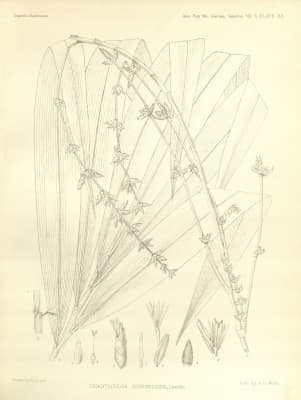
Gigantochloa scortechinii
Gigantochloa scortechinii
Family: Poaceae
Cultivation
A plant of the moist tropics, where it can be found at elevations up to 1,000 metres. The plant grows wild in areas where the mean annual maximum temperature is about 32°c; the mean minimum temperature 22°c; and mean annual rainfall is about 2,500mm, quite evenly distributed over the year. The plant will grow in any soil type, but does best on sandy loams with good drainage and a pH in the range 5.0 - 6.5.
Full cultivation guide →Gigantochloa thoi
Gigantochloa thoi
Family: Poaceae
Cultivation
A plant of the moist, tropical lowlands. Young shoots mainly develop during the rainy season. Bamboos have an interesting method of growth.
Full cultivation guide →
Gigantochloa verticillata
Gigantochloa verticillata
Family: Poaceae
Cultivation
A plant of the perhumid tropics growing at elevations from sea-level up to about 1,200 metres. It is found in areas with an annual rainfall in the range of 2,350 - 4,200 mm, an average temperature of 20 - 32°c and average relative humidity of over 70%. In Indonesia (West Java), the culms grown on hill slopes ( at elevations of 500 metres with an annual rainfall of around 4,200 mm) are stronger (higher specific gravity, bending and tensile strength) than culms grown in valleys.
Full cultivation guide →Gigantochloa wrayi
Gigantochloa wrayi
Family: Poaceae
Cultivation
The plant establishes naturally on poor clayey soils but does not produce as large culms as when it grows on alluvial soils. Nevertheless in many wasteland areas it can establish as whole stands, mixed with secondary-forest trees and also with Gigantochloa scortechinii and sometimes Schizostachyum grande Ridley. In such dense stands, its leaf litter accumulates on the ground and appears to prevent effective establishment of other plants.
Full cultivation guide →