Crotalaria — 45 species
Botanical species in the genus Crotalaria recorded in the PlantPeers database.

Crotalaria aculeata
Crotalaria aculeata
Family: Fabaceae
Cultivation
Plants in this genus generally prefer a sunny position, succeeding in dry to moist, well-drained soils. We have no specific report for this species, but most species in this genus have a symbiotic relationship with certain soil bacteria; these bacteria form nodules on the roots and fix atmospheric nitrogen. Some of this nitrogen is utilized by the growing plant but some can also be used by other plants growing nearby.
Full cultivation guide →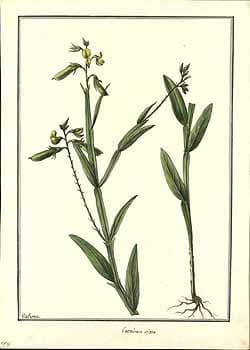
Crotalaria alata
Crotalaria alata
Family: Fabaceae
Cultivation
The plant is found in areas with a pronounced monsoonal climate, growing mainly at low elevations, but also ascending to 1,500 metres. Plants in this genus generally prefer a sunny position, succeeding in dry to moist, well-drained soils. The plant is tolerant of shade.
Full cultivation guide →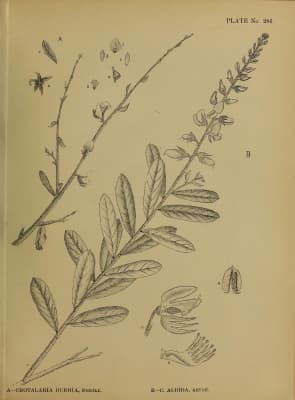
Crotalaria albida
Crotalaria albida
Family: Fabaceae
Cultivation
Annual and short-lived perennial plants in this genus generally gow best in a sunny position, succeeding in most dry to moist, well-drained soils. This species has a symbiotic relationship with certain soil bacteria; these bacteria form nodules on the roots and fix atmospheric nitrogen. Some of this nitrogen is utilized by the growing plant but some can also be used by other plants growing nearby.
Full cultivation guide →Crotalaria assamica
Crotalaria assamica
Family: Fabaceae
Cultivation
Species in this genus generally thrive in a wide range of well-drained soils and a sunny position. This species has a symbiotic relationship with certain soil bacteria; these bacteria form nodules on the roots and fix atmospheric nitrogen. Some of this nitrogen is utilized by the growing plant but some can also be used by other plants growing nearby.
Full cultivation guide →Crotalaria beddomeana
Crotalaria beddomeana
Family: Fabaceae
Cultivation
Species in this genus generally thrive in a wide range of well-drained soils and a sunny position. This species has at times been misidentified as Crotalaria semperflorens Vent. We have no specific report for this species, but most species in this genus have a symbiotic relationship with certain soil bacteria; these bacteria form nodules on the roots and fix atmospheric nitrogen.
Full cultivation guide →Crotalaria berteroana
Crotalaria berteroana
Family: Fabaceae
Cultivation
Plants in this genus generally prefer a sunny position, succeeding in dry to moist, well-drained soils. We have no specific report for this species, but most species in this genus have a symbiotic relationship with certain soil bacteria; these bacteria form nodules on the roots and fix atmospheric nitrogen. Some of this nitrogen is utilized by the growing plant but some can also be used by other plants growing nearby.
Full cultivation guide →
Crotalaria brevidens
Crotalaria brevidens
Family: Fabaceae
Cultivation
A plant of the tropics, where it is found at elevations up to 2,700 metres. It grows best in areas where annual daytime temperatures are within the range 16 - 26°c, but can tolerate 12 - 30°c. Dormant plants can be killed by temperatures of -2°c or lower, though new growth is damaged at -1°c.
Full cultivation guide →Crotalaria burhia
Crotalaria burhia
Family: Fabaceae
Cultivation
Crotalaria burhia is native to the semi-arid regions of Iran, Afghanistan, Pakistan and northern India. It experiences hot dry conditions in the growing season and can experience frost and snow in part of its range. Requires a sunny position in a well-drained soil.
Full cultivation guide →
Crotalaria cajanifolia
Crotalaria cajanifolia
Family: Fabaceae
Cultivation
Plants in this genus generally prefer a sunny position, succeeding in dry to moist, well-drained soils. We have no specific report for this species, but most species in this genus have a symbiotic relationship with certain soil bacteria; these bacteria form nodules on the roots and fix atmospheric nitrogen. Some of this nitrogen is utilized by the growing plant but some can also be used by other plants growing nearby.
Full cultivation guide →Crotalaria calycina
Crotalaria calycina
Family: Fabaceae
Cultivation
Annual and short-lived perennial plants in this genus generally gow best in a sunny position, succeeding in most dry to moist, well-drained soils. We have no specific report for this species, but most species in this genus have a symbiotic relationship with certain soil bacteria; these bacteria form nodules on the roots and fix atmospheric nitrogen. Some of this nitrogen is utilized by the growing plant but some can also be used by other plants growing nearby.
Full cultivation guide →Crotalaria cobalticola
Crotalaria cobalticola
Family: Fabaceae
Cultivation
Annual and short-lived perennial plants in this genus generally gow best in a sunny position, succeeding in most dry to moist, well-drained soils. We have no specific report for this species, but most species in this genus have a symbiotic relationship with certain soil bacteria; these bacteria form nodules on the roots and fix atmospheric nitrogen. Some of this nitrogen is utilized by the growing plant but some can also be used by other plants growing nearby.
Full cultivation guide →Crotalaria coursii
Crotalaria coursii
Family: Fabaceae
Cultivation
Annual and short-lived perennial plants in this genus generally gow best in a sunny position, succeeding in most dry to moist, well-drained soils. We have no specific report for this species, but most species in this genus have a symbiotic relationship with certain soil bacteria; these bacteria form nodules on the roots and fix atmospheric nitrogen. Some of this nitrogen is utilized by the growing plant but some can also be used by other plants growing nearby.
Full cultivation guide →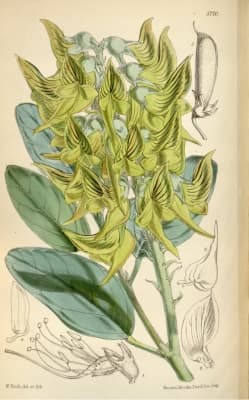
Crotalaria cunninghamii
Crotalaria cunninghamii
Family: Fabaceae
Cultivation
Crotalaria cunninghamii is a plant of arid and semi-arid regions of Australia from the warm temperate zone to the tropics. Requires a sunny position and a well-drained soil, growing in the wild on sandy soils. This species has a symbiotic relationship with certain soil bacteria; these bacteria form nodules on the roots and fix atmospheric nitrogen.
Full cultivation guide →Crotalaria decaryana
Crotalaria decaryana
Family: Fabaceae
Cultivation
Plants in this genus generally prefer a sunny position, succeeding in dry to moist, well-drained soils. We have no specific report for this species, but most species in this genus have a symbiotic relationship with certain soil bacteria; these bacteria form nodules on the roots and fix atmospheric nitrogen. Some of this nitrogen is utilized by the growing plant but some can also be used by other plants growing nearby.
Full cultivation guide →Crotalaria ferruginea
Crotalaria ferruginea
Family: Fabaceae
Cultivation
Plants in this genus generally prefer a sunny position, succeeding in dry to moist, well-drained soils. This species has a symbiotic relationship with certain soil bacteria; these bacteria form nodules on the roots and fix atmospheric nitrogen. Some of this nitrogen is utilized by the growing plant but some can also be used by other plants growing nearby.
Full cultivation guide →
Crotalaria glauca
Crotalaria glauca
Family: Fabaceae
Cultivation
Growing at low to medium elevations in the moist to drier tropics. Plants in this genus generally prefer a sunny position, succeeding in dry to moist, well-drained soils. A highly variable species in habit.
Full cultivation guide →
Crotalaria goodiiformis
Crotalaria goodiiformis
Family: Fabaceae
Cultivation
Plants in this genus generally prefer a sunny position, succeeding in dry to moist, well-drained soils. Prefers a position in some shade. The plant responds well to coppicing, especially when planted in some shade.
Full cultivation guide →
Crotalaria goreensis
Crotalaria goreensis
Family: Fabaceae
Cultivation
Plants in this genus generally prefer a sunny position, succeeding in dry to moist, well-drained soils. The plant readily invades disturbed areas and prevents the regeneration of native species. Seed is dispersed in contaminated pasture seed and fodder, as well as by machinery, vehicles and water.
Full cultivation guide →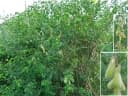
Crotalaria incana
Crotalaria incana
Family: Fabaceae
Cultivation
Plants in this genus generally prefer a sunny position, succeeding in dry to moist, well-drained soils. The plan has often escaped from cultivation - it is naturalized in disturbed areas such as roadsides, pastures, and agricultural fields in Hawaii, and t is found as a weed in oil-palm and rubber plantations in southeast Asia. Cultivation of the plant was discontinued in Bogor, Indonesia, because it was attacked by insects.
Full cultivation guide →
Crotalaria juncea
Crotalaria juncea
Family: Fabaceae
Cultivation
Sunn hemp is often cultivated in the dry to moist tropics and subtropics, where it can be grown at elevations up to 1,500 metres. It grows best in areas where annual daytime temperatures are within the range 20 - 30°c, but can tolerate 4 - 40°c. Mature plants can be killed by temperatures of -2°c or lower, whilst young growth will be severely damaged at -1°c.
Full cultivation guide →Crotalaria karagwensis
Crotalaria karagwensis
Family: Fabaceae
Cultivation
Annual and short-lived perennial plants in this genus generally grow best in a sunny position, succeeding in most dry to moist, well-drained soils. We have no specific report for this species, but most species in this genus have a symbiotic relationship with certain soil bacteria; these bacteria form nodules on the roots and fix atmospheric nitrogen. Some of this nitrogen is utilized by the growing plant but some can also be used by other plants growing nearby.
Full cultivation guide →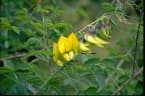
Crotalaria laburnifolia
Crotalaria laburnifolia
Family: Fabaceae
Cultivation
Grows best in a sunny position. Succeeds in most well-drained soils, preferring moist but tolerating fairly dry conditions. Light pruning can maintain a good shape for ornamental use and also enhance flowering.
Full cultivation guide →Crotalaria lachnophora
Crotalaria lachnophora
Family: Fabaceae
Cultivation
A plant of the drier to moist tropics, avoiding the wetter regions, and found at elevations from 750 - 1,650 metres. In Nigeria it is found in areas where the mean annual rainfall is within the range 500 - 1,300mm. Plants in this genus generally prefer a sunny position, succeeding in dry to moist, well-drained soils.
Full cultivation guide →Crotalaria lanceolata
Crotalaria lanceolata
Family: Fabaceae
Cultivation
Crotalaria lanceolata is a plant of the moist tropics, where it is found at elevations up to 2,150 metres. It grows best in areas where annual daytime temperatures are within the range 20 - 28°c, but can tolerate 9 - 32°c. When dormant, the plant can survive temperatures down to about -2°c, but young growth is more tender and can be severely damaged at -1°c.
Full cultivation guide →
Crotalaria longirostrata
Crotalaria longirostrata
Family: Fabaceae
Cultivation
Plants in this genus generally prefer a sunny position, succeeding in dry to moist, well-drained soils. The plant has been known to escape from cultivaion - it is recorded as 'Invasive' in Hawaii. This species has a symbiotic relationship with certain soil bacteria, these bacteria form nodules on the roots and fix atmospheric nitrogen.
Full cultivation guide →
Crotalaria macrocalyx
Crotalaria macrocalyx
Family: Fabaceae
Cultivation
Found in the wild on clay soils. The plant grows wild on sandy and gravelly soils. We have no specific report for this species, but most species in this genus have a symbiotic relationship with certain soil bacteria; these bacteria form nodules on the roots and fix atmospheric nitrogen.
Full cultivation guide →Crotalaria medicaginea
Crotalaria medicaginea
Family: Fabaceae
Cultivation
Species in this genus generally thrive in a wide range of well-drained soils and a sunny position. This species has a symbiotic relationship with certain soil bacteria; these bacteria form nodules on the roots and fix atmospheric nitrogen. Some of this nitrogen is utilized by the growing plant but some can also be used by other plants growing nearby.
Full cultivation guide →
Crotalaria micans
Crotalaria micans
Family: Fabaceae
Cultivation
Succeeds in the tropics and subtropics at elevations ranging from sea level to 2,600 metres, but grows best at lower elevations. Tolerates a wide range of climatic and soil conditions It is well suited to damp places. It grows in lowland areas generally and requires a position in full sunlight.
Full cultivation guide →
Crotalaria natalitia
Crotalaria natalitia
Family: Fabaceae
Cultivation
Plants in this genus generally prefer a sunny position, succeeding in dry to moist, well-drained soils. This species has a symbiotic relationship with certain soil bacteria; these bacteria form nodules on the roots and fix atmospheric nitrogen. Some of this nitrogen is utilized by the growing plant but some can also be used by other plants growing nearby.
Full cultivation guide →
Crotalaria ochroleuca
Crotalaria ochroleuca
Family: Fabaceae
Cultivation
Plants in this genus generally prefer a sunny position, succeeding in dry to moist, well-drained soils. Plant growth is favoured by warm conditions, and after the crop is well established and has formed long taproots and long lateral roots, it can tolerate rather dry conditions. In Africa, the most popular way of harvesting rattlepod as a vegetable is by uprooting the whole plant just before flowering when the stems are about 40 cm tall and 8 weeks old.
Full cultivation guide →
Crotalaria pallida
Crotalaria pallida
Family: Fabaceae
Cultivation
A plant of the lowland tropics and subtropics, where it has been successfully grown at elevations up to 1,800 metres. It grows in a wide range of annual rainfall conditions, from 850 mm to over 3,000 mm, and occurs occasionally in rather dry locations. The average annual temperature varies from 16 - 26°c.
Full cultivation guide →Crotalaria paulina
Crotalaria paulina
Family: Fabaceae
Cultivation
Species in this genus generally thrive in a wide range of well-drained soils and a sunny position. This species has a symbiotic relationship with certain soil bacteria; these bacteria form nodules on the roots and fix atmospheric nitrogen. Some of this nitrogen is utilized by the growing plant but some can also be used by other plants growing nearby.
Full cultivation guide →Crotalaria pilosa
Crotalaria pilosa
Family: Fabaceae
Cultivation
Annual and short-lived perennial plants in this genus generally grow best in a sunny position, succeeding in most dry to moist, well-drained soils. This species has a symbiotic relationship with certain soil bacteria; these bacteria form nodules on the roots and fix atmospheric nitrogen. Some of this nitrogen is utilized by the growing plant but some can also be used by other plants growing nearby.
Full cultivation guide →
Crotalaria prostrata
Crotalaria prostrata
Family: Fabaceae
Cultivation
Plants in this genus generally prefer a sunny position, succeeding in dry to moist, well-drained soils. This species has a symbiotic relationship with certain soil bacteria; these bacteria form nodules on the roots and fix atmospheric nitrogen. Some of this nitrogen is utilized by the growing plant but some can also be used by other plants growing nearby.
Full cultivation guide →
Crotalaria quinquefolia
Crotalaria quinquefolia
Family: Fabaceae
Cultivation
Plants in this genus generally prefer a sunny position, succeeding in dry to moist, well-drained soils. Grown as a green manure crop, the plant has escaped from cultivation in some areas. It is considered to be an aggressive weed in Fiji, where it is found along roadsides, in old fields and in waste ground.
Full cultivation guide →
Crotalaria retusa
Crotalaria retusa
Family: Fabaceae
Cultivation
Plants in this genus generally prefer a sunny position, succeeding in dry to moist, well-drained soils. Grown as a green manure, fibre crop and ornamental, the plant has escaped from cultivation and become naturalized in some areas. It is considered to be invasive in some areas - in Hawaii, for example, it is naturalized in disturbed sites such as roadsides, dump sites and urban areas.
Full cultivation guide →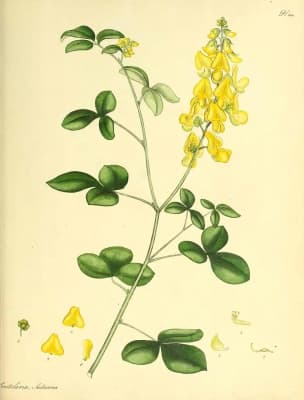
Crotalaria saltiana
Crotalaria saltiana
Family: Fabaceae
Cultivation
A plant of lowland tropical regions, growing in areas where there is a distinct dry season. Plants in this genus generally prefer a sunny position, succeeding in dry to moist, well-drained soils. This species has a symbiotic relationship with certain soil bacteria; these bacteria form nodules on the roots and fix atmospheric nitrogen.
Full cultivation guide →

Crotalaria spectabilis
Crotalaria spectabilis
Family: Fabaceae
Cultivation
A plant of the seasonal and wet tropics and subtropics, where it is found at elevations up to 1,500 metres. It grows best in areas where annual daytime temperatures are within the range 21 - 28°c, but can tolerate 9 - 32°c. When dormant, the plant can survive temperatures down to about -2°c, but young growth can be severely damaged at -1°c.
Full cultivation guide →Crotalaria tanety
Crotalaria tanety
Family: Fabaceae
Cultivation
Plants in this genus generally prefer a sunny position, succeeding in dry to moist, well-drained soils. We have no specific report for this species, but most species in this genus have a symbiotic relationship with certain soil bacteria; these bacteria form nodules on the roots and fix atmospheric nitrogen. Some of this nitrogen is utilized by the growing plant but some can also be used by other plants growing nearby.
Full cultivation guide →
Crotalaria tetragona
Crotalaria tetragona
Family: Fabaceae
Cultivation
Plants in this genus generally prefer a sunny position, succeeding in dry to moist, well-drained soils. This species has a symbiotic relationship with certain soil bacteria; these bacteria form nodules on the roots and fix atmospheric nitrogen. Some of this nitrogen is utilized by the growing plant but some can also be used by other plants growing nearby.
Full cultivation guide →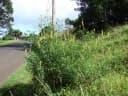
Crotalaria trichotoma
Crotalaria trichotoma
Family: Fabaceae
Cultivation
Plants in this genus generally prefer a sunny position, succeeding in dry to moist, well-drained soils. Succeeds on degraded and compacted soils. Established plants are fairly drought tolerant.
Full cultivation guide →Crotalaria uncinella
Crotalaria uncinella
Family: Fabaceae
Cultivation
Plants in this genus generally prefer a sunny position, succeeding in dry to moist, well-drained soils. We have no specific report for this species, but most species in this genus have a symbiotic relationship with certain soil bacteria; these bacteria form nodules on the roots and fix atmospheric nitrogen. Some of this nitrogen is utilized by the growing plant but some can also be used by other plants growing nearby.
Full cultivation guide →Crotalaria valetonii
Crotalaria valetonii
Family: Fabaceae
Cultivation
A plant of drier areas in the lowland tropics, it can also be grown in more humid areas. Grows best in a sunny position. Succeeds in dry and moist soils.
Full cultivation guide →
Crotalaria verrucosa
Crotalaria verrucosa
Family: Fabaceae
Cultivation
Plants in this genus generally prefer a sunny position, succeeding in dry to moist, well-drained soils. Plants can tolerate saline soils. The plant is a common weed throughout the tropics.
Full cultivation guide →