Brassica — 44 species
Botanical species in the genus Brassica recorded in the PlantPeers database.

Brassica balearica
Brassica balearica
Family: Brassicaceae
Cultivation
Succeeds in full sun in a well-drained fertile preferably alkaline soil. This species might be no more than a part of the polymorphic species Brassica cretica.
Full cultivation guide →
Brassica carinata
Brassica carinata
Family: Brassicaceae
Cultivation
Brassica carinata is very tolerant of a wide range of climatic conditions and can be grown from the temperate to tropical zones. In cool temperate it is only suitable as a leaf crop, but in other areas it can also be grown for its seed. It grows best in areas where annual daytime temperatures are within the range 10 - 25°c, but can tolerate 5 - 35°c.
Full cultivation guide →Brassica cretica
Brassica cretica
Family: Brassicaceae
Cultivation
Succeeds in full sun in a well-drained fertile preferably alkaline soil. This is a polymorphic species which is closely related to the wild cabbage, Brassica oleracea.
Full cultivation guide →Brassica elongata
Brassica elongata
Family: Brassicaceae
Cultivation
Succeeds in full sun in a well-drained fertile preferably alkaline soil. Succeeds in any reasonable soil.
Full cultivation guide →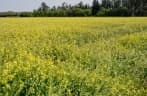
Brassica juncea
Brassica juncea
Family: Brassicaceae
Cultivation
Originating from the central Asian Himalayas to China, Brassica juncea has long been cultivated and many forms have been developed (see separate records). Plants can be grown in the tropical lowlands as well as in much cooler conditions. The plant is reported to tolerate a temperature range of 6 - 37°c and an annual precipitation of 500 - 4,000mm.
Full cultivation guide →
Brassica juncea integrifolia crispifolia
Brassica juncea integrifolia crispifolia
Family: Brassicaceae
Cultivation
A form of Brassica juncea with curled leaves that has been selected in the Orient for its edibility. There are some named varieties. Very hardy in cold weather, it is used more in temperate areas than in tropical ones.
Full cultivation guide →Brassica juncea integrifolia rugosa
Brassica juncea integrifolia rugosa
Family: Brassicaceae
Cultivation
Originating from the central Asian Himalayas to China, the plant has long been cultivated and many forms have been developed that can be grown from the temperate to the tropical zones. This form prefers a fairly high stable temperature and is well adapted to short day length. Succeeds in full sun in most well-drained moisture-retentive fertile soils.
Full cultivation guide →Brassica juncea integrifolia strumata
Brassica juncea integrifolia strumata
Family: Brassicaceae
Cultivation
Originating from the central Asian Himalayas to China, the plant has long been cultivated and many forms have been developed that can be grown from the temperate to the tropical zones. Plants are reasonably cold-tolerant. They prefer a fairly high stable temperature though they dislike very hot weather.
Full cultivation guide →Brassica juncea integrifolia subintegrifolia
Brassica juncea integrifolia subintegrifolia
Family: Brassicaceae
Cultivation
Originating from the central Asian Himalayas to China, leaf mustardt has long been cultivated and many forms have been developed that can be grown from the temperate to the tropical zones. The plants in this group are fairly cold-tolerant. Succeeds in full sun in most well-drained moisture-retentive fertile soils.
Full cultivation guide →Brassica juncea napiformis
Brassica juncea napiformis
Family: Brassicaceae
Cultivation
Originating from the central Asian Himalayas to China, the plant has long been cultivated and many forms have been developed that can be grown from the temperate to the tropical zones. This form is fairly hardy, surviving temperatures down to at least -4°c. Succeeds in full sun in most well-drained moisture-retentive fertile soils.
Full cultivation guide →Brassica juncea tsatsai multiceps
Brassica juncea tsatsai multiceps
Family: Brassicaceae
Cultivation
Originating from the central Asian Himalayas to China, the plant has long been cultivated and many forms have been developed that can be grown from the temperate to the tropical zones. Plants prefer a fairly high stable temperature and are well adapted to short day length. Many cultivars are best grown in warm temperate to subtropical and tropical climates, though there are several cultivars that grow well in cooler temperate regions.
Full cultivation guide →
Brassica juncea tsatsai tumida
Brassica juncea tsatsai tumida
Family: Brassicaceae
Cultivation
Originating from the central Asian Himalayas to China, the plant has long been cultivated and many forms have been developed that can be grown from the temperate to the tropical zones. Plants are reasonably cold-tolerant. They prefer a fairly high stable temperature and are well adapted to short day length.
Full cultivation guide →Brassica napus
Brassica napus
Family: Brassicaceae
Cultivation
Brassica napus is a plant of the temperate zone, much cultivated in temperate regions and also in the subtropics and sometimes at higher elevations in the tropics. Succeeds in full sun in a well-drained fertile preferably alkaline soil. Succeeds in any reasonable soil.
Full cultivation guide →Brassica napus napus
Brassica napus napus
Family: Brassicaceae
Cultivation
Oilseed rape is a plant of the temperate zone, where it is found mainly at low elevations but also ascending up to 2,000 metres - it can also be cultivated at higher elevations from 1,500 - 2,200 metres in the tropics. It grows best in areas where annual daytime temperatures are within the range 15 - 25°c, but can tolerate 5 - 41°c. When dormant, the plant can survive temperatures down to about -15°c, but young growth can be severely damaged at -6°c.
Full cultivation guide →Brassica napus pabularia
Brassica napus pabularia
Family: Brassicaceae
Cultivation
Very young plants are susceptible to cold damage, -4°c either killing or injuring seedlings, whereas -2°c has no affect when the plants are more than one month old. Succeeds in full sun in a well-drained fertile preferably alkaline soil. Succeeds in any reasonable soil.
Full cultivation guide →Brassica napus rapifera
Brassica napus rapifera
Family: Brassicaceae
Cultivation
The swede is much cultivated in the temperate to subtropical zones. It grows best in areas where annual daytime temperatures are within the range 14 - 24°c, but can tolerate 5 - 35°c. When dormant, the plant can survive temperatures down to several degrees below freezing, but young growth can be severely damaged at -1°c.
Full cultivation guide →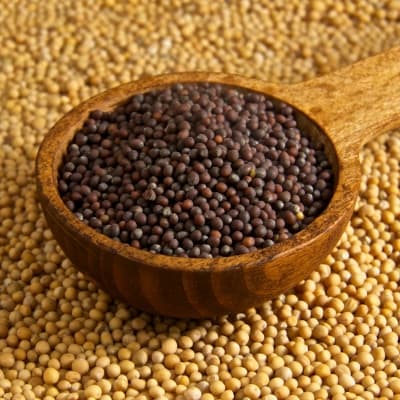
Brassica nigra
Brassica nigra
Family: Brassicaceae
Cultivation
Black mustard is adapted to a wide variety of climatic conditions. It is usually grown in the temperate and subtropical zones, being unsuited to wet tropical lowland areas but is able to be grown as a rainfed crop in tropical areas of low or moderate rainfall. The plant tolerates an annual precipitation of 300 - 1,700mm, an annual average temperature range of 6 to 27°c.
Full cultivation guide →Brassica oleracea
Brassica oleracea
Family: Brassicaceae
Cultivation
The wild cabbage is native to coastal regions of western Europe and the Mediterranean. An easily grown plant, it succeeds in full sun in any reasonable soil, though it prefers a well-drained fertile preferably alkaline soil. It does well in heavy clay soils.
Full cultivation guide →Brassica oleracea alboglabra
Brassica oleracea alboglabra
Family: Brassicaceae
Cultivation
Plants tolerate several degrees of frost once they are past the seedling stage. They also tolerate higher summer temperatures than most members of this genus. Most cultivars have been developed in the warmer parts of China and are best suited to warmer conditions, including the tropics, though some forms have been developed that are more suitable for the cooler conditions found in cool to warm temperate areas.
Full cultivation guide →Brassica oleracea asparagoides
Brassica oleracea asparagoides
Family: Brassicaceae
Cultivation
Prefers a position in full sun in a well-drained fertile preferably alkaline soil. Prefers a heavy soil. Succeeds in any reasonable soil.
Full cultivation guide →Brassica oleracea botrytis
Brassica oleracea botrytis
Family: Brassicaceae
Cultivation
The cauliflower has been derived through cultivation in milder regions of the temperate zone, and can also be grown in the tropics, especially at higher elevations. It grows best in areas where annual daytime temperatures are within the range 10 - 25°c, but can tolerate 5 - 30°c. When dormant, the plant can survive temperatures down to about -5°c, but the curds can be severely damaged at -2°c.
Full cultivation guide →Brassica oleracea capitata
Brassica oleracea capitata
Family: Brassicaceae
Cultivation
The cultivated cabbage was developed in the temperate zone and can withstand quite cold winters. It can also be grown in the tropics - though there it is best grown at elevations above 800 metres. It grows best in areas where annual daytime temperatures are within the range 15 - 24°c, but can tolerate 7 - 32°c.
Full cultivation guide →Brassica oleracea costata
Brassica oleracea costata
Family: Brassicaceae
Cultivation
Couve tronchuda has been developed in cultivation in the temperate zone. It is fairly hardy, tolerating short-lived temperatures down to between -5 and -10°c. Succeeds in full sun in a well-drained fertile preferably alkaline soil.
Full cultivation guide →Brassica oleracea gemmifera
Brassica oleracea gemmifera
Family: Brassicaceae
Cultivation
Brussels sprouts have been developed in the temperate zone from the wild cabbage and are tolerant of quite cold winters. The plant grows best in areas where annual daytime temperatures are within the range 2 -20°c, but can tolerate 7 - 25°c. A daily variation in temperature is required, with night temperatures of 16°c or lower.
Full cultivation guide →Brassica oleracea gongylodes
Brassica oleracea gongylodes
Family: Brassicaceae
Cultivation
Kohl rabi originated through cultivation in the warm temperate zone, and can be grown from cool temperate regions to the tropics. It grows best in areas where annual daytime temperatures are within the range 12 - 18°c, but can tolerate 5 - 25°c. When dormant, the plant can survive temperatures down to about -2°c, but young growth can be severely damaged at -1°c.
Full cultivation guide →Brassica oleracea italica
Brassica oleracea italica
Family: Brassicaceae
Cultivation
Sprouting broccoli originated through cultivation in the temperate zone, where it can be found at elevations up to 2,000 metres. It grows best in areas where annual daytime temperatures are within the range 15 - 24°c, but can tolerate 3 - 35°c. When dormant, the plant can survive temperatures down to about -5°c, but young growth can be severely damaged at 1°c.
Full cultivation guide →Brassica oleracea medullosa
Brassica oleracea medullosa
Family: Brassicaceae
Cultivation
Marrow-stem kale is a very hardy plant, tolerating temperatures down to about -15°c. It also tolerates high summer temperatures. A very easily grown plant, succeeding in full sun in a well-drained fertile preferably alkaline soil.
Full cultivation guide →Brassica oleracea palmifolia
Brassica oleracea palmifolia
Family: Brassicaceae
Cultivation
Succeeds in full sun in a well-drained fertile preferably alkaline soil. Prefers a heavy soil. Succeeds in any reasonable soil.
Full cultivation guide →Brassica oleracea ramosa
Brassica oleracea ramosa
Family: Brassicaceae
Cultivation
Perpetual kale is a very hardy plant, tolerating temperatures down to about -15°c. It also tolerates high summer temperatures. A very easily grown plant, succeeding in full sun in a well-drained fertile preferably alkaline soil.
Full cultivation guide →Brassica oleracea sabauda
Brassica oleracea sabauda
Family: Brassicaceae
Cultivation
Savoy cabbage was developed in the temperate zone and can withstand quite cold winters. It grows best in areas where annual daytime temperatures are within the range 15 - 24°c, but can tolerate 7 - 32°c. When dormant, the plant can survive temperatures down to about -10°c, but young growth can be severely damaged at -1°c.
Full cultivation guide →Brassica oleracea sabellica
Brassica oleracea sabellica
Family: Brassicaceae
Cultivation
A very hardy plant, tolerating temperatures down to about -15°c. It also tolerates high summer temperatures. A very easily grown plant, succeeding in full sun in a well-drained fertile preferably alkaline soil.
Full cultivation guide →Brassica oleracea viridis
Brassica oleracea viridis
Family: Brassicaceae
Cultivation
A very hardy plant, tolerating temperatures down to about -15°c. It also tolerates high summer temperatures. A very easily grown plant, succeeding in full sun in a well-drained fertile preferably alkaline soil.
Full cultivation guide →Brassica rapa
Brassica rapa
Family: Brassicaceae
Cultivation
The turnip arose through cultivation in the temperate zone. Basically a cool climate crop that is resistant to frost and mild freezes, it can also be cultivated at higher elevations in the tropics and subtropics. It grows best in areas where annual daytime temperatures are within the range 10 - 17°c, but can tolerate 7 - 30°c.
Full cultivation guide →
Brassica rapa chinensis
Brassica rapa chinensis
Family: Brassicaceae
Cultivation
Pak choi arose through cultivation in the warm temperate zone and can also be cultivated in the tropics and subtropics. It grows best in areas where annual daytime temperatures are within the range 20 - 25°c, but can tolerate 10 - 32°c. Plants are not tremendously winter-hardy, though they will withstand light frosts.
Full cultivation guide →Brassica rapa dichotoma
Brassica rapa dichotoma
Family: Brassicaceae
Cultivation
Indian rape arose in cultivation from forms of Brassica rapa and is cultivated as an annual crop from the warm temperate zone to the tropics of India. Succeeds in full sun in a well-drained fertile preferably alkaline soil. Prefers a light sandy soil and dislikes a heavy soil.
Full cultivation guide →
Brassica rapa narinosa
Brassica rapa narinosa
Family: Brassicaceae
Cultivation
Tatsoi has been developed in cultivation in the warm temperate zone of China. It can be grown as an annual from the temperate zone to the tropics and can also be grown in the cold season in the temperate zone, where it can tolerate temperatures down to around -10°c and can even be harvested from under the snow. Succeeds in full sun in a well-drained fertile preferably alkaline soil.
Full cultivation guide →
Brassica rapa nipposinica
Brassica rapa nipposinica
Family: Brassicaceae
Cultivation
Fairly hardy, tolerating quite hard frosts, though plants are likely to die if this is coupled with wet weather. Plants are also tolerant of summer heat. Succeeds in full sun in most well-drained fertile soils.
Full cultivation guide →Brassica rapa oleifera
Brassica rapa oleifera
Family: Brassicaceae
Cultivation
Succeeds in full sun in a well-drained fertile preferably alkaline soil. Succeeds in any reasonable soil. A good bee plant.
Full cultivation guide →
Brassica rapa parachinensis
Brassica rapa parachinensis
Family: Brassicaceae
Cultivation
Rosette pak choi has been developed in cultivation in the temperate zone of China. It can be grown as an annual from the temperate zone to the tropics and can also be grown in the cold season in the temperate zone, where it can tolerate temperatures down to around -10°c and can even be harvested from under the snow. The plants are less likely to stand up to prolonged winter wet.
Full cultivation guide →
Brassica rapa pekinensis
Brassica rapa pekinensis
Family: Brassicaceae
Cultivation
Chinese cabbage is not fully winter hardy in much of the temperate zone, though mature plants withstand light frosts to about -3°c. Plants prefer coolish weather during their growing season, a temperature range of 13 - 20°c is ideal. Succeeds in a well-drained fertile preferably alkaline soil.
Full cultivation guide →
Brassica rapa perviridis
Brassica rapa perviridis
Family: Brassicaceae
Cultivation
Mustard Spinach is a very hardy plant. Although knocked back, it has withstood temperatures down to about -14°c and can be cropped for most of the year. Succeeds in full sun in a moisture-retentive well-drained fertile preferably alkaline soil.
Full cultivation guide →
Brassica rapa trilocularis
Brassica rapa trilocularis
Family: Brassicaceae
Cultivation
Succeeds in full sun in a well-drained fertile preferably alkaline soil. Prefers a light sandy soil and dislikes a heavy soil. Prefers cool moist growing conditions.
Full cultivation guide →Brassica tournefortii
Brassica tournefortii
Family: Brassicaceae
Cultivation
Succeeds in full sun in a well-drained fertile preferably alkaline soil. Grows well in the heavier soils.
Full cultivation guide →