Allium — 143 species
Botanical species in the genus Allium recorded in the PlantPeers database.

Allium acuminatum
Allium acuminatum
Family: Amaryllidaceae
Cultivation
Although capable of tolerating winter temperatures considerable below zero, this species grows in semi-arid areas with a distinct dry season in the summer and autumn, and the bulbs tend to rot when grown in cool wet climates, even if they are given sharp drainage. When growing it in moister environments, the plant needs some protection from the wet - this can sometimes be achieved by simply placing a cloche over the plant after flowering, or by growing it in a frame. Prefers a sunny position in a light well-drained soil.
Full cultivation guide →Allium affine
Allium affine
Family: Amaryllidaceae
Cultivation
Allium affine Species in this genus generally prefer a sunny position in a light well-drained soil.
Full cultivation guide →Allium aflatunense
Allium aflatunense
Family: Amaryllidaceae
Cultivation
Although coming from a semi-arid region, this plant has proved surprisingly tolerant of moister climates and, so long as it is given a freely-draining soil, will normally prove hardy in regions with occasional winter temperatures falling to -8°c or even a bit lower. In colder regions it will need more protection, especially from winter wet. Prefers a sunny position in a light well-drained soil.
Full cultivation guide →Allium akaka
Allium akaka
Family: Amaryllidaceae
Cultivation
Although capable of tolerating winter temperatures considerable below zero, this species grows in semi-arid areas with a distinct dry season in the summer and autumn, and the bulbs tend to rot when grown in cool wet climates, even if they are given sharp drainage. When growing it in moister environments, the plant needs some protection from the wet - this can sometimes be achieved by simply placing a cloche over the plant after flowering, or by growing it in a frame. Prefers a sunny position in a light well-drained dry to moist soil.
Full cultivation guide →Allium altaicum
Allium altaicum
Family: Amaryllidaceae
Cultivation
Allium altaicum is very cold-tolerant and can be grown outdoors in most of the moist temperate zone. An easily grown plant, it prefers a sunny position in a light well-drained soil. Succeeds in moist and acid soils.
Full cultivation guide →Allium altissimum
Allium altissimum
Family: Amaryllidaceae
Cultivation
Allium altissimum is native to semi-arid regions of the temperate zone. It can tolerate winter temperatures falling as low as -20°c, but is intolerant of wet climates. Requires a very well-drained soil in a warm position.
Full cultivation guide →Allium altyncolicum
Allium altyncolicum
Family: Amaryllidaceae
Cultivation
Species in this genus generally prefer a sunny position in a light well-drained soil. This species is closely related to the cultivated chives (Allium schoenoprasum) - probably as a hybrid between chives and Allium ledebourianum - and has the potential for commercial use.
Full cultivation guide →Allium ampeloprasum
Allium ampeloprasum
Family: Amaryllidaceae
Cultivation
Prefers a sunny position in a light well-drained soil. Prefers a dry position. Succeeds in clay soils.
Full cultivation guide →Allium ampeloprasum Elephant Garlic Group
Allium ampeloprasum Elephant Garlic Group
Family: Amaryllidaceae
Cultivation
Prefers a sunny position in a light well-drained soil. Prefers a dry position. Succeeds in clay soils.
Full cultivation guide →Allium ampeloprasum Kurrat Group
Allium ampeloprasum Kurrat Group
Family: Amaryllidaceae
Cultivation
Prefers a sunny position in a light well-drained soil. Prefers a dry position. Succeeds in clay soils.
Full cultivation guide →Allium ampeloprasum Leek Group
Allium ampeloprasum Leek Group
Family: Amaryllidaceae
Cultivation
Prefers a sunny position in a light well-drained soil but succeeds in most soils. Grows well in heavy clay soils. Prefers an open situation.
Full cultivation guide →Allium ampeloprasum Pearl Onion Group
Allium ampeloprasum Pearl Onion Group
Family: Amaryllidaceae
Cultivation
Prefers a sunny position in a light well-drained soil. Prefers a dry position. Succeeds in clay soils.
Full cultivation guide →Allium ampeloprasum babingtonii
Allium ampeloprasum babingtonii
Family: Amaryllidaceae
Cultivation
Allium ampeloprasum babingtonii is a moderately cold-hardy plant, able to tolerate temperatures down to around -20°c when fully dormant. Prefers a sunny position in a light well-drained soil. Succeeds in clay soils.
Full cultivation guide →Allium angulosum
Allium angulosum
Family: Amaryllidaceae
Cultivation
Allium angulosum is very hardy ansd can be grown outdoors through most of the moist temperate zone. An easily grown plant, it prefers a sunny position in a moist but well-drained soil. Succeeds in heavy soils, acid soils and in light shade.
Full cultivation guide →Allium anisotepalum
Allium anisotepalum
Family: Amaryllidaceae
Cultivation
Allium anisopetalum is a plant of semi-arid areas in central and eastern Asia, and can tolerate cold winters with temperatures going below zero. However, it requires a dry period in the summer and autumn when it is dormant and so, even in very freely-draining soils, does not do very well outdoors in areas with summer and autumn rain. In such areas it is best grown in a cold greenhouse or bulb frame, though it might be sufficient to simply place a cloche over the plant after it has flowered and then remove it when new growth appears in spring.
Full cultivation guide →Allium armenum
Allium armenum
Family: Amaryllidaceae
Cultivation
Allium armenum is a plant of semi-arid regions in the temperate zone Species in this genus generally prefer a sunny position in a light well-drained soil.
Full cultivation guide →Allium atrosanguineum
Allium atrosanguineum
Family: Amaryllidaceae
Cultivation
Species in this genus generally prefer a sunny position in a light well-drained soil. The bulbs should be planted fairly deeply. Most members of this genus are intolerant of competition from other growing plants.
Full cultivation guide →Allium atroviolaceum
Allium atroviolaceum
Family: Amaryllidaceae
Cultivation
Easily grown in a well-drained soil in a sunny position. The plant prefers clay soils in the wild.
Full cultivation guide →Allium aucheri
Allium aucheri
Family: Amaryllidaceae
Cultivation
Allium aucheri Species in this genus generally prefer a sunny position in a light well-drained soil.
Full cultivation guide →Allium austrosibiricum
Allium austrosibiricum
Family: Amaryllidaceae
Cultivation
Allium austrosibiricum Species in this genus generally prefer a sunny position in a light well-drained soil.
Full cultivation guide →Allium bisceptrum
Allium bisceptrum
Family: Amaryllidaceae
Cultivation
Allium bisceptrum is only hardy in the milder regions of the temperate zone, it should tolerate temperatures down to between -5 and -10°c. Prefers a sunny position in a light well-drained soil. The bulbs should be planted fairly deeply.
Full cultivation guide →Allium bolanderi
Allium bolanderi
Family: Amaryllidaceae
Cultivation
Allium bolanderi is able to tolerate winter cold with temperatures dipping below -10°c, but is intolerant of wet conditions, especially when flowering and into the autumn. It can succeed in summer-wet areas if given very good drainage, but grows best in areas with a distinct dry season at this time. Prefers a sunny position in a light well-drained soil.
Full cultivation guide →Allium brevistylum
Allium brevistylum
Family: Amaryllidaceae
Cultivation
Allium brevistylum Prefers a sunny position in a light well-drained soil. This species tolerates much wetter soils than most members of the genus but it dislikes winters with alternating periods of damp and cold and no snow cover, so it is best given a damp though well-drained soil. It requires plenty of moisture in the growing season.
Full cultivation guide →Allium burjaticum
Allium burjaticum
Family: Amaryllidaceae
Cultivation
Allium burjaticum Requires a sunny position in a well-drained light to medium soil. Established plants are drought tolerant.
Full cultivation guide →Allium calocephalum
Allium calocephalum
Family: Amaryllidaceae
Cultivation
Allium calocephalum is a plant of semi-arid temperate regions. Fairly tolerant of winter cold, the plant requires summer heat and dry wintersif it is to succeed. Species in this genus generally prefer a sunny position in a light well-drained soil.
Full cultivation guide →Allium canadense
Allium canadense
Family: Amaryllidaceae
Cultivation
Allium canadense Prefers a sunny position in a light well-drained soil. A moisture loving plant according to another report. The bulbs should be planted fairly deeply.
Full cultivation guide →Allium canadense mobilense
Allium canadense mobilense
Family: Amaryllidaceae
Cultivation
Allium canadense mobilense Prefers a sunny position in a light well-drained soil. A moisture loving plant according to another report. The bulbs should be planted fairly deeply.
Full cultivation guide →Allium carinatum
Allium carinatum
Family: Amaryllidaceae
Cultivation
Allium carinatum Prefers a sunny position in a light well-drained soil. Succeeds in clay soils. The bulbs should be planted fairly deeply.
Full cultivation guide →Allium carolinianum
Allium carolinianum
Family: Amaryllidaceae
Cultivation
Allium carolinianum can tolerate temperatures considerably below zero in the winter, but does require very good drainage if it is to succeed outdoors. Easily grown from seed, succeeding in a sunny position in a light well-drained soil. The bulbs should be planted fairly deeply.
Full cultivation guide →Allium cepa
Allium cepa
Family: Amaryllidaceae
Cultivation
Onions are best grown in a Mediterranean climate, the hot dry summers ensuring that the bulbs are ripened fully. For best growth, however, cool weather is desirable at the early stages of growth. Plants are frost-tolerant but prolonged temperatures below 10°c cause the bulb to flower.
Full cultivation guide →
Allium cepa aggregatum
Allium cepa aggregatum
Family: Amaryllidaceae
Cultivation
Allium cepa aggregatum (the shallot) is a commonly grown vegetable, mainly in the temperate zone but it also succeeds in many areas of the tropics. Prefers a sunny sheltered position in a light well-drained fertile soil but tolerates most soils. Does not grow well on heavy clays.
Full cultivation guide →Allium cernuum
Allium cernuum
Family: Amaryllidaceae
Cultivation
Allium cernuum An easily grown plant, it prefers a sunny position in a light well-drained soil. Succeeds in clay soils. Established plants are fairly drought tolerant.
Full cultivation guide →
Allium chinense
Allium chinense
Family: Amaryllidaceae
Cultivation
Allium chinense Prefers a sunny position in a light well-drained soil. Tolerates poor soils. Plants often die-back in hot weather mid-summer, coming back into growth in late summer and flowering in the autumn.
Full cultivation guide →Allium commutatum
Allium commutatum
Family: Amaryllidaceae
Cultivation
Allium commutatum is a plant of Mediterranean climates with hot, dry summers and cool, wet winters. Species in this genus generally prefer a sunny position in a light well-drained soil.
Full cultivation guide →Allium condensatum
Allium condensatum
Family: Amaryllidaceae
Cultivation
Allium condensatum Prefers a sunny position in a light well-drained soil. The bulbs should be planted fairly deeply. Most members of this genus are intolerant of competition from other growing plants.
Full cultivation guide →Allium consanguineum
Allium consanguineum
Family: Amaryllidaceae
Cultivation
Allium consanguineum Species in this genus generally prefer a sunny position in a light well-drained soil.
Full cultivation guide →Allium cristophii
Allium cristophii
Family: Amaryllidaceae
Cultivation
Allium cristophii is a plant of semi-arid areas in central and eastern Asia, and can tolerate cold winters with temperatures going down to between -5 and -10°c or even lower. However, it requires a dry period in the summer and autumn when it is dormant and so, even in very freely-draining soils, may not do very well outdoors in areas with high rainfall, especially in summer and autumn. In such areas it is best grown in a cold greenhouse or bulb frame, though it might be sufficient to simply place a cloche over the plant after it has flowered and then remove it when new growth appears in spring.
Full cultivation guide →Allium cupani
Allium cupani
Family: Amaryllidaceae
Cultivation
Allium cupani is native to the Mediterranean region, with its hot, dry summers and cool, moist winters. It can tolerate winter temperatures dipping occasionally to between -5 and -10°c but, even in well-drained soils, can be killed by summer wet. In moister parts of the temperate zone it is probably best to grow the plant in a bulb frame, with water being withheld in late summer.
Full cultivation guide →Allium douglasii
Allium douglasii
Family: Amaryllidaceae
Cultivation
Allium douglasii is found in areas that have cold, wet winters and hot, dry summers. So long as it is given a well-drained soil, it generally grows well in cultivation. Prefers a sunny position in a light well-drained dry to moist soil.
Full cultivation guide →Allium drummondii
Allium drummondii
Family: Amaryllidaceae
Cultivation
Allium drummondii is found in areas that have cold, wet winters and hot, dry summers. It needs a well-drained soil and, in cold wet areas will need the added protection of a frame. Prefers a sunny position in a light well-drained soil.
Full cultivation guide →Allium elburzense
Allium elburzense
Family: Amaryllidaceae
Cultivation
Allium elburzense is a plant of semi-arid regions in the temperate zone. It is fairly cold-hardy but can be killed by winter wet. It also requires a hot, dry period when dormant in the summer.
Full cultivation guide →
Allium fistulosum
Allium fistulosum
Family: Amaryllidaceae
Cultivation
Allium fistulosum is a very cold-tolerant plant that originated in the temperate zone and is widely grown there. Plants will often retain their leaves even when covered in snow. In the tropics, it can be grown successfully at elevations between 1,000 - 2000 metres.
Full cultivation guide →Allium flavum
Allium flavum
Family: Amaryllidaceae
Cultivation
Allium flavum A very easily grown plant, it prefers a sunny position in a light well-drained soil. It succeeds in clay soils and also in areas of higher rainfall, so long as the soil drains fairly well. A very variable species with forms ranging in height from 8 - 50cm.
Full cultivation guide →Allium galanthum
Allium galanthum
Family: Amaryllidaceae
Cultivation
Allium galanthum is a plant of semi-arid regions in the temperate zone. It is fairly cold-hardy but can be killed by winter wet. It also requires a hot, dry period when dormant in the summer.
Full cultivation guide →Allium geyeri
Allium geyeri
Family: Amaryllidaceae
Cultivation
Allium geyeri is fairly cold tolerant, able to survive occasional dips to around -10°c, but it does not handle winter wet very well. Prefers a sunny position in a light well-drained soil. The bulbs should be planted fairly deeply.
Full cultivation guide →Allium giganteum
Allium giganteum
Family: Amaryllidaceae
Cultivation
Allium giganteum is a plant of semi-arid areas, and can tolerate cold winters with temperatures going below zero - at least down to -5°c without protection in our winter-wet garden in Cornwall, England. However, it grows best when given a dry period in the summer and autumn when it is dormant and so, even in very freely-draining soils, does not usually do very well outdoors in areas with summer and autumn rain. In such areas it is best grown in a cold greenhouse or bulb frame, though it might be sufficient to simply place a cloche over the plant after it has flowered and then remove it when new growth appears in spring.
Full cultivation guide →Allium haemanthoides
Allium haemanthoides
Family: Amaryllidaceae
Cultivation
Allium haemanthoides is a plant of semi-arid regions in the temperate zone. It is fairly cold-hardy but can be killed by winter wet. It also requires a hot, dry period when dormant in the summer.
Full cultivation guide →
Allium hookeri
Allium hookeri
Family: Amaryllidaceae
Cultivation
Allium hookeri grows in the subtropical and tropical regions of China, India, Bhutan, Myanmar and Sri Lanka. It is found at elevations up to 4,200 metres and can be grown outside at least in areas of the temperate zone with mild winters. Prefers a sunny position in a light well-drained soil.
Full cultivation guide →Allium iranicum
Allium iranicum
Family: Amaryllidaceae
Cultivation
Allium iranicum is a plant of semi-arid regions in the temperate zone. It is fairly cold-hardy but can be killed by winter wet. It also requires a hot, dry period when dormant in the summer.
Full cultivation guide →Allium jacquemontii
Allium jacquemontii
Family: Amaryllidaceae
Cultivation
Allium jacquemontii is a plant of semi-arid areas in central and eastern Asia, and can tolerate cold winters with temperatures going below zero. However, it requires a dry period in the summer and autumn when it is dormant and so, even in very freely-draining soils, does not do very well outdoors in areas with summer and autumn rain. In such areas it is best grown in a cold greenhouse or bulb frame.
Full cultivation guide →Allium jesdianum
Allium jesdianum
Family: Amaryllidaceae
Cultivation
Allium jesdianum Plants are intolerant of wet soils. Requires a warm, dry position.
Full cultivation guide →Allium karataviense
Allium karataviense
Family: Amaryllidaceae
Cultivation
Allium karataviense is a plant of central Asia, growing in a semi-arid, continental climate with cold winters and warm to hot summers. The bulb can tolerate temperatures down to -25°c, or perhaps even lower, but the new growth is produced early in the year and can be damaged by anything more than a light to medium frost, Requires a sunny position in a well-drained soil. Plants are intolerant of wet soils.
Full cultivation guide →Allium kharputense
Allium kharputense
Family: Amaryllidaceae
Cultivation
Allium kharputense Species in this genus generally prefer a sunny position in a light well-drained soil. The plants are dug up from the wild in Turkey and transplanted into gardens to be used as a source of fresh edible leaves.
Full cultivation guide →Allium koelzii
Allium koelzii
Family: Amaryllidaceae
Cultivation
Allium koelzii is a plant of semi-arid regions in the temperate zone. It is fairly cold-hardy but can be killed by winter wet. It also requires a hot, dry period when dormant in the summer.
Full cultivation guide →Allium ledebourianum
Allium ledebourianum
Family: Amaryllidaceae
Cultivation
Allium ledebourianum Prefers a sunny position in a light well-drained soil. The bulbs should be planted fairly deeply.
Full cultivation guide →Allium leucosphaerum
Allium leucosphaerum
Family: Amaryllidaceae
Cultivation
Allium leucosphaerum is a plant of semi-arid areas in central and eastern Asia, and can tolerate cold winters with temperatures going below zero. However, it requires a dry period in the summer and autumn when it is dormant and so, even in very freely-draining soils, does not do very well outdoors in areas with summer and autumn rain. In such areas it is best grown in a cold greenhouse or bulb frame.
Full cultivation guide →Allium longifolium
Allium longifolium
Family: Amaryllidaceae
Cultivation
Allium longifolium is native to an area with hot, dry summers and cool, moist winters. It can tolerate winter temperatures dipping occasionally to between -5 and -10°c but, even in well-drained soils, can be killed by summer wet. In moister parts of the temperate zone it is probably best to grow the plant in a bulb frame, with water being withheld in late summer.
Full cultivation guide →Allium macleanii
Allium macleanii
Family: Amaryllidaceae
Cultivation
Allium macleanii is a plant of semi-arid areas, and can tolerate cold winters with occasional temperatures going down to between -5 and -10°c. However, it requires a dry period in the summer and autumn when it is dormant and so, even in very freely-draining soils, might not do very well outdoors in areas with summer and autumn rain. In such areas it is best grown in a cold greenhouse or bulb frame, though it might be sufficient to simply place a cloche over the plant after it has flowered and then remove it when new growth appears in spring.
Full cultivation guide →Allium macranthum
Allium macranthum
Family: Amaryllidaceae
Cultivation
Allium macranthum An easily grown plant, succeeding in most, moist, well-drained soils in a sunny position.
Full cultivation guide →Allium macropetalum
Allium macropetalum
Family: Amaryllidaceae
Cultivation
Allium macropetalum is a plant of semi-arid areas with hot, dry summers and cool, moist winters. It can tolerate winter temperatures dipping occasionally to between -5 and -10°c or lower but, even in well-drained soils, can be killed by summer wet. In moister parts of the temperate zone it is probably best to grow the plant in a bulb frame, with water being withheld in late summer.
Full cultivation guide →Allium macrostemon
Allium macrostemon
Family: Amaryllidaceae
Cultivation
Allium macrostemon Prefers a sunny position in a light well-drained soil. A very high yielding species. The bulbs should be planted fairly deeply.
Full cultivation guide →Allium maximowiczii
Allium maximowiczii
Family: Amaryllidaceae
Cultivation
Allium maximowiczii Species in this genus generally prefer a sunny position in a light well-drained soil.
Full cultivation guide →Allium microdictyon
Allium microdictyon
Family: Amaryllidaceae
Cultivation
Allium microdictyon Species in this genus generally prefer a sunny position in a light well-drained soil.
Full cultivation guide →Allium minus
Allium minus
Family: Amaryllidaceae
Cultivation
Allium minus Species in this genus generally prefer a sunny position in a light well-drained soil.
Full cultivation guide →Allium minutum
Allium minutum
Family: Amaryllidaceae
Cultivation
Allium minutum is a plant of semi-arid areas in central and eastern Asia, and can tolerate cold winters with temperatures going below zero. However, it requires a dry period in the summer and autumn when it is dormant and so, even in very freely-draining soils, does not do very well outdoors in areas with summer and autumn rain. In such areas it is best grown in a cold greenhouse or bulb frame.
Full cultivation guide →Allium moly
Allium moly
Family: Amaryllidaceae
Cultivation
The dormant bulbs of Allium moly are fairly hardy and will withstand soil temperatures down to at least -10°c. An easily grown plant, preferring a sunny position in a light well-drained soil. Established plants are fairly drought tolerant.
Full cultivation guide →Allium monanthum
Allium monanthum
Family: Amaryllidaceae
Cultivation
Allium monanthum Prefers a sunny position in a light well-drained soil. This species might succeed in light woodland. The bulbs should be planted fairly deeply.
Full cultivation guide →Allium multiflorum
Allium multiflorum
Family: Amaryllidaceae
Cultivation
Allium multiflorum Species in this genus generally prefer a sunny position in a light well-drained soil.
Full cultivation guide →Allium neapolitanum
Allium neapolitanum
Family: Amaryllidaceae
Cultivation
Allium neapolitanum is a Mediterranean plant, growing best in areas with a distinct dry season in the summer to allow its bulbs to ripen. The plant is also said to be rather frost tender, though it can tolerate occasional dips to between -5 and -10°c. We have found it surprisingly tolerant of rain in our garden in Cornwall, England, and have also seen reports of it growing in northeast England where winters can be very wet and cold.
Full cultivation guide →Allium noeanum
Allium noeanum
Family: Amaryllidaceae
Cultivation
Allium noeanum is a plant of semi-arid areas in the temperate zone. It can withstand winter temperatures down to around -25°c, but can be killed by mild, moist winters. It also requires a hot, dry summer to fully ripen its bulb.
Full cultivation guide →Allium notabile
Allium notabile
Family: Amaryllidaceae
Cultivation
Allium notabile Species in this genus generally prefer a sunny position in a light well-drained soil.
Full cultivation guide →Allium nutans
Allium nutans
Family: Amaryllidaceae
Cultivation
Allium nutans is a very hardy plant, succeeding in most areas of the temperate zone. An easily grown plant for a sunny position in a well-drained soil. The plant is sometimes cultivated for food within its native range, where some distinct cultivars have been developed.
Full cultivation guide →Allium obliquum
Allium obliquum
Family: Amaryllidaceae
Cultivation
Allium obliquum is an easily grown plant succeeding in areas with cold winters and also tolerant of heavy rainfall areas. An easily grown plant, it prefers a sunny position in a light well-drained soil. Succeeds in damp acid soils and in heavy clay.
Full cultivation guide →Allium ochotense
Allium ochotense
Family: Amaryllidaceae
Cultivation
Allium ochotense Requires a sunny position in a light well-drained soil. The bulbs should be planted fairly deeply. Most members of this genus are intolerant of competition from other growing plants.
Full cultivation guide →Allium oleraceum
Allium oleraceum
Family: Amaryllidaceae
Cultivation
Allium oleraceum is a very tolerant plant and should succeed in most parts of the temperate zone. An easily grown plant, it prefers a sunny position in a light well-drained soil. The bulbs should be planted fairly deeply.
Full cultivation guide →Allium omeiense
Allium omeiense
Family: Amaryllidaceae
Cultivation
Allium omeiense grows at moderate elevations in a subtropical region of China. It is only likely to succeed outdoors in milder areas of the temperate zone. Prefers a sunny position in a light well-drained soil.
Full cultivation guide →Allium orientale
Allium orientale
Family: Amaryllidaceae
Cultivation
Allium orientale is native to the Mediterranean region, with its hot, dry summers and cool, moist winters. It can tolerate winter temperatures dipping occasionally to between -5 and -10°c but, even in well-drained soils, can be killed by summer wet. In moister parts of the temperate zone it is probably best to grow the plant in a bulb frame, with water being withheld in late summer.
Full cultivation guide →Allium oschaninii
Allium oschaninii
Family: Amaryllidaceae
Cultivation
Allium oschaninii is a plant of semi-arid regions of central Asia, where the winters can be quite cold and the summers are hot and dry. The plant might struggle to survive in moister areas of the temperate zone, especially if the summers are cool and moist. Prefers a sunny position in a light well-drained soil.
Full cultivation guide →Allium paradoxum
Allium paradoxum
Family: Amaryllidaceae
Cultivation
Allium paradoxum is not very hardy outside the milder areas of the temperate zone, it can tolerate temperatures down to between -5 and -10°c. Prefers a rich moist but well-drained soil. Plants grow well in a heavy wet clay soil in north-west England, where they are self-sowing.
Full cultivation guide →Allium parvulum
Allium parvulum
Family: Amaryllidaceae
Cultivation
Allium parvulum is a plant of semi-arid areas in central and eastern Asia, and can tolerate cold winters with temperatures going below zero. However, it requires a dry period in the summer and autumn when it is dormant and so, even in very freely-draining soils, does not do very well outdoors in areas with summer and autumn rain. In such areas it is best grown in a cold greenhouse or bulb frame.
Full cultivation guide →Allium pendulinum
Allium pendulinum
Family: Amaryllidaceae
Cultivation
Allium pendulinum is native to the Mediterranean region, with its hot, dry summers and cool, moist winters. It can tolerate winter temperatures dipping occasionally to between -5 and -10°c but, even in well-drained soils, can be killed by excessive wet. It generally does well outside the Mediterranean, so long as the winters are not too cold for it.
Full cultivation guide →Allium platycaule
Allium platycaule
Family: Amaryllidaceae
Cultivation
Allium platycaule is a plant of semi-arid regions in southwest N. America, experiencing a hot, dry summer and winters with temperatures that often go below zero. In moister regions in the temperate zone, especially where summers can be wet, the bulb can easily rot.
Full cultivation guide →Allium polyanthum
Allium polyanthum
Family: Amaryllidaceae
Cultivation
Allium polyanthum Species in this genus generally prefer a sunny position in a light well-drained soil.
Full cultivation guide →Allium praemixtum
Allium praemixtum
Family: Amaryllidaceae
Cultivation
Allium praemixtum Species in this genus generally prefer a sunny position in a light, well-drained soil.
Full cultivation guide →Allium prattii
Allium prattii
Family: Amaryllidaceae
Cultivation
Allium prattii Species in this genus generally prefer a sunny position in a light, well-drained soil.
Full cultivation guide →Allium przewalskianum
Allium przewalskianum
Family: Amaryllidaceae
Cultivation
Allium przewalskianum is only hardy in the milder areas of he temperate zone, it probably tolerates temperatures down to between -5 and -10°c. Prefers a sunny position in a light well-drained soil. The bulbs should be planted fairly deeply.
Full cultivation guide →Allium pseudoampeloprasum
Allium pseudoampeloprasum
Family: Amaryllidaceae
Cultivation
Allium pseudoampeloprasum Species in this genus generally prefer a sunny position in a light well-drained soil.
Full cultivation guide →Allium pskemense
Allium pskemense
Family: Amaryllidaceae
Cultivation
Allium pskemense Species in this genus generally prefer a sunny position in a light, well-drained soil. The plant is resistant to the disease 'onoin rust' caused by Puccinia allii.
Full cultivation guide →Allium pustulosum
Allium pustulosum
Family: Amaryllidaceae
Cultivation
Allium pustulosum Species in this genus generally prefer a sunny position in a light well-drained soil.
Full cultivation guide →Allium ramosum
Allium ramosum
Family: Amaryllidaceae
Cultivation
Allium ramosum An easily grown plant, it prefers a sunny position in a light well-drained soil. The bulbs should be planted fairly deeply. Very closely related to Allium tuberosum.
Full cultivation guide →Allium rhabdotum
Allium rhabdotum
Family: Amaryllidaceae
Cultivation
Allium rhabdotum Species in this genus generally prefer a sunny position in a light well-drained soil.
Full cultivation guide →Allium rhetoreanum
Allium rhetoreanum
Family: Amaryllidaceae
Cultivation
Allium rhetoreanum Species in this genus generally prefer a sunny position in a light well-drained soil. People in Turkey often uproot the plants from the wild and grow them in their gardens for use as a vegetable.
Full cultivation guide →Allium rosenbachianum
Allium rosenbachianum
Family: Amaryllidaceae
Cultivation
Allium rosenbachianum is a plant of central Asia, growing in a semi-arid, continental climate with cold winters and warm to hot summers. The bulb can tolerate temperatures down to -25°c, or perhaps even lower, but the new growth is produced early in the year and can be damaged by anything more than a light to medium frost, Requires a warm position in a well-drained soil.
Full cultivation guide →Allium roseum
Allium roseum
Family: Amaryllidaceae
Cultivation
Allium roseum is native to the Mediterranean region, with its hot, dry summers and cool, moist winters. It can tolerate winter temperatures dipping occasionally to between -5 and -10°c but requires a well-drained soil or it can be killed by summer wet. Outside the warmer regions of the temperate zone it is probably best to grow the plant in a bulb frame, with water being withheld in late summer.
Full cultivation guide →Allium rotundum
Allium rotundum
Family: Amaryllidaceae
Cultivation
Allium rotundum Prefers a sunny position in a light well-drained soil. Unlike some closely related species, this species does not produce bulbils in the inflorescence. The bulbs should be planted fairly deeply.
Full cultivation guide →Allium roylei
Allium roylei
Family: Amaryllidaceae
Cultivation
Allium roylei Species in this genus generally prefer a sunny position in a light, well-drained soil. This species suffers from intrinsic stress in the form of sterility, which is due to meiotic irregularities and chromosomal heteromorphism, which is common in wild populations of this species. This can be counteracted by propagation by bulbs, but this is seriously hindered in nature by a lack of dispersal mechanisms and results in small, restricted subpopulations with little chance of expansion.
Full cultivation guide →Allium rubellum
Allium rubellum
Family: Amaryllidaceae
Cultivation
Allium rubellum is a plant of semi-arid areas in central and eastern Asia, and can tolerate cold winters with temperatures going below zero. However, it requires a dry period in the summer and autumn when it is dormant and so, even in very freely-draining soils, does not do very well outdoors in areas with summer and autumn rain. In such areas it is best grown in a cold greenhouse or bulb frame.
Full cultivation guide →Allium ruhmerianum
Allium ruhmerianum
Family: Amaryllidaceae
Cultivation
Allium ruhmerianum is native to the Mediterranean region, with its hot, dry summers and cool, moist winters. It can tolerate winter temperatures dipping occasionally to between -5 and -10°c but, even in well-drained soils, can be killed by summer wet. In moister parts of the temperate zone it is probably best to grow the plant in a bulb frame, with water being withheld in late summer.
Full cultivation guide →Allium sabulosum
Allium sabulosum
Family: Amaryllidaceae
Cultivation
Allium sabulosum Species in this genus generally prefer a sunny position in a light well-drained soil. The bulbs should be planted fairly deeply. Most members of this genus are intolerant of competition from other growing plants.
Full cultivation guide →Allium sacculiferum
Allium sacculiferum
Family: Amaryllidaceae
Cultivation
Allium sacculiferum Prefers a sunny position in a light well-drained soil. It is likely to tolerate wetter soils than many other members of the genus. The bulbs should be planted fairly deeply.
Full cultivation guide →
Allium sativum
Allium sativum
Family: Amaryllidaceae
Cultivation
Garlic was originally a plant of warm temperate areas with a distinct cold season and a change of daylength from short days in the winter to long days in the summer. In Spring, when days are cooler and shorter, the plant focuses mainly on leaf growth, but with lengthening, hotter days the focus moves to bulb production. The plant can be grown in tropical areas, but only really succeeds at elevations above 500 metres, and preferably below 2,00 metres.
Full cultivation guide →Allium sativum ophioscorodon
Allium sativum ophioscorodon
Family: Amaryllidaceae
Cultivation
Garlic was originally a plant of warm temperate areas with a distinct cold season and a change of daylength from short days in the winter to long days in the summer. In Spring, when days are cooler and shorter, the plant focuses mainly on leaf growth, but with lengthening, hotter days the focus moves to bulb production. The plant can be grown in tropical areas, but only really succeeds at elevations above 500 metres, and preferably below 2,00 metres.
Full cultivation guide →Allium saxatile
Allium saxatile
Family: Amaryllidaceae
Cultivation
Allium saxatile Species in this genus generally prefer a sunny position in a light well-drained soil. The bulbs should be planted fairly deeply. Most members of this genus are intolerant of competition from other growing plants.
Full cultivation guide →
Allium schoenoprasum
Allium schoenoprasum
Family: Amaryllidaceae
Cultivation
Allium schoenoprasum is widespread through much of the temperate zone, where it is found at elevations up to 2,000 metres - it can also be cultivated in the subtropics and at medium elevations in the tropics. It grows best in areas where annual daytime temperatures are within the range 10 - 20°c, but can tolerate 2 - 35°c. It prefers a mean annual rainfall in the range 450 - 1,600mm, but tolerates 300 - 2,800mm.
Full cultivation guide →Allium scorodoprasum
Allium scorodoprasum
Family: Amaryllidaceae
Cultivation
Allium scorodoprasum Prefers a sunny position in a light well-drained soil. Thrives in poor dry soils. The bulbs should be planted fairly deeply.
Full cultivation guide →Allium semenovii
Allium semenovii
Family: Amaryllidaceae
Cultivation
Allium semenovii Prefers a sunny position in a light well-drained soil. The bulbs should be planted fairly deeply.
Full cultivation guide →Allium senescens
Allium senescens
Family: Amaryllidaceae
Cultivation
Allium senescens Prefers a sunny position in a light well-drained soil. Established plants are fairly drought tolerant. The bulbs should be planted fairly deeply.
Full cultivation guide →Allium shatakiense
Allium shatakiense
Family: Amaryllidaceae
Cultivation
Allium shatakiense Species in this genus generally prefer a sunny position in a light well-drained soil.
Full cultivation guide →Allium shirnakiense
Allium shirnakiense
Family: Amaryllidaceae
Cultivation
Allium shirnakiense Species in this genus generally prefer a sunny position in a light well-drained soil.
Full cultivation guide →Allium sintenisii
Allium sintenisii
Family: Amaryllidaceae
Cultivation
Allium sintenisii Species in this genus generally prefer a sunny position in a light well-drained soil.
Full cultivation guide →Allium spathaceum
Allium spathaceum
Family: Amaryllidaceae
Cultivation
Easily grown in a warm sunny position. The plants require a period of rest, when they are best kept dry, but they do succeed in a well-drained sunny position in the open garden. Prefers a rich moist but well-drained soil.
Full cultivation guide →Allium sphaerocephalon
Allium sphaerocephalon
Family: Amaryllidaceae
Cultivation
Allium sphaerocephalon An easily grown plant. it prefers a sunny position in a light well-drained soil. Established plants are fairly drought tolerant. The bulbs should be planted fairly deeply.
Full cultivation guide →Allium spirale
Allium spirale
Family: Amaryllidaceae
Cultivation
Allium spirale Species in this genus generally prefer a sunny position in a light, well-drained soil.
Full cultivation guide →Allium splendens
Allium splendens
Family: Amaryllidaceae
Cultivation
Allium splendens Prefers a sunny position in a light well-drained soil. The bulbs should be planted fairly deeply. Most members of this genus are intolerant of competition from other growing plants.
Full cultivation guide →Allium stellatum
Allium stellatum
Family: Amaryllidaceae
Cultivation
Allium stellatum An easily grown plant, it prefers a sunny position in a rich moist but well-drained soil. The bulbs should be planted fairly deeply. Most members of this genus are intolerant of competition from other growing plants.
Full cultivation guide →Allium stellerianum
Allium stellerianum
Family: Amaryllidaceae
Cultivation
Allium stellerianum Requires a sunny position, growing in the wild on dry, well-drained soils.
Full cultivation guide →Allium stipitatum
Allium stipitatum
Family: Amaryllidaceae
Cultivation
Allium stipitatum is native to the semi-arid areas of central Asia, and can tolerate cold winters with temperatures going below zero. It is used to a dry period in the summer and autumn when it is dormant. It is a tolerant plant, however, and can be grown in wetter climates so long as it is given a warm position and the soil is very freely-draining.
Full cultivation guide →Allium stracheyi
Allium stracheyi
Family: Amaryllidaceae
Cultivation
Coming from higher elevations in the Himalayas, Allium stracheyi should be able to tolerate cold winters - it will, however, require a very freely-draining soil and, in wetter areas of the temperate zone, will probably require the added protection of a bulb frame. Prefers a sunny position in a light well-drained soil. The bulbs should be planted fairly deeply.
Full cultivation guide →Allium suaveolens
Allium suaveolens
Family: Amaryllidaceae
Cultivation
Allium suaveolens An easily grown plant, it prefers a sunny position in a light well-drained soil. Succeeds in heavy soils and in light shade. The bulbs should be planted fairly deeply.
Full cultivation guide →Allium subhirsutum
Allium subhirsutum
Family: Amaryllidaceae
Cultivation
Allium subhirsutum is said to be less hardy than the closely-related Allium neopolitanum so is only suitable for the milder areas of the temperate zone, especially in those areas with a distinct dry season in the summer and autumn. The plant is thriving at the Botanic Gardens, Kew, England (zone 7); and so is hardier than the books say. Easily grown in a warm sunny position.
Full cultivation guide →Allium suworowii
Allium suworowii
Family: Amaryllidaceae
Cultivation
Allium suworowii Species in this genus generally prefer a sunny position in a light, well-drained soil.
Full cultivation guide →Allium synnotii
Allium synnotii
Family: Amaryllidaceae
Cultivation
Allium synnotii grows in areas with a hot, dry season and a cool, moist season. It can probably tolerate winter temperatures dipping occasionally to between -5 and -10°c but, even in well-drained soils, can be killed by summer wet. In moister parts of the temperate zone it is probably best to grow the plant in a bulb frame, with water being withheld in late summer.
Full cultivation guide →Allium szovitsii
Allium szovitsii
Family: Amaryllidaceae
Cultivation
Allium szovitsii Species in this genus generally prefer a sunny position in a light well-drained soil.
Full cultivation guide →Allium tenuissimum
Allium tenuissimum
Family: Amaryllidaceae
Cultivation
Allium tenuissimum As with most Allium species from this region, the plant is likely to require a sunny position in a well-drained soil. This species has very fine and narrow leaves and is extremely drought-tolerant.
Full cultivation guide →Allium textile
Allium textile
Family: Amaryllidaceae
Cultivation
Allium textile can tolerate winter temperatures considerably below zero, but requires a period of summer rest at which time the bulbs need to be kept dry or they are likely to rot. In areas with summer rainfall it may be possible to grow the plant in very freely-draining soil, but it is likely to be easier to grow it in a bulb frame or cold greenhouse. Prefers a sunny position in a light well-drained soil.
Full cultivation guide →Allium thunbergii
Allium thunbergii
Family: Amaryllidaceae
Cultivation
With a native range extending from northeast China to southern Japan and Taiwan, Allium thunbergii should succeed outdoors in much of the temperate zone. Prefers a sunny position in a light well-drained soil. The bulbs should be planted fairly deeply.
Full cultivation guide →Allium trachycoleum
Allium trachycoleum
Family: Amaryllidaceae
Cultivation
Allium trachycoleum Species in this genus generally prefer a sunny position in a light well-drained soil.
Full cultivation guide →Allium trautvetterianum
Allium trautvetterianum
Family: Amaryllidaceae
Cultivation
Allium trautvetterianum As with most Allium species from this region, the plant is likely to require a sunny position in a well-drained soil.
Full cultivation guide →Allium tricoccum
Allium tricoccum
Family: Amaryllidaceae
Cultivation
Allium tricocum is a moderately cold-hardy plant, tolerating temperatures down to at least -15°c. Prefers a sunny position in a light well-drained soil. Grows well in light moist woodland, where the plant forms large clumps and can become invasive.
Full cultivation guide →Allium tripedale
Allium tripedale
Family: Amaryllidaceae
Cultivation
Allium tripedale is a fairly cold-hardy plant, tolerating temperatures down to about -20°c. Species in this genus generally prefer a sunny to lightly shaded position in a light well-drained soil. Plants take around 6 years from seed until they produce seed.
Full cultivation guide →Allium triquetrum
Allium triquetrum
Family: Amaryllidaceae
Cultivation
Although a Mediterranean plant, Allium triquetrum is very tolerant of moister climates and has become naturalized in wetter temperate areas such as southern Britain. It is not, however, very cold tolerant, especially if the cold is accompanied by a moist climate. It is said to tolerate temperatures occasionally falling to between -5 and -10°c.
Full cultivation guide →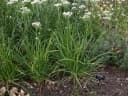
Allium tuberosum
Allium tuberosum
Family: Amaryllidaceae
Cultivation
Garlic chives succeeds in temperate and tropical climates. High temperatures encourage bulb formation, but flower formation and seed production are only possible where the bulbs are subjected to low temperatures. In the tropics, flower and seed formation can therefore only occur at higher elevations, but generally the plants seldom produce seeds in the tropics.
Full cultivation guide →Allium tuncelianum
Allium tuncelianum
Family: Amaryllidaceae
Cultivation
Allium tuncelianum Species in this genus generally prefer a sunny position in a light well-drained soil.
Full cultivation guide →Allium umbilicatum
Allium umbilicatum
Family: Amaryllidaceae
Cultivation
Allium umbilicatum is a plant of semi-arid areas in central and eastern Asia, and can tolerate cold winters with temperatures going below zero. However, it requires a dry period in the summer and autumn when it is dormant and so, even in very freely-draining soils, does not do very well outdoors in areas with summer and autumn rain. In such areas it is best grown in a cold greenhouse or bulb frame.
Full cultivation guide →Allium unifolium
Allium unifolium
Family: Amaryllidaceae
Cultivation
Although capable of tolerating winter temperatures considerable below zero, Allium unifolium grows in areas with a distinct dry season in the summer and autumn, and the bulbs tend to rot when grown in cool wet climates, even if they are given sharp drainage. When growing it in moister environments, the plant needs some protection from the wet - this can sometimes be achieved by simply placing a cloche over the plant after flowering, or by growing it in a frame. Prefers a hot dry sunny position in a light, rich well-drained soil.
Full cultivation guide →Allium ursinum
Allium ursinum
Family: Amaryllidaceae
Cultivation
Allium ursinum Prefers woodland conditions in a moist well-drained soil. Plants are often found in the wild growing in quite wet situations. When growing in suitable conditions, wild garlic forms a dense carpet of growth in the spring and can be a very invasive plant.
Full cultivation guide →Allium validum
Allium validum
Family: Amaryllidaceae
Cultivation
Allium validum is very cold tolerant, and grows wild in swampy areas; it should, therefore, be suitable for cultivation in many areas of the temperate zone. Prefers a sunny position in a light well-drained soil. This species tolerates much wetter soils than most members of the genus but it dislikes winters with alternating periods of damp and cold and no snow cover, so it is best given a damp though well-drained soil.
Full cultivation guide →Allium vavilovii
Allium vavilovii
Family: Amaryllidaceae
Cultivation
Allium vavilovii Species in this genus generally prefer a sunny position in a light, well-drained soil. The bulbs should be planted fairly deeply. Most members of this genus are intolerant of competition from other growing plants.
Full cultivation guide →Allium victorialis
Allium victorialis
Family: Amaryllidaceae
Cultivation
Allium victorialis Requires a sunny position in a light well-drained soil. The bulbs should be planted fairly deeply. Most members of this genus are intolerant of competition from other growing plants.
Full cultivation guide →Allium vineale
Allium vineale
Family: Amaryllidaceae
Cultivation
Allium vineale Prefers a sunny position in a light well-drained soil. The bulbs should be planted fairly deeply.
Full cultivation guide →Allium wallichii
Allium wallichii
Family: Amaryllidaceae
Cultivation
Allium wallichii is not hardy outside the milder regions of the temperate zone. It tolerates temperatures down to between -5 and -10°c. It succeeds outdoors in N.
Full cultivation guide →Allium × proliferum
Allium × proliferum
Family: Amaryllidaceae
Cultivation
Prefers a sunny position in a light well-drained soil but succeeds in most soils that are in good condition. Tolerates a pH in the range 4.5 to 8.3. The bulbs should be planted fairly deeply.
Full cultivation guide →