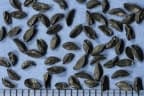
Allium schoenoprasum
Allium schoenoprasum
Safety & Hazards
Although no individual reports regarding this species have been seen, there have been cases of poisoning caused by the consumption, in very large quantities and by some mammals, of certain members of this genus. Dogs seem to be particularly susceptible[1].
Cultivation Details
Allium schoenoprasum is widespread through much of the temperate zone, where it is found at elevations up to 2,000 metres - it can also be cultivated in the subtropics and at medium elevations in the tropics. It grows best in areas where annual daytime temperatures are within the range 10 - 20°c, but can tolerate 2 - 35°c[2]. It prefers a mean annual rainfall in the range 450 - 1,600mm, but tolerates 300 - 2,800mm[2]. An easily grown plant[3], it prefers a sunny position in a rich moist but well-drained soil[4, 5], though it succeeds in most soils[6, 5, 7] and also in light shade[3]. Grows well in heavy clay soils[3]. Prefers a pH in the range 6 - 6.6, tolerating 5 - 8.2[2]. The bulbs divide rapidly and large clumps are quickly formed. There are some named varieties[8, 7, 3]. High temperatures encourage bulb and leaf formation, but flower formation and seed production are only possible where the bulbs are subjected to low temperatures. In the tropics, flower and seed formation will therefore only occur at higher elevations[2]. Chives are very tolerant of heavy harvesting, regular cutting of the leaves ensures a continuous supply of young leaves and prevents the plants flowering[9]. Plants can be moved into a frame or other protected environment in the autumn and will then produce leaves throughout the winter[9]. Do not do this every year or it weakens the plants. The bulbs should be planted fairly deeply[6]. A good bee plant[10].
Propagation
Seed - sow spring in a cold frame. Germination is usually free and easy, pot up the seedlings as soon as they are large enough to handle easily and plant out in the following spring. Division can be carried out at almost any time of the year but is probably best done in spring. The clumps should be divided at least every 3 or 4 years in order to maintain vigour[7], the divisions can be planted out direct into their permanent positions. Cite as: Temperate Plants Database, Ken Fern. temperate.theferns.info. 2026-02-20. <temperate.theferns.info/plant/Allium+schoenoprasum>
Pollinators
Bees, Flies, Lepidoptera, Self
References
- [1]Poisonous Plants in Britain and their Effects on Animals and Man. — Cooper. M. and Johnson. A. · HMSO · 1984 · ISBN 0112425291 ↩︎Concentrates mainly on the effects of poisonous plants to livestock.
- [2]Ecocrop — http://ecocrop.fao.org/ecocrop/srv/en/home ↩︎Basic information on a wide range of useful plants, plus details of environmental needs where available.
- [3]Alliums. The Ornamental Onions. — Davies. D. · Batsford · 1992 · ISBN 0-7134-7030-5 ↩︎Covers about 200 species of Alliums. A very short section on their uses, good details of their cultivation needs.
- [4]Complete Guide to Herbs. — Holtom. J. and Hylton. W. · Rodale Press · 1979 · ISBN 0-87857-262-7 ↩︎A good herbal.
- [5]The Gardener's Assistant. — Thompson. B. · Blackie and Son. · 1878 · ISBN - ↩︎Excellent general but extensive guide to gardening practices in the 19th century. A very good section on fruits and vegetables with many little known species.
- [6]RHS Dictionary of Plants plus Supplement. 1956 — F. Chittendon. · Oxford University Press · 1951 · ISBN - ↩︎Comprehensive listing of species and how to grow them. Somewhat outdated, it has been replaced in 1992 by a new dictionary (see [ 200 ]).
- [7]The New RHS Dictionary of Gardening. 1992. — Huxley. A. · MacMillan Press · 1992 · ISBN 0-333-47494-5 ↩︎Excellent and very comprehensive, though it contains a number of silly mistakes. Readable yet also very detailed.
- [8]Cornucopia - A Source Book of Edible Plants. — Facciola. S. · Kampong Publications · 1990 · ISBN 0-9628087-0-9 ↩︎Excellent. Contains a very wide range of conventional and unconventional food plants (including tropical) and where they can be obtained (mainly N. American nurseries but also research institutes and a lot of other nurseries from around the world.
- [9]Rare Vegetables for Garden and Table. — Organ. J. · Faber · 1960 · ISBN - ↩︎Unusual vegetables that can be grown outdoors in Britain. A good guide.
- [10]Making a Wildlife Garden. — Baines. C. ↩︎Fairly good with lots of ideas about creating wildlife areas in the garden.
- [11]Flora of the USSR. — Komarov. V. L. · Israel Program for Scientific Translation · 1968 · http://www.biodiversitylibrary.org · ISBN - ↩︎An immense (25 or more large volumes) and not yet completed translation of the Russian flora. Full of information on plant uses and habitats but heavy going for casual readers. It can be downloaded from the Internet.
- [12]Flora of China — Missouri Botanical Garden Press; St. Louis. · 1994 · http://flora.huh.harvard.edu/china/ ↩︎An excellent, comprehensive resource in 25 volumes. In addition to the botanical information the flora also gives basic information on habitat and some uses. An on-line version is also available.
- [13]IUCN Red List of Threatened Species — http://www.iucnredlist.org/ ↩︎A list of plants under threat and facing possible extinction, usually with brief details of the threats and information on habitat.
- [14]Flora of N. America — http://flora.huh.harvard.edu/fna/ ↩︎An on-line version of the flora with an excellent description of the plant including a brief mention of plant uses.
- [15]Flora of the British Isles. — Clapham, Tutin and Warburg. · Cambridge University Press · 1962 · ISBN - ↩︎A very comprehensive flora, the standard reference book but it has no pictures.
- [16]Bulbs — Phillips. R. and Rix. M. · Pan Books · 1989 · ISBN 0-330-30253-1 ↩︎Superbly illustrated, it gives brief details on cultivation and native habitat.
- [17]Flora of Turkey. — Davis. P. H. · Edinburgh University Press · 1965 · ISBN - ↩︎Not for the casual reader, this is an immense work in many volumes. Some details of plant uses and habitats.
- [18]Sturtevant's Edible Plants of the World. — Hedrick. U. P. · Dover Publications · 1972 · ISBN 0-486-20459-6 ↩︎Lots of entries, quite a lot of information in most entries and references.
- [19]A Modern Herbal. — Grieve. · Penguin · 1984 · ISBN 0-14-046-440-9 ↩︎Not so modern (1930's?) but lots of information, mainly temperate plants.
- [20]Food for Free. — Mabey. R. · Collins · 1974 · ISBN 0-00-219060-5 ↩︎Edible wild plants found in Britain. Fairly comprehensive, very few pictures and rather optimistic on the desirability of some of the plants.
- [21]Edible and Medicinal Plants. — Launert. E. · Hamlyn · 1981 · ISBN 0-600-37216-2 ↩︎Covers plants in Europe. a drawing of each plant, quite a bit of interesting information.
- [22]The Vegetable Garden. — Vilmorin. A. · Ten Speed Press · ISBN 0-89815-041-8 ↩︎A reprint of a nineteenth century classic, giving details of vegetable varieties. Not really that informative though.
- [23]A - Z of Companion Planting. — Allardice.P. · Cassell Publishers Ltd. · 1993 · ISBN 0-304-34324-2 ↩︎A well produced and very readable book.
- [24]Medicinal Plants of China — Duke. J. A. and Ayensu. E. S. · Reference Publications, Inc. · 1985 · ISBN 0-917256-20-4 ↩︎Details of over 1,200 medicinal plants of China and brief details of their uses. Often includes an analysis, or at least a list of constituents. Heavy going if you are not into the subject.
- [25]Traditional uses of Iraqi medicinal plants (Part 1) — Prof. Dr Ali Esmail Al-Snafi · 2018 · ISBN 2250-3013 ↩︎Covers botanical names srarting with an A to K.
- [26]Encyclopaedia of Herbs and their Uses. — Bown. D. · Dorling Kindersley, London. · 1995 · ISBN 0-7513-020-31 ↩︎A very well presented and informative book on herbs from around the globe. Plenty in it for both the casual reader and the serious student. Just one main quibble is the silly way of having two separate entries for each plant.
- [27]Companion Plants. — Philbrick H. and Gregg R. B. · Watkins · 1979 · ISBN - ↩︎Details of beneficial and antagonistic relationships between neighbouring plants.
- [28]Companion Planting for Successful Gardening. — Riotte. L. · Garden Way, Vermont, USA. · 1978 · ISBN 0-88266-064-0 ↩︎Fairly good.
- [PFAF]Plants for a Future — pfaf.org ↩︎