Rumex — 43 species
Botanical species in the genus Rumex recorded in the PlantPeers database.
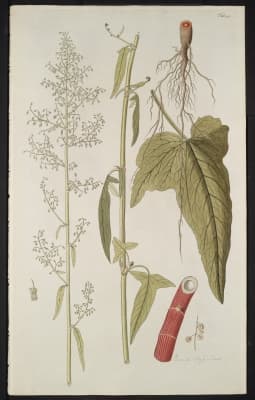
Rumex abyssinicus
Rumex abyssinicus
Family: Polygonaceae
Cultivation
A plant of mainly higher elevations, from 750 - 3,300 metres, in the tropics. In Tanzania, the plant thrives on volcanic soils and sandy loams, where the mean annual rainfall is 1,100 - 2,200mm. Succeeds in most soils but prefers a deep fertile moderately heavy soil that is humus-rich, moisture-retentive but well-drained and a position in full-sun or part shade.
Full cultivation guide →
Rumex acetosa
Rumex acetosa
Family: Polygonaceae
Cultivation
Rumex acetosa is a very cold-hardy plant, being able to tolerate temperatures down to around -35°c when fully dormant. A very easily grown and tolerant plant, it succeeds in most soils, preferring a moist moderately fertile well-drained soil in a sunny position. Shade tolerant.
Full cultivation guide →Rumex acetosella
Rumex acetosella
Family: Polygonaceae
Cultivation
Succeeds in most soils, preferring a moist moderately fertile well-drained soil in a sunny position. Although a plant of acid soils, it can tolerate some alkalinity. A good food plant for the caterpillars of many species of butterflies, it grows well in the summer meadow.
Full cultivation guide →Rumex alpinus
Rumex alpinus
Family: Polygonaceae
Cultivation
Hardy to about -20°c. A very easily grown and tolerant plant, it succeeds in most soils, preferring a moist moderately fertile well-drained soil in a sunny position. Alpine dock was at one time cultivated for its edible leaves, though it has now fallen out of favour to be replaced by less strong-tasting plants.
Full cultivation guide →Rumex aquaticus
Rumex aquaticus
Family: Polygonaceae
Cultivation
A plant of shallow water. Being wind -pollinated, Rumex species usually hybridize readily, especially with other members of the genus they are more closely related to.
Full cultivation guide →Rumex arcticus
Rumex arcticus
Family: Polygonaceae
Cultivation
Species in this genus generally succeed in a variety of soils, but they prefer deep fertile moderately heavy soils that are humus-rich, moisture-retentive and also well-drained, with a position in full-sun or part shade. This species is a plant of wet soils. Being wind -pollinated, Rumex species usually hybridize readily, especially with other members of the genus they are more closely related to.
Full cultivation guide →Rumex arifolius
Rumex arifolius
Family: Polygonaceae
Cultivation
Species in this genus generally succeed in a variety of soils, but they prefer deep fertile moderately heavy soils that are humus-rich, moisture-retentive and also well-drained, with a position in full-sun or part shade. Being wind -pollinated, Rumex species usually hybridize readily, especially with other members of the genus they are more closely related to. Dioecious, male and female plants must be grown if seed is required.
Full cultivation guide →Rumex brownii
Rumex brownii
Family: Polygonaceae
Cultivation
Species in this genus generally succeed in a variety of soils, but they prefer deep fertile moderately heavy soils that are humus-rich, moisture-retentive and also well-drained, with a position in full-sun or part shade. This species is sometimes introduced into Britain via bales of wool from Australia and it then persists for a few years. Being wind -pollinated, Rumex species usually hybridize readily, especially with other members of the genus they are more closely related to.
Full cultivation guide →Rumex bucephalophorus
Rumex bucephalophorus
Family: Polygonaceae
Cultivation
Species in this genus generally succeed in a variety of soils, but they prefer deep fertile moderately heavy soils that are humus-rich, moisture-retentive and also well-drained, with a position in full-sun or part shade. This species is likely to be tolerant of maritime exposure and of dry soils. Being wind -pollinated, Rumex species usually hybridize readily, especially with other members of the genus they are more closely related to.
Full cultivation guide →Rumex chrysocarpos
Rumex chrysocarpos
Family: Polygonaceae
Cultivation
Species in this genus generally succeed in a variety of soils, but they prefer deep fertile moderately heavy soils that are humus-rich, moisture-retentive and also well-drained, with a position in full-sun or part shade. Being wind -pollinated, Rumex species usually hybridize readily, especially with other members of the genus they are more closely related to.
Full cultivation guide →Rumex conglomeratus
Rumex conglomeratus
Family: Polygonaceae
Cultivation
Species in this genus generally succeed in a variety of soils, but they prefer deep fertile moderately heavy soils that are humus-rich, moisture-retentive and also well-drained, with a position in full-sun or part shade. This species is often confused with Rumex sanguineus. Being wind -pollinated, Rumex species usually hybridize readily, especially with other members of the genus they are more closely related to.
Full cultivation guide →
Rumex crispus
Rumex crispus
Family: Polygonaceae
Cultivation
Originally native to temperate Asia and Europe, the plant has spread to become a weed of agriculture throughout much of the world, including higher elevations above 2,200 metres in the tropics. It grows best in areas where annual daytime temperatures are within the range 14 - 18°c, but can tolerate 8 - 28°c. The plant can tolerate quite severe frosts.
Full cultivation guide →Rumex dentatus
Rumex dentatus
Family: Polygonaceae
Cultivation
Species in this genus generally succeed in a variety of soils, but they prefer deep fertile moderately heavy soils that are humus-rich, moisture-retentive and also well-drained, with a position in full-sun or part shade. Plants are usually annual, but, rarely, they can be biennial. This is an extremely variable species represented in N.
Full cultivation guide →Rumex gmelinii
Rumex gmelinii
Family: Polygonaceae
Cultivation
Species in this genus generally succeed in a variety of soils, but they prefer deep fertile moderately heavy soils that are humus-rich, moisture-retentive and also well-drained, with a position in full-sun or part shade. Being wind -pollinated, Rumex species usually hybridize readily, especially with other members of the genus they are more closely related to.
Full cultivation guide →Rumex graminifolius
Rumex graminifolius
Family: Polygonaceae
Cultivation
. Species in this genus generally succeed in a variety of soils, but they prefer deep fertile moderately heavy soils that are humus-rich, moisture-retentive and also well-drained, with a position in full-sun or part shade. Dioecious, male and female plants must be grown if seed is required.
Full cultivation guide →Rumex hastatus
Rumex hastatus
Family: Polygonaceae
Cultivation
Species in this genus generally succeed in a variety of soils, but they prefer deep fertile moderately heavy soils that are humus-rich, moisture-retentive and also well-drained, with a position in full-sun or part shade. This species is likely to succeed in dry soils. Being wind -pollinated, Rumex species usually hybridize readily, especially with other members of the genus they are more closely related to.
Full cultivation guide →Rumex hydrolapathum
Rumex hydrolapathum
Family: Polygonaceae
Cultivation
Requires a moist or wet soil, also succeeding in shallow water. Avoids acid conditions in the wild. This species hybridizes in the wild with several other members of the genus.
Full cultivation guide →Rumex hymenosepalus
Rumex hymenosepalus
Family: Polygonaceae
Cultivation
Succeeds in most soils but prefers a deep fertile moderately heavy soil that is humus-rich, moisture-retentive but well-drained and a position in full-sun or part shade. Judging by its native range, this plant should succeed in dry soils. The plant has been extensively cultivated in the past for the tannin contained in its root.
Full cultivation guide →Rumex japonicus
Rumex japonicus
Family: Polygonaceae
Cultivation
Species in this genus generally succeed in a variety of soils, but they prefer deep fertile moderately heavy soils that are humus-rich, moisture-retentive and also well-drained, with a position in full-sun or part shade. Being wind -pollinated, Rumex species usually hybridize readily, especially with other members of the genus they are more closely related to.
Full cultivation guide →Rumex longifolius
Rumex longifolius
Family: Polygonaceae
Cultivation
Species in this genus generally succeed in a variety of soils, but they prefer deep fertile moderately heavy soils that are humus-rich, moisture-retentive and also well-drained, with a position in full-sun or part shade. Being wind -pollinated, Rumex species usually hybridize readily, especially with other members of the genus they are more closely related to.
Full cultivation guide →Rumex madaio
Rumex madaio
Family: Polygonaceae
Cultivation
Species in this genus generally succeed in a variety of soils, but they prefer deep fertile moderately heavy soils that are humus-rich, moisture-retentive and also well-drained, with a position in full-sun or part shade. Being wind -pollinated, Rumex species usually hybridize readily, especially with other members of the genus they are more closely related to.
Full cultivation guide →Rumex maritimus
Rumex maritimus
Family: Polygonaceae
Cultivation
Succeeds in most soils but prefers a deep fertile moderately heavy soil that is humus-rich, moisture-retentive but well-drained and a position in full-sun or part shade. Plants are likely to require a moist to wet soil. Closely related to Rumex palustris.
Full cultivation guide →Rumex mexicanus
Rumex mexicanus
Family: Polygonaceae
Cultivation
Succeeds in most soils, preferring a moist moderately fertile well-drained soil in a sunny position. Plants succeed outdoors at Cambridge Botanical gardens and are growing well in Cornwall. Being wind -pollinated, Rumex species usually hybridize readily, especially with other members of the genus they are more closely related to.
Full cultivation guide →Rumex microcarpus
Rumex microcarpus
Family: Polygonaceae
Cultivation
Rumex microcarpus has a wide range, being found in China growingfrom the temperate zone (hardiness zone 5 - 6) to the subtropics of southern China (zone 10). Species in this genus generally succeed in a variety of soils, but they prefer deep fertile moderately heavy soils that are humus-rich, moisture-retentive and also well-drained, with a position in full-sun or part shade. Being wind -pollinated, Rumex species usually hybridize readily, especially with other members of the genus they are more closely related to.
Full cultivation guide →
Rumex nepalensis
Rumex nepalensis
Family: Polygonaceae
Cultivation
Rumex nepalensis is a plant of the warm temperate to tropical zones, usually being found at higher elevations in the tropics. Species in this genus generally succeed in a variety of soils, but they prefer deep fertile moderately heavy soils that are humus-rich, moisture-retentive and also well-drained, with a position in full-sun or part shade. Being wind -pollinated, Rumex species usually hybridize readily, especially with other members of the genus they are more closely related to.
Full cultivation guide →Rumex obtusifolius
Rumex obtusifolius
Family: Polygonaceae
Cultivation
Requires a good soil. Plants are occasionally cultivated for their edible leaves. Being wind -pollinated, Rumex species usually hybridize readily, especially with other members of the genus they are more closely related to.
Full cultivation guide →Rumex occidentalis
Rumex occidentalis
Family: Polygonaceae
Cultivation
Species in this genus generally succeed in a variety of soils, but they prefer deep fertile moderately heavy soils that are humus-rich, moisture-retentive and also well-drained, with a position in full-sun or part shade. Plants were seen growing well in a sunny well-drained bed at Kew in 1989. Being wind -pollinated, Rumex species usually hybridize readily, especially with other members of the genus they are more closely related to.
Full cultivation guide →Rumex patientia
Rumex patientia
Family: Polygonaceae
Cultivation
A very easily grown plant, it succeeds in most soils, preferring a moist moderately fertile well-drained soil in a sunny position. Formerly cultivated for its edible leaves, these can be available from lae winter if the winter is mild. An important food plant for the caterpillars of many species of butterfly.
Full cultivation guide →Rumex paucifolius
Rumex paucifolius
Family: Polygonaceae
Cultivation
Species in this genus generally succeed in a variety of soils, but they prefer deep fertile moderately heavy soils that are humus-rich, moisture-retentive and also well-drained, with a position in full-sun or part shade. Being wind -pollinated, Rumex species usually hybridize readily, especially with other members of the genus they are more closely related to. Dioecious, male and female plants must be grown if seed is required.
Full cultivation guide →Rumex pseudonatronatus
Rumex pseudonatronatus
Family: Polygonaceae
Cultivation
Species in this genus generally succeed in a variety of soils, but they prefer deep fertile moderately heavy soils that are humus-rich, moisture-retentive and also well-drained, with a position in full-sun or part shade. Being wind -pollinated, Rumex species usually hybridize readily, especially with other members of the genus they are more closely related to. This species is often confused with Rumex longifolius and Rumex crispus.
Full cultivation guide →Rumex pulcher
Rumex pulcher
Family: Polygonaceae
Cultivation
Species in this genus generally succeed in a variety of soils, but they prefer deep fertile moderately heavy soils that are humus-rich, moisture-retentive and also well-drained, with a position in full-sun or part shade. Being wind -pollinated, Rumex species usually hybridize readily, especially with other members of the genus they are more closely related to. Rumex pulcher is an extremely polymorphic species consisting of five or six more or less distinct subspecies.
Full cultivation guide →Rumex roseus
Rumex roseus
Family: Polygonaceae
Cultivation
Species in this genus generally succeed in a variety of soils, but they prefer deep fertile moderately heavy soils that are humus-rich, moisture-retentive and also well-drained, with a position in full-sun or part shade. This species is likely to tolerate maritime exposure. Being wind -pollinated, Rumex species usually hybridize readily, especially with other members of the genus they are more closely related to.
Full cultivation guide →Rumex salicifolius
Rumex salicifolius
Family: Polygonaceae
Cultivation
Species in this genus generally succeed in a variety of soils, but they prefer deep fertile moderately heavy soils that are humus-rich, moisture-retentive and also well-drained, with a position in full-sun or part shade. Being wind -pollinated, Rumex species usually hybridize readily, especially with other members of the genus they are more closely related to.
Full cultivation guide →Rumex sanguineus
Rumex sanguineus
Family: Polygonaceae
Cultivation
A very easily grown plant, succeeding in most soils and preferring a moist moderately fertile well-drained soil in a sunny position. Plants usually self-sow freely in the garden. Of some value in the flower border or kitchen garden for its ornamental edible leaves.
Full cultivation guide →Rumex scutatus
Rumex scutatus
Family: Polygonaceae
Cultivation
A very easily grown plant, succeeding in most soils but preferring a moist moderately fertile well-drained soil in a sunny position. Prefers a rather dry soil. Established plants are drought tolerant.
Full cultivation guide →Rumex simpliciflorus
Rumex simpliciflorus
Family: Polygonaceae
Cultivation
Species in this genus generally succeed in a variety of soils, but they prefer deep fertile moderately heavy soils that are humus-rich, moisture-retentive and also well-drained, with a position in full-sun or part shade. Being wind -pollinated, Rumex species usually hybridize readily, especially with other members of the genus they are more closely related to.
Full cultivation guide →Rumex stenophyllus
Rumex stenophyllus
Family: Polygonaceae
Cultivation
Species in this genus generally succeed in a variety of soils, but they prefer deep fertile moderately heavy soils that are humus-rich, moisture-retentive and also well-drained, with a position in full-sun or part shade. Being wind -pollinated, Rumex species usually hybridize readily, especially with other members of the genus they are more closely related to.
Full cultivation guide →Rumex trisetifer
Rumex trisetifer
Family: Polygonaceae
Cultivation
Species in this genus generally succeed in a variety of soils, but they prefer deep fertile moderately heavy soils that are humus-rich, moisture-retentive and also well-drained, with a position in full-sun or part shade. Being wind -pollinated, Rumex species usually hybridize readily, especially with other members of the genus they are more closely related to.
Full cultivation guide →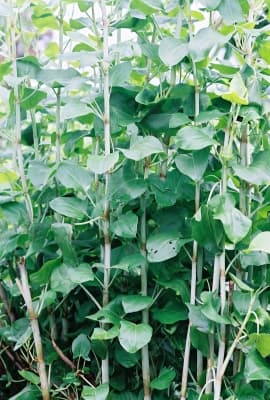
Rumex usambarensis
Rumex usambarensis
Family: Polygonaceae
Cultivation
In Tanzania, the plant grows in areas where the mean annual rainfall is in the range 1,100 - 2,200mm. Grows best in a soil that is rich in humus.
Full cultivation guide →Rumex venosus
Rumex venosus
Family: Polygonaceae
Cultivation
Species in this genus generally succeed in a variety of soils, but they prefer deep fertile moderately heavy soils that are humus-rich, moisture-retentive and also well-drained, with a position in full-sun or part shade. Being wind -pollinated, Rumex species usually hybridize readily, especially with other members of the genus they are more closely related to.
Full cultivation guide →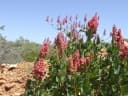
Rumex vesicarius
Rumex vesicarius
Family: Polygonaceae
Cultivation
A plant of the drier regions of the warm temperate to tropical zones, it has been grown with some success in more humid areas, such as Tanzania. Succeeds in most soils, preferring a moist moderately fertile well-drained soil in a sunny position. Being wind -pollinated, Rumex species usually hybridize readily, especially with other members of the genus they are more closely related to.
Full cultivation guide →