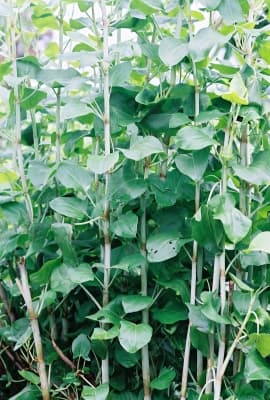
Rumex usambarensis
Rumex usambarensis
Safety & Hazards
Although no specific mention has been seen for this species, plants in this genus can contain quite high levels of oxalic acid, which is what can give their leaves an acid-lemon flavour. Perfectly alright in small quantities, leaves containing oxalic acid should not be eaten in large amounts since it can lock-up other nutrients in the food, especially calcium, thus causing mineral deficiencies. The oxalic acid content will be reduced if the plant is cooked. People with a tendency to rheumatism, arthritis, gout, kidney stones or hyperacidity should take especial caution if including this plant in their diet since it can aggravate their condition[1].
Cultivation Details
In Tanzania, the plant grows in areas where the mean annual rainfall is in the range 1,100 - 2,200mm[2]. Grows best in a soil that is rich in humus[2].
Propagation
Seed - Cite as: Tropical Plants Database, Ken Fern. tropical.theferns.info. 2026-02-20. <tropical.theferns.info/viewtropical.php?id=Rumex+usambarensis>
Pollinators
Bees
References
- [1]Encyclopaedia of Herbs and their Uses. — Bown. D. · Dorling Kindersley, London. · 1995 · ISBN 0-7513-020-31 ↩︎A very well presented and informative book on herbs from around the globe. Plenty in it for both the casual reader and the serious student. Just one main quibble is the silly way of having two separate entries for each plant.
- [2]Edible Wild Plants of Tanzania — Ruffo, C.K.: Birnie, A. & Tengnas, B. · Regional Land Management Unit; Nairobi. · 2002 · ISBN 9966-896-60-0 ↩︎A very well presented, simple guide to growing and utilizing wild food plants in Tanzania, with line drawings of each plant, a description, habitat and range, non-food as well as food uses, plus basic information on growing the plants.