Bauhinia — 22 species
Botanical species in the genus Bauhinia recorded in the PlantPeers database.

Bauhinia acuminata
Bauhinia acuminata
Family: Fabaceae
Cultivation
Succeeds in full sun to partial shade. Prefers a fertile, well-drained but moisture-retentive soil. Succeeds in a variety of soils.
Full cultivation guide →
Bauhinia forficata
Bauhinia forficata
Family: Fabaceae
Cultivation
Brazilian orchid tree is found from the subtropical to the tropical zones. Prefers a sunny position. Succeeds in a range of soils so long as they are well-drained.
Full cultivation guide →


Bauhinia longifolia
Bauhinia longifolia
Family: Fabaceae
Cultivation
Grows best in a sunny position. Succeeds in dry to moist soils. Prefers a moist, fertile, clayey soil.
Full cultivation guide →

Bauhinia monandra
Bauhinia monandra
Family: Fabaceae
Cultivation
Prefers a sunny position in a fertile, well-drained soil. Grows well on drier, poorer sites. A commonly cultivated ornamental plant, it can escape from cultivation and become naturalized in open and waste places.
Full cultivation guide →

Bauhinia petersiana
Bauhinia petersiana
Family: Fabaceae
Cultivation
Bauhinia petersiana is a plant of moist to arid areas in the tropics, where it can be found at elevations up to 1,850 metres. The plant can tolerate some frost and can be found in areas experiencing as little as 350mm of rain in a year. Requires a sunny position in a well-drained, preferably light, soil.
Full cultivation guide →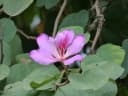


Bauhinia purpurea
Bauhinia purpurea
Family: Fabaceae
Cultivation
A plant of subtropical to tropical regions where it can usually be found at elevations from 500 - 2,000 metres, exceptionally to 3,000 metres. The mean annual temperature in its natural habitat ranges from 12 - 21°c; it experiences an absolute maximum shade temperature of 38 - 46°c and an absolute minimum of -1 - +9°c. Severe frost kills the leaves of seedlings and saplings, but they can recover during the growing season.
Full cultivation guide →
Bauhinia racemosa
Bauhinia racemosa
Family: Fabaceae
Cultivation
A plant of dry to moist areas of the tropics and subtropics. In its natural habitat the absolute maximum shade temperature it experiences varies from 38 - 48°c, the absolute minimum from -1 - +11°c. The mean annual rainfall ranges from 750 - 2, 125mm.
Full cultivation guide →
Bauhinia roxburghiana
Bauhinia roxburghiana
Family: Fabaceae
Cultivation
A plant of the subtropics to tropics. In its natural habitat the plant experiences an absolute maximum shade temperature from 35 - 45°c., an absolute minimum of -2 - +5°c; and a mean annual rainfall from 1,000 - 2,250mm. Prefers a fertile, moisture-retentive but well-drained soil and a position in full sun.
Full cultivation guide →
Bauhinia rufescens
Bauhinia rufescens
Family: Fabaceae
Cultivation
A plant of the drier tropics, where it is found at elevations up to 800 metres. It grows best in areas where annual daytime temperatures are within the range 30 - 40°c, but can tolerate 20 - 46°c. It prefers a mean annual rainfall in the range 400 - 1,000mm, but tolerates 250 - 1,200mm.
Full cultivation guide →
Bauhinia tomentosa
Bauhinia tomentosa
Family: Fabaceae
Cultivation
A plant of fairly dry areas in the tropics and subtropics. Plants can withstand light frost. Succeeds in full sun or light shade.
Full cultivation guide →
Bauhinia ungulata
Bauhinia ungulata
Family: Fabaceae
Cultivation
Grows best in a sunny position. Young plants have a rapid rate of growth. Although many species within the family Fabaceae have a symbiotic relationship with soil bacteria, this species is said to be devoid of such a relationship and therefore does not fix atmospheric nitrogen.
Full cultivation guide →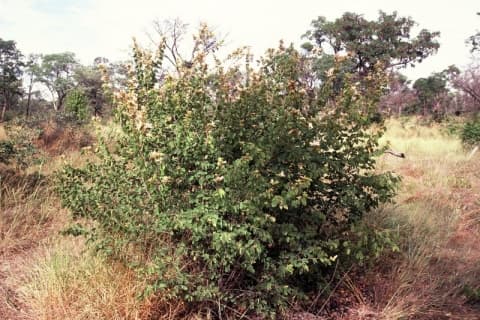

Bauhinia vahlii
Bauhinia vahlii
Family: Fabaceae
Cultivation
Grows best in a sunny position. Prefers a fertile, well-drained but moisture-retentive soil. The plant grows back quickly from the base when it is cut down, and has been known to produce new growth of 15 metres within 12 months.
Full cultivation guide →
Bauhinia variegata
Bauhinia variegata
Family: Fabaceae
Cultivation
Mountain ebony is a plant of tropical and subtropical climates with hot, dry summers and mild winters. It grows best at an altitude up to 1,800 metres with a mean maximum temperature in the range 30 - 42°c and a mean minimum temperature in the range 7 - 14°c. Plants can experience occasional temperatures down to -2°c in their native range.
Full cultivation guide →