Vitex — 45 species
Botanical species in the genus Vitex recorded in the PlantPeers database.

Vitex agnus-castus
Vitex agnus-castus
Family: Verbenaceae
Cultivation
Prefers a light well-drained loamy soil in a warm sunny position sheltered from cold drying winds. Succeeds in dry soils. Intolerant of water-logging.
Full cultivation guide →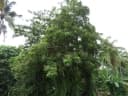
Vitex altissima
Vitex altissima
Family: Lamiaceae
Cultivation
The tree is reasonably shade tolerant, especially when young, but tending to prefer sunnier conditions as it gets bigger. The tree produces root suckers.
Full cultivation guide →Vitex cannabifolia
Vitex cannabifolia
Family: Verbenaceae
Cultivation
We have very little information on this species and do not know if it will be hardy in Britain, though judging by its native range it is likely to succeed outdoors at least in the milder areas of the country. It is seen as no more than a subspecies of Vitex negundo in some recent floras. The following notes are based on the general needs of the genus.
Full cultivation guide →
Vitex cofassus
Vitex cofassus
Family: Lamiaceae
Cultivation
Vitex cofassus is a plant mainly of the lowland moist tropics, though it can also be found at elevations up to 2,000 metres. It grows best in areas where the mean annual temperature is 22 - 28°c, the mean annual rainfall is in the range 1,500 - 3,500mm, and there are distinct wet and dry seasons. Requires a sunny position.
Full cultivation guide →

Vitex cymosa
Vitex cymosa
Family: Lamiaceae
Cultivation
A plant of the lowland, moist forest where it grows in areas with a distinct dry season as well as areas that have rain all year round. Grows best in a sunny position. Tolerant of seasonal inundation of the soil.
Full cultivation guide →Vitex divaricata
Vitex divaricata
Family: Lamiaceae
Cultivation
Requires nearly full sunlight, otherwise it can be very slow-growing.
Full cultivation guide →
Vitex doniana
Vitex doniana
Family: Lamiaceae
Cultivation
Black plum is a plant of hot, tropical climates where it is found at elevations from near sea level to 1,850 metres. It grows best in areas where annual daytime temperatures are within the range 14 - 28°c, but can tolerate 10 - 36°c. It prefers a mean annual rainfall in the range 750 - 2,000mm, but tolerates 600 - 2,500mm.
Full cultivation guide →

Vitex gardneriana
Vitex gardneriana
Family: Lamiaceae
Cultivation
A plant of the 'Caatinga' dry forest region of northeast Brazil. The climate is hot and dry, there are usually 6 to 11 months without rain each year. The mean annual rainfall varies from 250 - 1,000mm, and the mean annual temperature is from 24 - 26°c.
Full cultivation guide →

Vitex grandifolia
Vitex grandifolia
Family: Lamiaceae
Cultivation
The tree often flowers all year round, though the fruit ripens in two distinct periods through the year.
Full cultivation guide →
Vitex keniensis
Vitex keniensis
Family: Lamiaceae
Cultivation
A plant of the moist tropics where it is found growing at elevations up to 2,100 metres. It grows best in areas where annual daytime temperatures are within the range 15 - 20°c, though it can tolerate 12 - 28°c. It prefers a mean annual rainfall of 1,800 - 2,200mm, tolerating 1,500 - 2,500mm.
Full cultivation guide →


Vitex megapotamica
Vitex megapotamica
Family: Lamiaceae
Cultivation
Requires a sunny position. Succeeds in most soils. Newly planted young trees establish reasonably well and grow away moderately quickly.
Full cultivation guide →

Vitex mombassae
Vitex mombassae
Family: Lamiaceae
Cultivation
Prefers a sandy soil with a high groundwater. The fruits are borne in profusion.
Full cultivation guide →
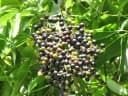
Vitex negundo
Vitex negundo
Family: Lamiaceae
Cultivation
Vitex negundo can be grown in warm temperate to tropical areas, succeeding at elevations from sea level to around 2,000 metres. It is found in areas where the mean annual rainfall is in the range of 600 - 2,000mm. It can tolerate short-lived temperatures falling down to about -10°c.
Full cultivation guide →
Vitex parviflora
Vitex parviflora
Family: Lamiaceae
Cultivation
A plant of the lowland tropics, found at elevations up to 1,000 metres in areas with a distinct dry season. It is found in areas where the mean annual temperature is in the range 22 - 32°c, and the mean annual rainfall is 750 - 2,600mm. Tolerant of a wide range of soils but occurs mostly on dry limestone soils.
Full cultivation guide →
Vitex payos
Vitex payos
Family: Lamiaceae
Cultivation
Vitex payos is a species of the tropics, growing in hot, low and semi-arid places with a high water table. In more arid zones it is found near rock outcrops. It grows in areas where the mean annual rainfall is within the range 650 - 850 metres.
Full cultivation guide →

Vitex pinnata
Vitex pinnata
Family: Lamiaceae
Cultivation
Vitex pinnata is common in comparatively dry regions in lowland forest, where it can be found at elevations up to 1,000 metres. It is found in areas where the mean annual rainfall is within the range 590 - 1,500mm, and the mean annual temperature 20 - 32°c. Young trees grow moderately slowly, with a mean annual diameter increment of 0.6 cm and slightly over 1 cm in Myanmar and Java respectively.
Full cultivation guide →
Vitex polygama
Vitex polygama
Family: Lamiaceae
Cultivation
Prefers a sunny position. Newly planted young trees establish fairly well and grow away moderately quickly.
Full cultivation guide →
Vitex sellowiana
Vitex sellowiana
Family: Lamiaceae
Cultivation
Succeeds in sunny and shady positions. Newly planted young trees grow away moderately well.
Full cultivation guide →
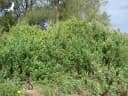
Vitex trifolia
Vitex trifolia
Family: Lamiaceae
Cultivation
Requires a sunny position and a well-drained, preferably sandy soil. Plants are highly tolerant of salt in the air and in the soil. Established plants are very drought tolerant.
Full cultivation guide →