Triticum — 19 species
Botanical species in the genus Triticum recorded in the PlantPeers database.
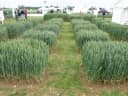
Triticum aestivum
Triticum aestivum
Family: Poaceae
Cultivation
Bread wheat arose in southeast Europe and around the Caspian Sea, but is now widely cultivated from near the tropics to the colder regions of the temperate zone. It the tropics it is generally grown at elevations from 1,200 - 3,000 metres, or at lower elevations in the cool season. It grows best in areas where annual daytime temperatures are within the range 15 - 23°c, but can tolerate 5 - 27°c.
Full cultivation guide →
Triticum aestivum compactum
Triticum aestivum compactum
Family: Poaceae
Cultivation
An easily grown plant, it prefers a sunny position in a rich well-drained soil. Succeeds in poor soils. One of the more modern species of wheat, probably developed around 8,000 years ago as a result of a cross between T. dicoccum and Aegilops squarrosa.
Full cultivation guide →Triticum aestivum macha
Triticum aestivum macha
Family: Poaceae
Cultivation
Succeeds in most well-drained soils in a sunny position. One of the more modern species of wheat, probably developed around 8,000 years ago as a result of a cross between T. dicoccum and Aegilops squarrosa. It is still sometimes cultivated for its edible seed in Georgia and other areas in W.
Full cultivation guide →Triticum aestivum spelta
Triticum aestivum spelta
Family: Poaceae
Cultivation
An easily grown plant, it succeeds in most well-drained soils in a sunny position. Succeeds in poor soils. Spelt probably arose through cultivation around 8,000 years ago following a cross between T. dicoccum and Aegilops squarrosa.
Full cultivation guide →Triticum aestivum sphaerococcum
Triticum aestivum sphaerococcum
Family: Poaceae
Cultivation
Succeeds in most well-drained soils in a sunny position. One of the more modern species of wheat, probably developed in cultivation around 8,000 years ago following a cross between T. dicoccum and Aegilops squarrosa. This cross contributed an extra protein gene to the seed, making a much stronger flour for baking as bread.
Full cultivation guide →Triticum georgicum
Triticum georgicum
Family: Poaceae
Cultivation
Succeeds in most well-drained soils in a sunny position. Cultivated for its edible seed in S. Russia.
Full cultivation guide →Triticum monococcum
Triticum monococcum
Family: Poaceae
Cultivation
An easily grown plant, it succeeds in most well-drained soils in a sunny position. A low yielding species, but it succeeds in poor rocky soils and thrives in a short growing season. This is supposedly the oldest species of wheat, it probably arose over 10,000 years ago and is still occasionally cultivated for its edible seed in the mountains of Germany, Switzerland and Italy.
Full cultivation guide →Triticum monococcum aegilopoides
Triticum monococcum aegilopoides
Family: Poaceae
Cultivation
An easily grown plant, it prefers a sunny position in a rich well-drained soil.
Full cultivation guide →Triticum timopheevii
Triticum timopheevii
Family: Poaceae
Cultivation
Succeeds in most well-drained soils in a sunny position. An ancient grain crop, it is still occasionally cultivated for its edible seed in Georgia and other areas in W. Asia.
Full cultivation guide →Triticum turgidum
Triticum turgidum
Family: Poaceae
Cultivation
An easily grown plant, it succeeds in most well-drained soils in a sunny position. One of the more primitive forms of wheat, it was probably developed in cultivation from T. dicoccoides about 10,000 years ago. It is still occasionally cultivated for its edible seed, there are some named varieties.
Full cultivation guide →Triticum turgidum carthlicum
Triticum turgidum carthlicum
Family: Poaceae
Cultivation
Prefers a sunny position in a rich well-drained soil. A fairly ancient wheat that was developed over 8,000 years ago and is still cultivated for its edible seed in the Turkish-Caucasian region at altitudes up to 2100 metres.
Full cultivation guide →Triticum turgidum dicoccoides
Triticum turgidum dicoccoides
Family: Poaceae
Cultivation
An easily grown plant, it succeeds in most well-drained soils in a sunny position. A very ancient form of wheat that probably arose over 10,000 years ago as a result of a cross between T. aethiopicum (a very primitive wheat) and Aegilops sp. This species was rather larger than the primitive wheats and was then improved by cultivation.
Full cultivation guide →Triticum turgidum dicoccon
Triticum turgidum dicoccon
Family: Poaceae
Cultivation
An easily grown plant, it succeeds in most well-drained soils in a sunny position. Succeeds in poor rocky and in dry soils. One of the oldest cultivated wheats, it arose over 10,000 years ago through cultivation of the wild emmer, T. dicoccoides.
Full cultivation guide →
Triticum turgidum durum
Triticum turgidum durum
Family: Poaceae
Cultivation
Durum wheat probably arose in the Middle East but is now cultivated from the temperate to the tropical zone. In the tropics it is generally grown at higher elevations from xxx - xxx metres, or at lower elevations during the cool season. It grows best in areas where annual daytime temperatures are within the range 17 - 25°c, but can tolerate 6 - 30°c.
Full cultivation guide →Triticum turgidum polonicum
Triticum turgidum polonicum
Family: Poaceae
Cultivation
Succeeds in most well-drained soils in a sunny position. A rather primitive wheat, it probably arose through cultivation about 10,000 years ago following a cross between T. aethiopicum (the first primitive wheat) and Aegilops sp. It is sometimes cultivated for its edible seed, especially in N.
Full cultivation guide →Triticum turgidum turanicum
Triticum turgidum turanicum
Family: Poaceae
Cultivation
Succeeds in most well-drained soils in a sunny position. A rather primitive wheat, it probably arose through cultivation about 10,000 years ago following a cross between T. aethiopicum (the first primitive wheat) and Aegilops sp. It is still occasionally cultivated for its edible seed in the Mediterranean and the Near East.
Full cultivation guide →Triticum vavilovi
Triticum vavilovi
Family: Poaceae
Cultivation
Succeeds in most well-drained soils in a sunny position. One of the more modern species of wheat, probably developed in cultivation around 8,000 years ago following a cross between T. dicoccum and Aegilops squarrosa. This cross contributed an extra protein gene to the seed, making a much stronger flour for baking as bread.
Full cultivation guide →