Ephedra — 34 species
Botanical species in the genus Ephedra recorded in the PlantPeers database.

Ephedra alata
Ephedra alata
Family: Ephedraceae
Cultivation
Ephedra species are mainly temperate to subtropical plants, native to arid and semi-arid regions and are also found in seasonally dry habitats such as Mediterranean climates. They are often found at moderate to high elevations, especially when they occur in tropical regions. The plant tolerates dry soils and saline soil.
Full cultivation guide →Ephedra altissima
Ephedra altissima
Family: Ephedraceae
Cultivation
Ephedra species are mainly temperate to subtropical plants, native to arid and semi-arid regions and are also found in seasonally dry habitats such as Mediterranean climates. They are often found at moderate to high elevations, especially when they occur in tropical regions. A plant of this species is growing at Hilliers Arboretum in Hampshire (hardiness zone 7).
Full cultivation guide →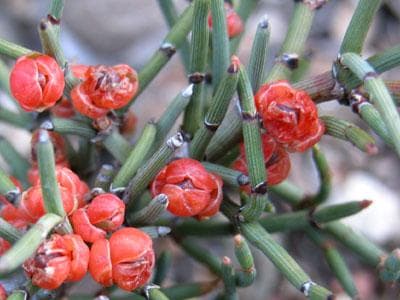
Ephedra americana
Ephedra americana
Family: Ephedraceae
Cultivation
Most Ephedra species are native to warm, dry, inhospitable regions, frequently found on stony slopes and gravel terraces, often on limestone. Ephedra americana is found mainly in the subtropical regions of the Andes and is generally not very frost tolerant. Requires a porous, freely-draining soil in a sunny position.
Full cultivation guide →Ephedra antisyphilitica
Ephedra antisyphilitica
Family: Ephedraceae
Cultivation
Ephedra species are mainly temperate to subtropical plants, native to arid and semi-arid regions and are also found in seasonally dry habitats such as Mediterranean climates. They are often found at moderate to high elevations, especially when they occur in tropical regions. Requires a sunny position in a freely-draining soil.
Full cultivation guide →Ephedra aphylla
Ephedra aphylla
Family: Ephedraceae
Cultivation
Ephedra species are mainly temperate to subtropical plants, native to arid and semi-arid regions and are also found in seasonally dry habitats such as Mediterranean climates. They are often found at moderate to high elevations, especially when they occur in tropical regions. Requires a sunny position in a freely-draining soil.
Full cultivation guide →Ephedra aspera
Ephedra aspera
Family: Ephedraceae
Cultivation
Ephedra species are mainly temperate to subtropical plants, native to arid and semi-arid regions and are also found in seasonally dry habitats such as Mediterranean climates. They are often found at moderate to high elevations, especially when they occur in tropical regions. Requires a sunny position in a freely-draining soil.
Full cultivation guide →Ephedra breana
Ephedra breana
Family: Ephedraceae
Cultivation
Ephedra species are mainly temperate to subtropical plants, native to arid and semi-arid regions and are also found in seasonally dry habitats such as Mediterranean climates. They are often found at moderate to high elevations, especially when they occur in tropical regions. This species is able to tolerate temperatures as low as -13°c, through the mechanism of supercooling.
Full cultivation guide →Ephedra californica
Ephedra californica
Family: Ephedraceae
Cultivation
Ephedra species are mainly temperate to subtropical plants, native to arid and semi-arid regions and are also found in seasonally dry habitats such as Mediterranean climates. They are often found at moderate to high elevations, especially when they occur in tropical regions. Requires a sunny position in a freely-draining soil.
Full cultivation guide →Ephedra chilensis
Ephedra chilensis
Family: Ephedraceae
Cultivation
Most Ephedra species are native to warm, dry, inhospitable regions, frequently found on stony slopes and gravel terraces, often on limestone. This species succeeds outdoors at Cambridge Botanical Gardens in eastern England (hardyness zone 7) and we have been growing it outdoors successfully in Cornwall (zone 8) since 1988. Requires a well-drained loamy soil and a sunny position.
Full cultivation guide →Ephedra ciliata
Ephedra ciliata
Family: Ephedraceae
Cultivation
Ephedra species are mainly temperate to subtropical plants, native to arid and semi-arid regions and are also found in seasonally dry habitats such as Mediterranean climates. They are often found at moderate to high elevations, especially when they occur in tropical regions. Requires a well-drained loamy soil and a sunny position.
Full cultivation guide →Ephedra compacta
Ephedra compacta
Family: Ephedraceae
Cultivation
Ephedra species are mainly temperate to subtropical plants, native to arid and semi-arid regions and are also found in seasonally dry habitats such as Mediterranean climates. They are often found at moderate to high elevations, especially when they occur in tropical regions. Requires a sunny position in a freely-draining soil.
Full cultivation guide →Ephedra distachya
Ephedra distachya
Family: Ephedraceae
Cultivation
Ephedra species are mainly temperate to subtropical plants, native to arid and semi-arid regions and are also found in seasonally dry habitats such as Mediterranean climates. They are often found at moderate to high elevations, especially when they occur in tropical regions. This species is said to tolerate winter temperatures down to at least -15°c, though it does not flower or fruit well in moist temperate climates.
Full cultivation guide →Ephedra equisetina
Ephedra equisetina
Family: Ephedraceae
Cultivation
Ephedra species are mainly temperate to subtropical plants, native to arid and semi-arid regions and are also found in seasonally dry habitats such as Mediterranean climates. They are often found at moderate to high elevations, especially when they occur in tropical regions Requires a well-drained loamy soil and a sunny position. Suceeds in dry soils.
Full cultivation guide →Ephedra fasciculata
Ephedra fasciculata
Family: Ephedraceae
Cultivation
Ephedra species are mainly temperate to subtropical plants, native to arid and semi-arid regions and are also found in seasonally dry habitats such as Mediterranean climates. They are often found at moderate to high elevations, especially when they occur in tropical regions Requires a sunny position in a freely-draining soil. It grows well in dry soils and is very drought tolerant once established.
Full cultivation guide →Ephedra foeminea
Ephedra foeminea
Family: Ephedraceae
Cultivation
Ephedra species are mainly temperate to subtropical plants, native to arid and semi-arid regions and are also found in seasonally dry habitats such as Mediterranean climates. They are often found at moderate to high elevations, especially when they occur in tropical regions Requires a well-drained loamy soil and a sunny position. Established plants are drought resistant and are also lime tolerant.
Full cultivation guide →Ephedra fragilis
Ephedra fragilis
Family: Ephedraceae
Cultivation
Ephedra species are mainly temperate to subtropical plants, native to arid and semi-arid regions and are also found in seasonally dry habitats such as Mediterranean climates. They are often found at moderate to high elevations, especially when they occur in tropical regions. This species is not very hardy in Britain, tolerating only a few degrees of frost.
Full cultivation guide →Ephedra gerardiana
Ephedra gerardiana
Family: Ephedraceae
Cultivation
The major habitat of Ephedra gerardiana is the cold deserts of the Himalayas, with some distribution in the arid regions of the tropical and subtropical Himalayas. This species is heat-resistant, cold-resistant, and does well in drought partially due to its near lack of vessels. It can survive with an annual rainfall of less than 350 mm.
Full cultivation guide →Ephedra intermedia
Ephedra intermedia
Family: Ephedraceae
Cultivation
Ephedra species are mainly temperate to subtropical plants, native to arid and semi-arid regions and are also found in seasonally dry habitats such as Mediterranean climates. They are often found at moderate to high elevations, especially when they occur in tropical regions Requires a well-drained loamy soil and a sunny position. Established plants are drought resistant and are also lime tolerant.
Full cultivation guide →Ephedra likiangensis
Ephedra likiangensis
Family: Ephedraceae
Cultivation
Ephedra species are mainly temperate to subtropical plants, native to arid and semi-arid regions and are also found in seasonally dry habitats such as Mediterranean climates. They are often found at moderate to high elevations, especially when they occur in tropical regions Requires a sunny position in a freely-draining soil. It grows well in dry soils and is very drought tolerant once established.
Full cultivation guide →Ephedra minuta
Ephedra minuta
Family: Ephedraceae
Cultivation
Ephedra species are mainly temperate to subtropical plants, native to arid and semi-arid regions and are also found in seasonally dry habitats such as Mediterranean climates. They are often found at moderate to high elevations, especially when they occur in tropical regions Requires a sunny position in a freely-draining soil. It grows well in dry soils and is very drought tolerant once established.
Full cultivation guide →Ephedra monosperma
Ephedra monosperma
Family: Ephedraceae
Cultivation
Ephedra species are mainly temperate to subtropical plants, native to arid and semi-arid regions and are also found in seasonally dry habitats such as Mediterranean climates. They are often found at moderate to high elevations, especially when they occur in tropical regions Requires a sunny position in a freely-draining soil. It grows well in dry soils and is very drought tolerant once established.
Full cultivation guide →Ephedra multiflora
Ephedra multiflora
Family: Ephedraceae
Cultivation
Ephedra species are mainly temperate to subtropical plants, native to arid and semi-arid regions and are also found in seasonally dry habitats such as Mediterranean climates. They are often found at moderate to high elevations, especially when they occur in tropical regions Requires a sunny position in a freely-draining soil. It grows well in dry soils and is very drought tolerant once established.
Full cultivation guide →Ephedra nebrodensis
Ephedra nebrodensis
Family: Ephedraceae
Cultivation
Ephedra species are mainly temperate to subtropical plants, native to arid and semi-arid regions and are also found in seasonally dry habitats such as Mediterranean climates. They are often found at moderate to high elevations, especially when they occur in tropical regions Requires a sunny position in a freely-draining soil. It grows well in dry soils and is very drought tolerant once established.
Full cultivation guide →Ephedra nevadensis
Ephedra nevadensis
Family: Ephedraceae
Cultivation
Ephedra species are mainly temperate to subtropical plants, native to arid and semi-arid regions and are also found in seasonally dry habitats such as Mediterranean climates. They are often found at moderate to high elevations, especially when they occur in tropical regions Requires a well-drained loamy soil and a sunny position. Established plants are drought resistant and are also lime tolerant.
Full cultivation guide →Ephedra ochreata
Ephedra ochreata
Family: Ephedraceae
Cultivation
Ephedra species are mainly temperate to subtropical plants, native to arid and semi-arid regions and are also found in seasonally dry habitats such as Mediterranean climates. They are often found at moderate to high elevations, especially when they occur in tropical regions Requires a sunny position in a freely-draining soil. It grows well in dry soils and is very drought tolerant once established.
Full cultivation guide →Ephedra pachyclada
Ephedra pachyclada
Family: Ephedraceae
Cultivation
Ephedra species are mainly temperate to subtropical plants, native to arid and semi-arid regions and are also found in seasonally dry habitats such as Mediterranean climates. They are often found at moderate to high elevations, especially when they occur in tropical regions Requires a well-drained loamy soil and a sunny position. Established plants are drought resistant and are also lime tolerant.
Full cultivation guide →Ephedra pedunculata
Ephedra pedunculata
Family: Ephedraceae
Cultivation
Ephedra species are mainly temperate to subtropical plants, native to arid and semi-arid regions and are also found in seasonally dry habitats such as Mediterranean climates. They are often found at moderate to high elevations, especially when they occur in tropical regions Requires a sunny position in a freely-draining soil. It grows well in dry soils and is very drought tolerant once established.
Full cultivation guide →Ephedra procera
Ephedra procera
Family: Ephedraceae
Cultivation
Ephedra species are mainly temperate to subtropical plants, native to arid and semi-arid regions and are also found in seasonally dry habitats such as Mediterranean climates. They are often found at moderate to high elevations, especially when they occur in tropical regions Requires a sunny position in a freely-draining soil. It grows well in dry soils and is very drought tolerant once established.
Full cultivation guide →Ephedra rupestris
Ephedra rupestris
Family: Ephedraceae
Cultivation
Ephedra species are mainly temperate to subtropical plants, native to arid and semi-arid regions and are also found in seasonally dry habitats such as Mediterranean climates. They are often found at moderate to high elevations, especially when they occur in tropical regions Requires a sunny position in a freely-draining soil. It grows well in dry soils and is very drought tolerant once established.
Full cultivation guide →Ephedra sinica
Ephedra sinica
Family: Ephedraceae
Cultivation
Ephedra species are mainly temperate to subtropical plants, native to arid and semi-arid regions and are also found in seasonally dry habitats such as Mediterranean climates. They are often found at moderate to high elevations, especially when they occur in tropical regions. A small plant of this species is being grown in the Centenary Border at Hilliers Arboretum in Hampshire.
Full cultivation guide →Ephedra torreyana
Ephedra torreyana
Family: Ephedraceae
Cultivation
Ephedra species are mainly temperate to subtropical plants, native to arid and semi-arid regions and are also found in seasonally dry habitats such as Mediterranean climates. They are often found at moderate to high elevations, especially when they occur in tropical regions Requires a well-drained loamy soil and a sunny position. Established plants are drought resistant and are also lime tolerant.
Full cultivation guide →Ephedra triandra
Ephedra triandra
Family: Ephedraceae
Cultivation
Ephedra species are mainly temperate to subtropical plants, native to arid and semi-arid regions and are also found in seasonally dry habitats such as Mediterranean climates. They are often found at moderate to high elevations, especially when they occur in tropical regions Requires a well-drained loamy soil and a sunny position. Established plants are drought resistant and are also lime tolerant.
Full cultivation guide →Ephedra trifurca
Ephedra trifurca
Family: Ephedraceae
Cultivation
Ephedra species are mainly temperate to subtropical plants, native to arid and semi-arid regions and are also found in seasonally dry habitats such as Mediterranean climates. They are often found at moderate to high elevations, especially when they occur in tropical regions Requires a well-drained loamy soil and a sunny position. Established plants are drought resistant and are also lime tolerant.
Full cultivation guide →Ephedra viridis
Ephedra viridis
Family: Ephedraceae
Cultivation
Ephedra species are mainly temperate to subtropical plants, native to arid and semi-arid regions and are also found in seasonally dry habitats such as Mediterranean climates. They are often found at moderate to high elevations, especially when they occur in tropical regions. This species is not very hardy in moister temperate regions such as Britain, where it succeeds well in a cold greenhouse but is often killed outdoors by a combination of cold and wet conditions.
Full cultivation guide →