Xanthosoma — 5 species
Botanical species in the genus Xanthosoma recorded in the PlantPeers database.

Xanthosoma brasiliense
Xanthosoma brasiliense
Family: Araceae
Cultivation
A plant of the moister tropics. It grows best in areas where the mean annual temperature is within the range 22 - 30°c, though it can tolerate 10 - 36°c. It prefers a mean annual rainfall in the range 1,500 - 3,000mm, tolerating 1,000 - 5,000mm.
Full cultivation guide →Xanthosoma caracu
Xanthosoma caracu
Family: Araceae
Cultivation
A plant of the moister tropics, preferring an annual rainfall in the region 1,000 - 1,500mm. Succeeds in full sun or light shade, requiring high levels of organic matter in the soil. Prefers a pH in the range 5.5 - 6.5.
Full cultivation guide →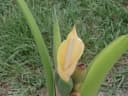
Xanthosoma sagittifolium
Xanthosoma sagittifolium
Family: Araceae
Cultivation
Tania is often grown where the soil moisture content is too low for the successful cultivation of Colocasia, but production is most successful in areas of high air humidity. The crop is often restricted to lowland areas where climatic conditions favour rapid growth, it grows best at elevations below 800 metres, though successful crops have been produced at elevations up to 1,900 metres. It grows best in areas with a mean annual rainfall in the range 1,000 - 2,000mm, but tolerates 750 - 6,000mm.
Full cultivation guide →
Xanthosoma striatipes
Xanthosoma striatipes
Family: Araceae
Cultivation
Like many species in the family Araceae, this plant has the ability to heat the flowering spadix as the pollen becomes ready for fertilization. This heat greatly increases the strength of the aroma released by the plant, thus attracting more pollinating insects. It can also have the effect of making the insects more active, thus increasing the level of fertilization.
Full cultivation guide →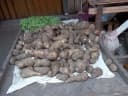
Xanthosoma violaceum
Xanthosoma violaceum
Family: Araceae
Cultivation
A plant of the moister tropics, preferring an annual rainfall in the region 1,000 - 1,500mm. Succeeds in full sun or light shade, requiring high levels of organic matter in the soil. Prefers a pH in the range 5.5 - 6.5.
Full cultivation guide →