Sesbania — 18 species
Botanical species in the genus Sesbania recorded in the PlantPeers database.

Sesbania bispinosa
Sesbania bispinosa
Family: Fabaceae
Cultivation
A plant of subtropical to tropical areas, where it is found at elevations up to 1,200 metres. It grows best in areas where the mean annual temperature falls within the range 18 - 30°c, though it can tolerate 10 - 34°c. It prefers a mean annual rainfall of 700 - 1,200mm, but tolerates 500 - 2,900mm.
Full cultivation guide →
Sesbania cannabina
Sesbania cannabina
Family: Fabaceae
Cultivation
Sesbania cannabina is mainly found in tropical regions but moves into the subtropiclal and warm temperate regions of southeastern Australia. Requires a sunny position. Growing best in heavy soils, plants are able to withstand waterlogged conditions.
Full cultivation guide →Sesbania cinerascens
Sesbania cinerascens
Family: Fabaceae
Cultivation
This species has a symbiotic relationship with certain soil bacteria, these bacteria form nodules on the roots and fix atmospheric nitrogen. Some of this nitrogen is utilized by the growing plant but some can also be used by other plants growing nearby.
Full cultivation guide →Sesbania drummondii
Sesbania drummondii
Family: Fabaceae
Cultivation
Sesbania drummondii is a subtropical plant and is not very cold tolerant, being damaged by temperatures down to around -4°c. In mild winter areas, although top growth may be killed off, the plant will often resprout from the lower 30 - 50cm of the stem. Requires a sunny position, growing best in moist to wet soils.
Full cultivation guide →
Sesbania formosa
Sesbania formosa
Family: Fabaceae
Cultivation
A plant of the lowland tropics, where it is found at elevations up to 150 metres. It grows best in areas where annual daytime temperatures are within the range 22 - 38°c, but can tolerate 14 - 45°c. It prefers a mean annual rainfall in the range 250 - 1,100mm, but tolerates 100 - 1,300mm.
Full cultivation guide →
Sesbania grandiflora
Sesbania grandiflora
Family: Fabaceae
Cultivation
Sesbania grandiflora is well adapted to hot, humid environments in the lowland tropics. It succeeds at elevations below 1,000 metres with a mean annual temperature in the range 22 - 30°c, and a mean annual rainfall of 2,000 - 4,000 mm, exceptionally tolerating rainfall as low as 800mm per year. It lacks tolerance for cool temperatures below about 10°c.
Full cultivation guide →Sesbania herbacea
Sesbania herbacea
Family: Fabaceae
Cultivation
Sesbania herbacea is not very cold tolerant, being killed by light frosts. In frost-free regions the plant perennates with a main stem that often becomes woody with age. It grows best in regions with hot summers and low humidity.
Full cultivation guide →Sesbania javanica
Sesbania javanica
Family: Fabaceae
Cultivation
This species has a symbiotic relationship with certain soil bacteria, these bacteria form nodules on the roots and fix atmospheric nitrogen. Some of this nitrogen is utilized by the growing plant but some can also be used by other plants growing nearby.
Full cultivation guide →Sesbania macrantha
Sesbania macrantha
Family: Fabaceae
Cultivation
Sesbania macrantha grows under a variety of climatic conditions from the tropics to the frost-free subtropical regions, and is sometimes grown as an annual where frosts do occur. It can be found cultivated at elevations up to 2,300 metres in E. Africa, however growth rates and yields are lower than at lower elevations.
Full cultivation guide →Sesbania pachycarpa
Sesbania pachycarpa
Family: Fabaceae
Cultivation
This species has a symbiotic relationship with certain soil bacteria, these bacteria form nodules on the roots and fix atmospheric nitrogen. Some of this nitrogen is utilized by the growing plant but some can also be used by other plants growing nearby.
Full cultivation guide →Sesbania rostrata
Sesbania rostrata
Family: Fabaceae
Cultivation
A plant of the tropics, where it is found at elevations up to 1,600 metres. It grows best in areas where annual daytime temperatures are within the range 15 - 30°c, but can tolerate 10 - 35°c. It grows best at temperatures above 25°c.
Full cultivation guide →
Sesbania sericea
Sesbania sericea
Family: Fabaceae
Cultivation
A plant of arid to moist tropical and subtropical regions, where it is found at elevations up to 1,250 metres. It grows in areas where the mean annual rainfall is in the range 500 - 2,000mm. The plant is tolerant of high temperatures, at least up to 40°c, but does not tolerate even light frosts.
Full cultivation guide →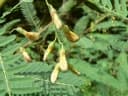
Sesbania sesban
Sesbania sesban
Family: Fabaceae
Cultivation
A plant of the subtropics, also succeeding at higher elevations in the tropics, being found at elevations of 100 - 2,300 metres. It grows best in areas where annual daytime temperatures are within the range 18 - 28°c, but can tolerate 10 - 45°c. When dormant, the plant can survive temperatures down to about -5°c, but young growth can be severely damaged at -1°c.
Full cultivation guide →Sesbania speciosa
Sesbania speciosa
Family: Fabaceae
Cultivation
Grows best in a sunny position. It tolerates wet and saline soils. This species has a symbiotic relationship with certain soil bacteria, these bacteria form nodules on the roots and fix atmospheric nitrogen.
Full cultivation guide →Sesbania tetraptera
Sesbania tetraptera
Family: Fabaceae
Cultivation
Requires a sunny position. Plants can withstand seasonal inundation of the soil. This species has a symbiotic relationship with certain soil bacteria, these bacteria form nodules on the roots and fix atmospheric nitrogen.
Full cultivation guide →Sesbania tomentosa
Sesbania tomentosa
Family: Fabaceae
Cultivation
Prefers a sunny position and a well-drained, light-textured soil. A xeric plant, growing best in dry conditions and generally tolerant of strong winds and salt spray. Established plants are drought tolerant.
Full cultivation guide →