Mucuna — 19 species
Botanical species in the genus Mucuna recorded in the PlantPeers database.

Mucuna aimun
Mucuna aimun
Family: Fabaceae
Cultivation
Mucuna species generally grow best in a shady position in a humus-rich, moist but well-drained soil. This species resembles Mucuna mollissima, Mucuna platyphylla, Mucuna tomentosa and Mucuna verdcourtii, differing from them in pod and seed characters.
Full cultivation guide →Mucuna biplicata
Mucuna biplicata
Family: Fabaceae
Cultivation
Mucuna species generally grow best in a shady position in a humus-rich, moist but well-drained soil. This species is found in the wild on limestone, red soil, yellow sandy clay, loam and sands.
Full cultivation guide →Mucuna bracteata
Mucuna bracteata
Family: Fabaceae
Cultivation
Prefers a well-drained, moist, humus-rich soil and a position in full sun or partial shade. This species is extremely similar to Mucuna pruriens, and is only distinguished by the thickly textured robust-veined ovate-rhombic leaflets with indumentum abaxially conspicuously sparser on the veins than on the leaf surface, the lower part of the inflorescence with many flowerless nodes with scars or persistent bracts, and the almost straight legume.
Full cultivation guide →Mucuna elmeri
Mucuna elmeri
Family: Fabaceae
Cultivation
Mucuna species generally grow best in a shady position in a humus-rich, moist but well-drained soil.
Full cultivation guide →Mucuna flagellipes
Mucuna flagellipes
Family: Fabaceae
Cultivation
Mucuna species generally grow best in a shady position in a humus-rich, moist but well-drained soil. Plants can flower and produce fruit all year round. The whole plant turns black when dried.
Full cultivation guide →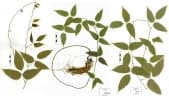
Mucuna gigantea
Mucuna gigantea
Family: Fabaceae
Cultivation
A plant mainly of tropical lowland areas, but is also found at elevations up to 1,800 metres in Africa. Mucuna species generally grow best in a shady position in a humus-rich, moist but well-drained soil. Initial growth of the plant is rapid - seedlings may attain a height of more than 1 metre within 3 weeks.
Full cultivation guide →Mucuna macrophylla
Mucuna macrophylla
Family: Fabaceae
Cultivation
Mucuna species generally grow best in a shady position in a humus-rich, moist but well-drained soil.
Full cultivation guide →
Mucuna mollissima
Mucuna mollissima
Family: Fabaceae
Cultivation
Mucuna species generally grow best in a shady position in a humus-rich, moist but well-drained soil.
Full cultivation guide →
Mucuna monosperma
Mucuna monosperma
Family: Fabaceae
Cultivation
Mucuna species generally grow best in a shady position in a humus-rich, moist but well-drained soil. This species has a symbiotic relationship with certain soil bacteria; these bacteria form nodules on the roots and fix atmospheric nitrogen. Some of this nitrogen is utilized by the growing plant but some can also be used by other plants growing nearby.
Full cultivation guide →Mucuna novo-guineensis
Mucuna novo-guineensis
Family: Fabaceae
Cultivation
Mucuna species generally grow best in a shady position in a humus-rich, moist but well-drained soil. This species is found in the wild in stoney clay, limestone, granite, volcanic and sedimentary soils. This species has a symbiotic relationship with certain soil bacteria; these bacteria form nodules on the roots and fix atmospheric nitrogen.
Full cultivation guide →Mucuna paniculata
Mucuna paniculata
Family: Fabaceae
Cultivation
Mucuna species generally grow best in a shady position in a humus-rich, moist but well-drained soil.
Full cultivation guide →Mucuna platyphylla
Mucuna platyphylla
Family: Fabaceae
Cultivation
Mucuna species generally grow best in a shady position in a humus-rich, moist but well-drained soil.
Full cultivation guide →
Mucuna poggei
Mucuna poggei
Family: Fabaceae
Cultivation
Mucuna species generally grow best in a shady position in a humus-rich, moist but well-drained soil. Contact with the sap stains hands and iron implements brown-red. This species has a symbiotic relationship with certain soil bacteria; these bacteria form nodules on the roots and fix atmospheric nitrogen.
Full cultivation guide →
Mucuna pruriens
Mucuna pruriens
Family: Fabaceae
Cultivation
A plant of the hot and humid tropics, where it is found at elevations up to 2,100 metres. It grows best in areas where annual daytime temperatures are within the range 20 - 30°c, but can tolerate 10 - 34°c. Young growth can be severely damaged at 5°c.
Full cultivation guide →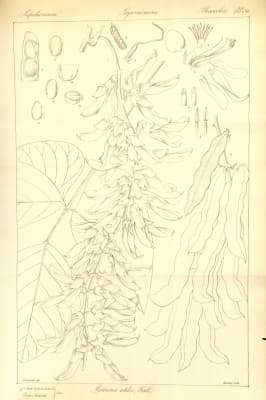
Mucuna pruriens utilis
Mucuna pruriens utilis
Family: Fabaceae
Cultivation
Velvet bean is native to the hot and humid tropics, where it is found at elevations up to 2,100 metres, though it can also be cultivated in the sub-tropical and warm temperate regions. It grows best in areas where annual daytime temperatures are within the range 20 - 30°c, but can tolerate 10 - 35°c. Young growth can be severely damaged at 5°c.
Full cultivation guide →Mucuna reticulata
Mucuna reticulata
Family: Fabaceae
Cultivation
Mucuna species generally grow best in a shady position in a humus-rich, moist but well-drained soil. This species is found in the wild on coral limestome soils.
Full cultivation guide →
Mucuna sloanei
Mucuna sloanei
Family: Fabaceae
Cultivation
Mucuna species generally grow best in a shady position in a humus-rich, moist but well-drained soil. Cultivation of Mucuna sloanei is done using tall poles, as for climbing types of common bean. There are conflicting reports on whether or not this species has a symbiotic relationship with certain soil bacteria, so it is unclear as to whether it fixes atmospheric nitrogen.
Full cultivation guide →
Mucuna urens
Mucuna urens
Family: Fabaceae
Cultivation
Succeeds in full sun and in partial shade. Mucuna species generally grow best in a shady position in a humus-rich, moist but well-drained soil. This species has a symbiotic relationship with certain soil bacteria; these bacteria form nodules on the roots and fix atmospheric nitrogen.
Full cultivation guide →