Jasminum — 12 species
Botanical species in the genus Jasminum recorded in the PlantPeers database.
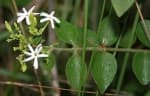
Jasminum auriculatum
Jasminum auriculatum
Family: Oleaceae
Cultivation
Succeeds in full sun and in moderate shade. An easy to grow plant, it tolerates dry to moist soils. Prefers a fertile, humus-rich, moist but well-drained soil.
Full cultivation guide →
Jasminum elongatum
Jasminum elongatum
Family: Oleaceae
Cultivation
Members of this genus generally succeed in full sun or partial shade, preferring a fertile, humus-rich, moist but well-drained soil.
Full cultivation guide →
Jasminum grandiflorum
Jasminum grandiflorum
Family: Oleaceae
Cultivation
Jasminum grandiflorum can be grown from the warm temperate to the tropical zones. When grown commercially, plantations are usually below elevations of 500 metres. The plant is day-neutral, and floral initiation is promoted by high day and low night temperatures.
Full cultivation guide →
Jasminum humile
Jasminum humile
Family: Oleaceae
Cultivation
Succeeds in a good well-drained loam in a sunny position. Tolerates light shade. Tolerates most soil types, including dry soils once it is established.
Full cultivation guide →
Jasminum lanceolaria
Jasminum lanceolaria
Family: Oleaceae
Cultivation
Members of this genus generally succeed in full sun or partial shade, preferring a fertile, humus-rich, moist but well-drained soil.
Full cultivation guide →
Jasminum multiflorum
Jasminum multiflorum
Family: Oleaceae
Cultivation
Grows best in a sunny position. Members of this genus generally succeed in full sun or partial shade, preferring a fertile, humus-rich, moist but well-drained soil. Plants can flower nearly all year round.
Full cultivation guide →
Jasminum nervosum
Jasminum nervosum
Family: Oleaceae
Cultivation
Members of this genus generally succeed in full sun or partial shade, preferring a fertile, humus-rich, moist but well-drained soil. The flowers are fragrant.
Full cultivation guide →Jasminum niloticum
Jasminum niloticum
Family: Oleaceae
Cultivation
Members of this genus generally succeed in full sun or partial shade, preferring a fertile, humus-rich, moist but well-drained soil. Jasmine flowers are picked manually between dawn and 10 a.m., during the hot season in India even between 3 - 8 a.m. Preferably only half-opened and fresh fully opened flowers must be picked, not buds or old (yellowish) flowers, as these will depress the quality of the essential oil.
Full cultivation guide →Jasminum nudiflorum
Jasminum nudiflorum
Family: Oleaceae
Cultivation
Succeeds in a good well-drained loam. Grows well in heavy clay soils. Prefers a good soil and a sunny position but succeeds in shade, including on a north facing wall.
Full cultivation guide →
Jasminum odoratissimum
Jasminum odoratissimum
Family: Oleaceae
Cultivation
We have almost no information on this species, though one report says that it can succeed outdoors in the mildest areas of Britain. Most members of this genus succeed in a good well-drained loam. The flowers have a heavy sweet perfume.
Full cultivation guide →Jasminum officinale
Jasminum officinale
Family: Oleaceae
Cultivation
Succeeds in a good well-drained loam, preferring a sunny position. Very shade tolerant, it succeeds on a north facing wall. Plants are hardy to about -15°c.
Full cultivation guide →
Jasminum sambac
Jasminum sambac
Family: Oleaceae
Cultivation
Succeeds in lowland areas of the tropics and subtropics. Plants can only tolerate occasional light frosts. Succeeds in full sun and in partial shade.
Full cultivation guide →