Handroanthus — 20 species
Botanical species in the genus Handroanthus recorded in the PlantPeers database.

Handroanthus albus
Handroanthus albus
Family: Bignoniaceae
Cultivation
Grows best in a sunny position. Prefers a deep, fertile, moist but well-drained soil. Young plants grow away quickly, reaching a height of around 3.5 metres within 2 years.
Full cultivation guide →
Handroanthus arianeae
Handroanthus arianeae
Family: Bignoniaceae
Cultivation
Tolerant of sunny positions, though it usually germinates in the primary forest where it can tolerate considerable shade when young as it grows up to the light.
Full cultivation guide →Handroanthus barbatus
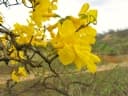
Handroanthus barbatus
Family: Bignoniaceae
Handroanthus capitatus
Handroanthus capitatus
Family: Bignoniaceae
Cultivation
Found in the wild mainly on well-drained soils low in nutrients. The plant is considered to be slow to regenerate in the wild.
Full cultivation guide →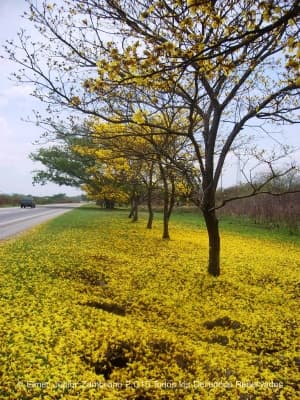
Handroanthus chrysanthus
Handroanthus chrysanthus
Family: Bignoniaceae
Cultivation
A plant of mainly moist or seasonally dry areas in the lowland tropics, where it can be found at elevations up to 750 metres. Plants are tolerant of salt-laden winds. A slow-growing species, though it has a relatively good natural regeneration.
Full cultivation guide →
Handroanthus chrysotrichus
Handroanthus chrysotrichus
Family: Bignoniaceae
Cultivation
Requires a sunny position. Freshly planted young trees grow away reasonably well.
Full cultivation guide →
Handroanthus cristatus
Handroanthus cristatus
Family: Bignoniaceae
Cultivation
Grows best in a sunny position. Found in the wild on well-drained, dry soils. Established plants are drought tolerant.
Full cultivation guide →
Handroanthus guayacan
Handroanthus guayacan
Family: Bignoniaceae
Cultivation
A plant of mainly moist areas in the lowland tropics, though it can also be found at elevations up to 1,200 metres. Plants are tolerant of salt-laden winds. This species is closely related to Handroanthus chrysanthus.
Full cultivation guide →
Handroanthus heptaphyllus
Handroanthus heptaphyllus
Family: Bignoniaceae
Cultivation
Grows best in a sunny position, though young plants are more tolerant of shade. Newly planted young trees usually grow away fairly quickly, reaching a height of around 3 metres after 2 years.
Full cultivation guide →
Handroanthus impetiginosus
Handroanthus impetiginosus
Family: Bignoniaceae
Cultivation
A species of higher elevations in the tropics, it is well-suited to subtropical areas. Prefers a well-drained fertile soil and a position in full sun. Young plants establish well, achieving heights of around 3.5 metres within 2 years.
Full cultivation guide →Handroanthus incanus
Handroanthus incanus
Family: Bignoniaceae
Cultivation
A slow-growing species, it is not readily cultivated in plantations.
Full cultivation guide →
Handroanthus ochraceus
Handroanthus ochraceus
Family: Bignoniaceae
Cultivation
Requires a sunny position. Well adapted to well-drained and dry soils. Established plants are drought tolerant.
Full cultivation guide →Handroanthus riodocensis
Handroanthus riodocensis
Family: Bignoniaceae
Cultivation
Succeeds in full sun to quite deep shade. Prefers a well-drained soil.
Full cultivation guide →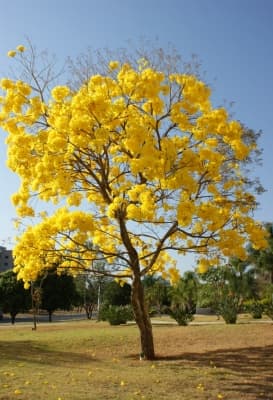
Handroanthus serratifolius
Handroanthus serratifolius
Family: Bignoniaceae
Cultivation
A plant of the moist, lowland tropics where it is found at elevations up to 800 metres. It grows best in areas where annual daytime temperatures are within the range 24 - 32°c, but can tolerate 20 - 36°c. It can be killed by temperatures of 5°c or lower.
Full cultivation guide →
Handroanthus umbellatus
Handroanthus umbellatus
Family: Bignoniaceae
Cultivation
Prefers a sunny position. Requires a moist to wet soil. Young plants have a moderate rate of growth, reaching a height of around 2.5 metres after 2 years.
Full cultivation guide →
Handroanthus vellosoi
Handroanthus vellosoi
Family: Bignoniaceae
Cultivation
Succeeds in a sunny position and also in moderate shade. Plants have a moderate rate of growth, not exceeding a height of 2.5 metres within 2 years from seed.
Full cultivation guide →