Astragalus — 62 species
Botanical species in the genus Astragalus recorded in the PlantPeers database.
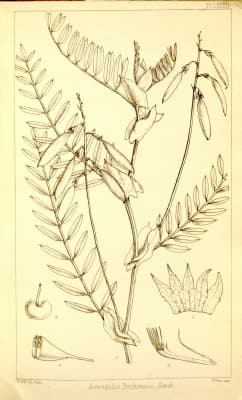

Astragalus australis
Astragalus australis
Family: Fabaceae
Cultivation
Requires a dry well-drained soil in a sunny position. Plants are intolerant of root disturbance and are best planted in their final positions whilst still small. This species has a symbiotic relationship with certain soil bacteria, these bacteria form nodules on the roots and fix atmospheric nitrogen.
Full cultivation guide →Astragalus boeticus
Astragalus boeticus
Family: Fabaceae
Cultivation
This species is not hardy in the colder areas of the temperate zone, it tolerates temperatures down to between -5 and -10°c. Requires a dry well-drained soil in a sunny position. Plants are intolerant of root disturbance and are best planted in their final positions whilst still small.
Full cultivation guide →Astragalus brachycalyx
Astragalus brachycalyx
Family: Fabaceae
Cultivation
Astragalus species that produce tragacanth gum are generally low-growing, spiny shrubs found in windy, usually semi-arid regions, often in mountains but also near the coast. They will often experience cold winters with frost, rain and snow and hot, dry summers. Most species grow in subarid areas with an annual precipitation of not more than 500mm, with a pronounced dry period of around four months in summer and most of the precipitation in winter.
Full cultivation guide →Astragalus canadensis
Astragalus canadensis
Family: Fabaceae
Cultivation
This species is not hardy in the colder areas of the Temperate zone, it tolerates temperatures down to between -5 and -10°c. A very strange report for this species, given that it is found as far north as the Northwest Territories of Canada. It is likely to be much more cold tolerant.
Full cultivation guide →Astragalus carduchorum
Astragalus carduchorum
Family: Fabaceae
Cultivation
Astragalus species that produce tragacanth gum are generally low-growing, spiny shrubs found in windy, usually semi-arid regions, often in mountains but also near the coast. They will often experience cold winters with frost, rain and snow and hot, dry summers. Most species grow in subarid areas with an annual precipitation of not more than 500mm, with a pronounced dry period of around four months in summer and most of the precipitation in winter.
Full cultivation guide →Astragalus caspicus
Astragalus caspicus
Family: Fabaceae
Cultivation
Astragalus species that produce tragacanth gum are generally low-growing, spiny shrubs found in windy, usually semi-arid regions, often in mountains but also near the coast. They will often experience cold winters with frost, rain and snow and hot, dry summers. Most species grow in subarid areas with an annual precipitation of not more than 500mm, with a pronounced dry period of around four months in summer and most of the precipitation in winter.
Full cultivation guide →Astragalus cephalotes
Astragalus cephalotes
Family: Fabaceae
Cultivation
Astragalus species that produce tragacanth gum are generally low-growing, spiny shrubs found in windy, usually semi-arid regions, often in mountains but also near the coast. They will often experience cold winters with frost, rain and snow and hot, dry summers. Most species grow in subarid areas with an annual precipitation of not more than 500mm, with a pronounced dry period of around four months in summer and most of the precipitation in winter.
Full cultivation guide →Astragalus ceramicus
Astragalus ceramicus
Family: Fabaceae
Cultivation
Requires a dry well-drained soil in a sunny position. Plants are intolerant of root disturbance and are best planted in their final positions whilst still small. This species has a symbiotic relationship with certain soil bacteria, these bacteria form nodules on the roots and fix atmospheric nitrogen.
Full cultivation guide →Astragalus cerasocrenus
Astragalus cerasocrenus
Family: Fabaceae
Cultivation
Astragalus cerasocrenus is found in the semi-arid to arid zone of central Asia, where it can experience very hot summers and cold winters. Tragacanthic Astragalus species generally prefer a gravelly soil with a small amount of fine earth. Requires a sunny position in a well-drained soil.
Full cultivation guide →Astragalus chartostegius
Astragalus chartostegius
Family: Fabaceae
Cultivation
Astragalus species that produce tragacanth gum are generally low-growing, spiny shrubs found in windy, usually semi-arid regions, often in mountaisn but also near the coast. They will often experience cold winters with frost, rain and snow and hot, dry summers. Most species grow in subarid areas with an annual precipitation of not more than 500mm, with a pronounced dry period of around four months in summer and most of the precipitation in winter.
Full cultivation guide →Astragalus chinensis
Astragalus chinensis
Family: Fabaceae
Cultivation
Requires a dry well-drained soil in a sunny position. Plants are intolerant of root disturbance and are best planted in their final positions whilst still small. This species has a symbiotic relationship with certain soil bacteria, these bacteria form nodules on the roots and fix atmospheric nitrogen.
Full cultivation guide →Astragalus christianus
Astragalus christianus
Family: Fabaceae
Cultivation
Requires a dry well-drained soil in a sunny position. Plants are intolerant of root disturbance and are best planted in their final positions whilst still small. This species has a symbiotic relationship with certain soil bacteria, these bacteria form nodules on the roots and fix atmospheric nitrogen.
Full cultivation guide →Astragalus crassicarpus
Astragalus crassicarpus
Family: Fabaceae
Cultivation
Requires a dry well-drained soil in a sunny position. Plants are intolerant of root disturbance and are best planted in their final positions whilst still small. The stems are sometimes prostrate.
Full cultivation guide →Astragalus creticus
Astragalus creticus
Family: Fabaceae
Cultivation
Astragalus species that produce tragacanth gum are generally low-growing, spiny shrubs found in windy, usually semi-arid regions, often in mountaisn but also near the coast. They will often experience cold winters with frost, rain and snow and hot, dry summers. Most species grow in subarid areas with an annual precipitation of not more than 500mm, with a pronounced dry period of around four months in summer and most of the precipitation in winter.
Full cultivation guide →Astragalus crotalariae
Astragalus crotalariae
Family: Fabaceae
Cultivation
Astragalus crotalariae is native to arid and semi-arid regions of southwestern N. America where it is found at elevations below 250 metres. The summers are hot and the winters can bw very cold, with temperatures falling below freezing.
Full cultivation guide →Astragalus dasyanthus
Astragalus dasyanthus
Family: Fabaceae
Cultivation
The plant is likely to require a well-drained soil in a sunny position.
Full cultivation guide →Astragalus dipodurus
Astragalus dipodurus
Family: Fabaceae
Cultivation
Astragalus species that produce tragacanth gum are generally low-growing, spiny shrubs found in windy, usually semi-arid regions, often in mountaisn but also near the coast. They will often experience cold winters with frost, rain and snow and hot, dry summers. Most species grow in subarid areas with an annual precipitation of not more than 500mm, with a pronounced dry period of around four months in summer and most of the precipitation in winter.
Full cultivation guide →Astragalus echidnaeformis
Astragalus echidnaeformis
Family: Fabaceae
Cultivation
Astragalus species that produce tragacanth gum are generally low-growing, spiny shrubs found in windy, usually semi-arid regions, often in mountaisn but also near the coast. They will often experience cold winters with frost, rain and snow and hot, dry summers. Most species grow in subarid areas with an annual precipitation of not more than 500mm, with a pronounced dry period of around four months in summer and most of the precipitation in winter.
Full cultivation guide →Astragalus echinus
Astragalus echinus
Family: Fabaceae
Cultivation
Requires a dry well-drained soil in a sunny position. Plants are intolerant of root disturbance and are best planted in their final positions whilst still small. This species has a symbiotic relationship with certain soil bacteria, these bacteria form nodules on the roots and fix atmospheric nitrogen.
Full cultivation guide →Astragalus edulis
Astragalus edulis
Family: Fabaceae
Cultivation
Requires a dry well-drained soil in a sunny position. Succeeds in poor soils. Plants are intolerant of root disturbance and are best planted in their final positions whilst still small.
Full cultivation guide →Astragalus exscapus
Astragalus exscapus
Family: Fabaceae
Cultivation
Requires a dry well-drained soil in a sunny position. Succeeds in poor soils. Plants are intolerant of root disturbance and are best planted in their final positions whilst still small.
Full cultivation guide →Astragalus floridulus
Astragalus floridulus
Family: Fabaceae
Cultivation
Requires a dry well-drained soil in a sunny position. Succeeds in poor soils. Plants are intolerant of root disturbance and are best planted in their final positions whilst still small.
Full cultivation guide →Astragalus florulentus
Astragalus florulentus
Family: Fabaceae
Cultivation
Astragalus species that produce tragacanth gum are generally low-growing, spiny shrubs found in windy, usually semi-arid regions, often in mountaisn but also near the coast. They will often experience cold winters with frost, rain and snow and hot, dry summers. Most species grow in subarid areas with an annual precipitation of not more than 500mm, with a pronounced dry period of around four months in summer and most of the precipitation in winter.
Full cultivation guide →
Astragalus garbancillo
Astragalus garbancillo
Family: Fabaceae
Cultivation
A plant of the subtropical to tropical zones, usually found at higher elevations up to 3,500 metres. It can be cultivated outdoors in the warmer regions of the temperate zone, where winters are mild Requires a dry well-drained soil in a sunny position. Plants are intolerant of root disturbance and are best planted in their final positions whilst still small.
Full cultivation guide →Astragalus glabrifolius
Astragalus glabrifolius
Family: Fabaceae
Cultivation
Astragalus species that produce tragacanth gum are generally low-growing, spiny shrubs found in windy, usually semi-arid regions, often in mountaisn but also near the coast. They will often experience cold winters with frost, rain and snow and hot, dry summers. Most species grow in subarid areas with an annual precipitation of not more than 500mm, with a pronounced dry period of around four months in summer and most of the precipitation in winter.
Full cultivation guide →Astragalus globiflorus
Astragalus globiflorus
Family: Fabaceae
Cultivation
Astragalus species that produce tragacanth gum are generally low-growing, spiny shrubs found in windy, usually semi-arid regions, often in mountaisn but also near the coast. They will often experience cold winters with frost, rain and snow and hot, dry summers. Most species grow in subarid areas with an annual precipitation of not more than 500mm, with a pronounced dry period of around four months in summer and most of the precipitation in winter.
Full cultivation guide →Astragalus glycyphyllos
Astragalus glycyphyllos
Family: Fabaceae
Cultivation
Requires a well-drained soil in a sunny position. Prefers chalk and limestone soils, succeeding in grassland. Succeeds in poor soils.
Full cultivation guide →Astragalus gossypinus
Astragalus gossypinus
Family: Fabaceae
Cultivation
Astragalus species that produce tragacanth gum are generally low-growing, spiny shrubs found in windy, usually semi-arid regions, often in mountaisn but also near the coast. They will often experience cold winters with frost, rain and snow and hot, dry summers. Most species grow in subarid areas with an annual precipitation of not more than 500mm, with a pronounced dry period of around four months in summer and most of the precipitation in winter.
Full cultivation guide →Astragalus gummifer
Astragalus gummifer
Family: Fabaceae
Cultivation
Astragalus species that produce tragacanth gum are generally low-growing, spiny shrubs found in windy, usually semi-arid regions, often in mountaisn but also near the coast. They will often experience cold winters with frost, rain and snow and hot, dry summers. Most species grow in subarid areas with an annual precipitation of not more than 500mm, with a pronounced dry period of around four months in summer and most of the precipitation in winter.
Full cultivation guide →Astragalus hamosus
Astragalus hamosus
Family: Fabaceae
Cultivation
Requires a dry well-drained soil in a sunny position. Grows well in Cornwall. Plants are intolerant of root disturbance and are best sown in situ.
Full cultivation guide →Astragalus henryi
Astragalus henryi
Family: Fabaceae
Cultivation
Requires a dry well-drained soil in a sunny position. Plants are intolerant of root disturbance and are best planted in their final positions whilst still small. This species has a symbiotic relationship with certain soil bacteria, these bacteria form nodules on the roots and fix atmospheric nitrogen.
Full cultivation guide →Astragalus hoantchy
Astragalus hoantchy
Family: Fabaceae
Cultivation
Requires a dry well-drained soil in a sunny position. Plants are intolerant of root disturbance and are best planted in their final positions whilst still small. This species has a symbiotic relationship with certain soil bacteria, these bacteria form nodules on the roots and fix atmospheric nitrogen.
Full cultivation guide →Astragalus isauricus
Astragalus isauricus
Family: Fabaceae
Cultivation
Astragalus species that produce tragacanth gum are generally low-growing, spiny shrubs found in windy, usually semi-arid regions, often in mountaisn but also near the coast. They will often experience cold winters with frost, rain and snow and hot, dry summers. Most species grow in subarid areas with an annual precipitation of not more than 500mm, with a pronounced dry period of around four months in summer and most of the precipitation in winter.
Full cultivation guide →Astragalus karjaginii
Astragalus karjaginii
Family: Fabaceae
Cultivation
Astragalus species that produce tragacanth gum are generally low-growing, spiny shrubs found in windy, usually semi-arid regions, often in mountaisn but also near the coast. They will often experience cold winters with frost, rain and snow and hot, dry summers. Most species grow in subarid areas with an annual precipitation of not more than 500mm, with a pronounced dry period of around four months in summer and most of the precipitation in winter.
Full cultivation guide →Astragalus kurdicus
Astragalus kurdicus
Family: Fabaceae
Cultivation
Astragalus species that produce tragacanth gum are generally low-growing, spiny shrubs found in windy, usually semi-arid regions, often in mountaisn but also near the coast. They will often experience cold winters with frost, rain and snow and hot, dry summers. Most species grow in subarid areas with an annual precipitation of not more than 500mm, with a pronounced dry period of around four months in summer and most of the precipitation in winter.
Full cultivation guide →Astragalus leioclados
Astragalus leioclados
Family: Fabaceae
Cultivation
Astragalus species that produce tragacanth gum are generally low-growing, spiny shrubs found in windy, usually semi-arid regions, often in mountaisn but also near the coast. They will often experience cold winters with frost, rain and snow and hot, dry summers. Most species grow in subarid areas with an annual precipitation of not more than 500mm, with a pronounced dry period of around four months in summer and most of the precipitation in winter.
Full cultivation guide →Astragalus lentiginosus
Astragalus lentiginosus
Family: Fabaceae
Cultivation
Requires a dry well-drained soil in a sunny position. Plants are intolerant of root disturbance and are best planted in their final positions whilst still small. This species has a symbiotic relationship with certain soil bacteria, these bacteria form nodules on the roots and fix atmospheric nitrogen.
Full cultivation guide →Astragalus longifolius
Astragalus longifolius
Family: Fabaceae
Cultivation
Astragalus species that produce tragacanth gum are generally low-growing, spiny shrubs found in windy, usually semi-arid regions, often in mountaisn but also near the coast. They will often experience cold winters with frost, rain and snow and hot, dry summers. Most species grow in subarid areas with an annual precipitation of not more than 500mm, with a pronounced dry period of around four months in summer and most of the precipitation in winter.
Full cultivation guide →Astragalus massiliensis
Astragalus massiliensis
Family: Fabaceae
Cultivation
Astragalus species that produce tragacanth gum are generally low-growing, spiny shrubs found in windy, usually semi-arid regions, often in mountaisn but also near the coast. They will often experience cold winters with frost, rain and snow and hot, dry summers. Most species grow in subarid areas with an annual precipitation of not more than 500mm, with a pronounced dry period of around four months in summer and most of the precipitation in winter.
Full cultivation guide →Astragalus microcephalus
Astragalus microcephalus
Family: Fabaceae
Cultivation
Astragalus species that produce tragacanth gum are generally low-growing, spiny shrubs found in windy, usually semi-arid regions, often in mountaisn but also near the coast. They will often experience cold winters with frost, rain and snow and hot, dry summers. Most species grow in subarid areas with an annual precipitation of not more than 500mm, with a pronounced dry period of around four months in summer and most of the precipitation in winter.
Full cultivation guide →Astragalus mongholicus
Astragalus mongholicus
Family: Fabaceae
Cultivation
Plants are hardy to at least -15°c. Requires a dry well-drained soil in a sunny position. Prefers a sandy slightly alkaline soil.
Full cultivation guide →Astragalus multiceps
Astragalus multiceps
Family: Fabaceae
Cultivation
. Requires a dry well-drained soil in a sunny position. Plants are intolerant of root disturbance and are best planted in their final positions whilst still small.
Full cultivation guide →Astragalus myriacanthus
Astragalus myriacanthus
Family: Fabaceae
Cultivation
Astragalus species that produce tragacanth gum are generally low-growing, spiny shrubs found in windy, usually semi-arid regions, often in mountaisn but also near the coast. They will often experience cold winters with frost, rain and snow and hot, dry summers. Most species grow in subarid areas with an annual precipitation of not more than 500mm, with a pronounced dry period of around four months in summer and most of the precipitation in winter.
Full cultivation guide →Astragalus ochrochlorus
Astragalus ochrochlorus
Family: Fabaceae
Cultivation
Astragalus species that produce tragacanth gum are generally low-growing, spiny shrubs found in windy, usually semi-arid regions, often in mountaisn but also near the coast. They will often experience cold winters with frost, rain and snow and hot, dry summers. Most species grow in subarid areas with an annual precipitation of not more than 500mm, with a pronounced dry period of around four months in summer and most of the precipitation in winter.
Full cultivation guide →Astragalus octopus
Astragalus octopus
Family: Fabaceae
Cultivation
Astragalus species that produce tragacanth gum are generally low-growing, spiny shrubs found in windy, usually semi-arid regions, often in mountaisn but also near the coast. They will often experience cold winters with frost, rain and snow and hot, dry summers. Most species grow in subarid areas with an annual precipitation of not more than 500mm, with a pronounced dry period of around four months in summer and most of the precipitation in winter.
Full cultivation guide →Astragalus oleifolius
Astragalus oleifolius
Family: Fabaceae
Cultivation
Astragalus species that produce tragacanth gum are generally low-growing, spiny shrubs found in windy, usually semi-arid regions, often in mountaisn but also near the coast. They will often experience cold winters with frost, rain and snow and hot, dry summers. Most species grow in subarid areas with an annual precipitation of not more than 500mm, with a pronounced dry period of around four months in summer and most of the precipitation in winter.
Full cultivation guide →Astragalus parnassi
Astragalus parnassi
Family: Fabaceae
Cultivation
Astragalus species that produce tragacanth gum are generally low-growing, spiny shrubs found in windy, usually semi-arid regions, often in mountaisn but also near the coast. They will often experience cold winters with frost, rain and snow and hot, dry summers. Most species grow in subarid areas with an annual precipitation of not more than 500mm, with a pronounced dry period of around four months in summer and most of the precipitation in winter.
Full cultivation guide →Astragalus pulvinatus
Astragalus pulvinatus
Family: Fabaceae
Cultivation
Astragalus species that produce tragacanth gum are generally low-growing, spiny shrubs found in windy, usually semi-arid regions, often in mountaisn but also near the coast. They will often experience cold winters with frost, rain and snow and hot, dry summers. Most species grow in subarid areas with an annual precipitation of not more than 500mm, with a pronounced dry period of around four months in summer and most of the precipitation in winter.
Full cultivation guide →Astragalus pycnocladus
Astragalus pycnocladus
Family: Fabaceae
Cultivation
Astragalus species that produce tragacanth gum are generally low-growing, spiny shrubs found in windy, usually semi-arid regions, often in mountaisn but also near the coast. They will often experience cold winters with frost, rain and snow and hot, dry summers. Most species grow in subarid areas with an annual precipitation of not more than 500mm, with a pronounced dry period of around four months in summer and most of the precipitation in winter.
Full cultivation guide →Astragalus reflexistipulus
Astragalus reflexistipulus
Family: Fabaceae
Cultivation
Requires a dry well-drained soil in a sunny position. Plants are intolerant of root disturbance and are best planted in their final positions whilst still small. This species has a symbiotic relationship with certain soil bacteria, these bacteria form nodules on the roots and fix atmospheric nitrogen.
Full cultivation guide →Astragalus shinanensis
Astragalus shinanensis
Family: Fabaceae
Cultivation
Requires a dry well-drained soil in a sunny position. Plants are intolerant of root disturbance and are best planted in their final positions whilst still small. This species has a symbiotic relationship with certain soil bacteria, these bacteria form nodules on the roots and fix atmospheric nitrogen.
Full cultivation guide →Astragalus sinicus
Astragalus sinicus
Family: Fabaceae
Cultivation
Requires a dry well-drained soil in a sunny position. This species is often found in moist or wet soils. Plants are intolerant of root disturbance and are best planted in their final positions whilst still small.
Full cultivation guide →Astragalus sirinicus
Astragalus sirinicus
Family: Fabaceae
Cultivation
Astragalus species that produce tragacanth gum are generally low-growing, spiny shrubs found in windy, usually semi-arid regions, often in mountaisn but also near the coast. They will often experience cold winters with frost, rain and snow and hot, dry summers. Most species grow in subarid areas with an annual precipitation of not more than 500mm, with a pronounced dry period of around four months in summer and most of the precipitation in winter.
Full cultivation guide →Astragalus stenonychioides
Astragalus stenonychioides
Family: Fabaceae
Cultivation
Astragalus species that produce tragacanth gum are generally low-growing, spiny shrubs found in windy, usually semi-arid regions, often in mountaisn but also near the coast. They will often experience cold winters with frost, rain and snow and hot, dry summers. Most species grow in subarid areas with an annual precipitation of not more than 500mm, with a pronounced dry period of around four months in summer and most of the precipitation in winter.
Full cultivation guide →Astragalus strobiliferus
Astragalus strobiliferus
Family: Fabaceae
Cultivation
Astragalus species that produce tragacanth gum are generally low-growing, spiny shrubs found in windy, usually semi-arid regions, often in mountaisn but also near the coast. They will often experience cold winters with frost, rain and snow and hot, dry summers. Most species grow in subarid areas with an annual precipitation of not more than 500mm, with a pronounced dry period of around four months in summer and most of the precipitation in winter.
Full cultivation guide →Astragalus stromatodes
Astragalus stromatodes
Family: Fabaceae
Cultivation
Astragalus species that produce tragacanth gum are generally low-growing, spiny shrubs found in windy, usually semi-arid regions, often in mountaisn but also near the coast. They will often experience cold winters with frost, rain and snow and hot, dry summers. Most species grow in subarid areas with an annual precipitation of not more than 500mm, with a pronounced dry period of around four months in summer and most of the precipitation in winter.
Full cultivation guide →Astragalus tragacantha
Astragalus tragacantha
Family: Fabaceae
Cultivation
Astragalus species that produce tragacanth gum are generally low-growing, spiny shrubs found in windy, usually semi-arid regions, often in mountaisn but also near the coast. They will often experience cold winters with frost, rain and snow and hot, dry summers. Most species grow in subarid areas with an annual precipitation of not more than 500mm, with a pronounced dry period of around four months in summer and most of the precipitation in winter.
Full cultivation guide →Astragalus turkmenorum
Astragalus turkmenorum
Family: Fabaceae
Cultivation
Astragalus species that produce tragacanth gum are generally low-growing, spiny shrubs found in windy, usually semi-arid regions, often in mountaisn but also near the coast. They will often experience cold winters with frost, rain and snow and hot, dry summers. Most species grow in subarid areas with an annual precipitation of not more than 500mm, with a pronounced dry period of around four months in summer and most of the precipitation in winter.
Full cultivation guide →Astragalus umbellatus
Astragalus umbellatus
Family: Fabaceae
Cultivation
Requires a dry well-drained soil in a sunny position. Prefers sandy soils in the wild. Plants are intolerant of root disturbance and are best planted in their final positions whilst still small.
Full cultivation guide →Astragalus verus
Astragalus verus
Family: Fabaceae
Cultivation
Requires a dry well-drained soil in a sunny position. Prefers sandy soils in the wild. Plants are intolerant of root disturbance and are best planted in their final positions whilst still small.
Full cultivation guide →