Amaranthus — 25 species
Botanical species in the genus Amaranthus recorded in the PlantPeers database.

Amaranthus albus
Amaranthus albus
Family: Amaranthaceae
Cultivation
Prefers a well-drained fertile soil in a sunny position. Requires a hot sheltered position if it is to do well. Plants are particularly susceptible to attacks by leaf-chewing insects.
Full cultivation guide →
Amaranthus blitoides
Amaranthus blitoides
Family: Amaranthaceae
Cultivation
Prefers a well-drained fertile soil in a sunny position. Requires a hot sheltered position if it is to do well. Plants are particularly susceptible to attacks by leaf-chewing insects.
Full cultivation guide →
Amaranthus blitum
Amaranthus blitum
Family: Amaranthaceae
Cultivation
Often cultivated, especially the form oleraceus, the plant succeeds from the temperate zone through to the tropics. It grows best in areas where annual daytime temperatures are within the range 21 - 27°c, but can tolerate 18 - 32°c. It can be killed by temperatures of 4°c or lower.
Full cultivation guide →
Amaranthus campestris
Amaranthus campestris
Family: Amaranthaceae
Cultivation
Prefers a well-drained fertile soil in a sunny position. Requires a hot sheltered position if it is to do well. Plants are particularly susceptible to attacks by leaf-chewing insects.
Full cultivation guide →
Amaranthus caudatus
Amaranthus caudatus
Family: Amaranthaceae
Cultivation
Amaranthus caudatus is a plant of the tropics, though it can be cultivated from the tropics to the temperate zones. It grows best in areas where annual daytime temperatures are within the range 21 - 28°c, but can tolerate 7 - 40°c. It can be killed by temperatures of 4°c or lower.
Full cultivation guide →
Amaranthus cruentus
Amaranthus cruentus
Family: Amaranthaceae
Cultivation
The plant can be cultivated from the tropics to the temperate zone. It grows best in areas where annual daytime temperatures are within the range 22 - 28°c, but can tolerate 10 - 45°c. It can be killed by temperatures of 4°c or lower.
Full cultivation guide →
Amaranthus dubius
Amaranthus dubius
Family: Amaranthaceae
Cultivation
A plant of the tropics, it has long been cultivated outside its natural range, succeeding from the temperate zone to most areas of the tropics, at elevations up to 1,200 metres. It grows best in areas where annual daytime temperatures are within the range 22 - 30°c, but can tolerate 12 - 45°c. It can be killed by temperatures of 4°c or lower.
Full cultivation guide →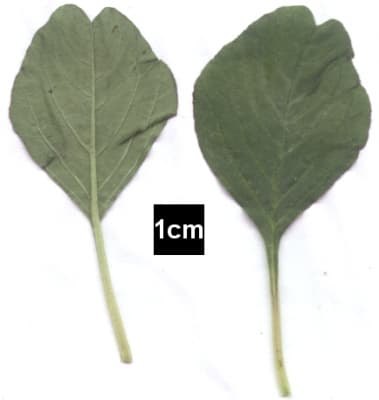
Amaranthus graecizans
Amaranthus graecizans
Family: Amaranthaceae
Cultivation
A plant of the warm temperate zone to the tropics, where it can be found at elevation up to 2,400 metres. It grows best in regions with a mean annual rainfall in the range 600 - 1,800mm - if there is less rainfall, then it is only found during the rainy season. Prefers a well-drained fertile soil in a sunny position, though it can also succeed in poorer soils and some shade.
Full cultivation guide →
Amaranthus hybridus
Amaranthus hybridus
Family: Amaranthaceae
Cultivation
A plant originally from the tropics, it is widely cultivated from the temperate zone through to most tropical areas, where it is found at elevations up to 1,300 metres. It grows best in areas where annual daytime temperatures are within the range 12 - 30°c, but can tolerate 8 - 35°c. It can be killed by temperatures of 4°c or lower.
Full cultivation guide →
Amaranthus hypochondriacus
Amaranthus hypochondriacus
Family: Amaranthaceae
Cultivation
Originally from the tropics, the plant has spread through cultivation and is now grown from the warm temperate zones to the tropics. It grows best in areas where annual daytime temperatures are within the range 19 - 23°c, but can tolerate 10 - 32°c. It can be killed by temperatures of 4°c or lower.
Full cultivation guide →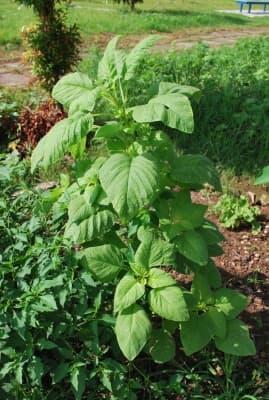
Amaranthus mangostanus
Amaranthus mangostanus
Family: Amaranthaceae
Cultivation
Prefers a well-drained fertile soil in a sunny position. Requires a hot sheltered position if it is to do well. Plants are particularly susceptible to attacks by leaf-chewing insects.
Full cultivation guide →Amaranthus mitchellii
Amaranthus mitchellii
Family: Amaranthaceae
Cultivation
Prefers a well-drained fertile soil in a sunny position. Requires a hot sheltered position if it is to do well. Plants are particularly susceptible to attacks by leaf-chewing insects.
Full cultivation guide →
Amaranthus pallidiflorus
Amaranthus pallidiflorus
Family: Amaranthaceae
Cultivation
Prefers a well-drained fertile soil in a sunny position. Requires a hot sheltered position if it is to do well. Plants are particularly susceptible to attacks by leaf-chewing insects.
Full cultivation guide →
Amaranthus palmeri
Amaranthus palmeri
Family: Amaranthaceae
Cultivation
Prefers a well-drained fertile soil in a sunny position. Requires a hot sheltered position if it is to do well. Plants are particularly susceptible to attacks by leaf-chewing insects.
Full cultivation guide →Amaranthus polystachyus
Amaranthus polystachyus
Family: Amaranthaceae
Cultivation
Prefers a well-drained fertile soil in a sunny position. Requires a hot sheltered position if it is to do well. Plants are particularly susceptible to attacks by leaf-chewing insects.
Full cultivation guide →
Amaranthus powellii
Amaranthus powellii
Family: Amaranthaceae
Cultivation
Prefers a well-drained fertile soil in a sunny position. Requires a hot sheltered position if it is to do well. Plants are particularly susceptible to attacks by leaf-chewing insects.
Full cultivation guide →
Amaranthus retroflexus
Amaranthus retroflexus
Family: Amaranthaceae
Cultivation
Originally a tropical plant, it can be found as a weed from the temperate zone through to the tropics. Prefers a well-drained fertile soil in a sunny position. Requires a hot sheltered position if it is to do well.
Full cultivation guide →
Amaranthus spinosus
Amaranthus spinosus
Family: Amaranthaceae
Cultivation
Prefers a well-drained fertile soil in a sunny position. Grows best in a moist soil, but is able to tolerate fairly dry soils and also quite wet, but not waterlogged, ones. Plants are particularly susceptible to attacks by leaf-chewing insects.
Full cultivation guide →Amaranthus standleyanus
Amaranthus standleyanus
Family: Amaranthaceae
Cultivation
Prefers a well-drained fertile soil in a sunny position. Requires a hot sheltered position if it is to do well. Plants are particularly susceptible to attacks by leaf-chewing insects.
Full cultivation guide →Amaranthus tenuifolius
Amaranthus tenuifolius
Family: Amaranthaceae
Cultivation
Prefers a well-drained fertile soil in a sunny position. Requires a hot sheltered position if it is to do well. Plants are particularly susceptible to attacks by leaf-chewing insects.
Full cultivation guide →Amaranthus thunbergii
Amaranthus thunbergii
Family: Amaranthaceae
Cultivation
Prefers a well-drained fertile soil in a sunny position. Prefers light soils. The plant grows quickly from seed - young shoots can be harvested from the wild three weeks after the rains have started, whilst repeated harvesting stimulates the growth of new shoots.
Full cultivation guide →
Amaranthus tricolor
Amaranthus tricolor
Family: Amaranthaceae
Cultivation
A plant originally from the tropics, it can be grown in a wide range of climates from the temperate zone to the tropics, where it thrives from near sea level to about 800 metres. It grows best in areas where annual daytime temperatures are within the range 22 - 30°c, but can tolerate 8 - 45°c. It can be killed by temperatures of 4°c or lower.
Full cultivation guide →Amaranthus tuberculatus
Amaranthus tuberculatus
Family: Amaranthaceae
Cultivation
Species in this genus generally prefer a well-drained fertile soil somewhat on the light side, and a sunny position. A dioecious species, both male and female forms of the plant need to be grown if fruit and seed are required.
Full cultivation guide →
Amaranthus viridis
Amaranthus viridis
Family: Amaranthaceae
Cultivation
Originally from the American tropics, the plant can be cultivated in a wide range of zones from the temperate through to many parts of the tropics. Prefers a well-drained fertile soil in a sunny position. Requires a hot sheltered position if it is to do well.
Full cultivation guide →
Amaranthus watsonii
Amaranthus watsonii
Family: Amaranthaceae
Cultivation
Prefers a well-drained fertile soil in a sunny position. Requires a hot sheltered position if it is to do well. Plants are particularly susceptible to attacks by leaf-chewing insects.
Full cultivation guide →