Sambucus — 21 species
Botanical species in the genus Sambucus recorded in the PlantPeers database.

Sambucus australasica
Sambucus australasica
Family: Adoxaceae
Cultivation
Tolerates most soils, including chalk, but prefers a moist loamy soil. Tolerates some shade but is best in a sunny position. Tolerates atmospheric pollution and coastal situations.
Full cultivation guide →
Sambucus australis
Sambucus australis
Family: Adoxaceae
Cultivation
A plant mainly of the subtropics, just entering the tropics at elevations around 1,000 metres.
Full cultivation guide →Sambucus caerulea
Sambucus caerulea
Family: Adoxaceae
Cultivation
Tolerates most soils, including chalk, but prefers a moist loamy soil. Grows well in heavy clay soils. Tolerates some shade but is best in a sunny position.
Full cultivation guide →Sambucus callicarpa
Sambucus callicarpa
Family: Adoxaceae
Cultivation
Tolerates most soils, including chalk, but prefers a moist loamy soil. Grows well in heavy clay soils. Tolerates some shade but is best in a sunny position.
Full cultivation guide →
Sambucus canadensis
Sambucus canadensis
Family: Adoxaceae
Cultivation
Sambucus canadensis is a very hardy plant with a wide range, found from the tropics to the temperate zone between latitudes of 9 - 65°N. It can be found from low to high elevations in the tropics as well as in the temperate zones. It can succeed in areas where the mean annual rainfall is within the range 300 - 4,000mm.
Full cultivation guide →Sambucus chinensis
Sambucus chinensis
Family: Adoxaceae
Cultivation
Tolerates most soils, including chalk, but prefers a moist loamy soil. Grows well in heavy clay soils. Tolerates some shade but is best in a sunny position.
Full cultivation guide →Sambucus ebulus
Sambucus ebulus
Family: Adoxaceae
Cultivation
Tolerates most soils, including chalk, but prefers a moist loamy soil. Grows well in heavy clay soils. Tolerates some shade but is best in a sunny position.
Full cultivation guide →Sambucus gaudichaudiana
Sambucus gaudichaudiana
Family: Adoxaceae
Cultivation
We have very little information on this species and do not know if it will be hardy in Britain, though judging by its native range it is only likely to be hardy outdoors in the mildest areas of the country. The plant is more of a sub-shrub, producing annual shoots from a perennial rootstock. The following notes are based on the general needs of the genus.
Full cultivation guide →
Sambucus javanica
Sambucus javanica
Family: Adoxaceae
Cultivation
We have very little information on this species and do not know if it will be hardy in Britain, though judging by its native range it is only likely to be hardy outdoors in the mildest areas of the country. There is some confusion over the true identity of this plant. Some authorities suggest that this name is a synonym of S. chinensis, and we also have two different authors for the name of this species, the name mentioned above, from, and also Blume, which is mentioned in.
Full cultivation guide →Sambucus latipinna
Sambucus latipinna
Family: Adoxaceae
Cultivation
We have very little information on this species and do not know if it will be hardy in Britain, though judging by its native range it could succeed outdoors in many parts of this country. The following notes are based on the general needs of the genus. Tolerates most soils, including chalk, but prefers a moist loamy soil.
Full cultivation guide →Sambucus melanocarpa
Sambucus melanocarpa
Family: Adoxaceae
Cultivation
Tolerates most soils, including chalk, but prefers a moist loamy soil. Grows well in heavy clay soils. Tolerates some shade but is best in a sunny position.
Full cultivation guide →Sambucus mexicana
Sambucus mexicana
Family: Adoxaceae
Cultivation
We have very little information on this species and do not know if it will be hardy in Britain, though judging by its native range it should succeed outdoors in many parts of this country. It is closely related to S. caerulea. The following notes are based on the general needs of the genus.
Full cultivation guide →Sambucus microbotrys
Sambucus microbotrys
Family: Adoxaceae
Cultivation
Tolerates most soils, including chalk, but prefers a moist loamy soil. Grows well in heavy clay soils. Tolerates some shade but is best in a sunny position.
Full cultivation guide →Sambucus nigra
Sambucus nigra
Family: Adoxaceae
Cultivation
A very easily grown plant, it tolerates most soils and situations, growing well on chalk, but prefers a moist loamy soil. Grows well in heavy clay soils. Tolerates some shade but fruits better in a sunny position.
Full cultivation guide →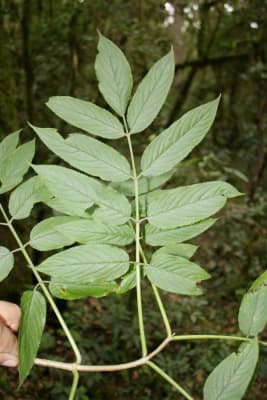
Sambucus peruviana
Sambucus peruviana
Family: Adoxaceae
Cultivation
A plant of higher elevations in the tropics, often found at elevations over 3,000 metres.
Full cultivation guide →Sambucus pubens
Sambucus pubens
Family: Adoxaceae
Cultivation
Tolerates most soils, including chalk, but prefers a moist loamy soil. Grows well in heavy clay soils. Tolerates some shade but is best in a sunny position.
Full cultivation guide →Sambucus racemosa
Sambucus racemosa
Family: Adoxaceae
Cultivation
Tolerates most soils, including chalk, but prefers a moist loamy soil. Grows well in heavy clay soils. Tolerates some shade but is best in a sunny position.
Full cultivation guide →Sambucus racemosa kamtschatica
Sambucus racemosa kamtschatica
Family: Adoxaceae
Cultivation
Tolerates most soils, including chalk, but prefers a moist loamy soil. Grows well in heavy clay soils. Tolerates some shade but is best in a sunny position.
Full cultivation guide →Sambucus sieboldiana
Sambucus sieboldiana
Family: Adoxaceae
Cultivation
Tolerates most soils, including chalk, but prefers a moist loamy soil. Grows well in heavy clay soils. Tolerates some shade but is best in a sunny position.
Full cultivation guide →Sambucus wightiana
Sambucus wightiana
Family: Adoxaceae
Cultivation
Tolerates most soils, including chalk, but prefers a moist loamy soil. Grows well in heavy clay soils. Tolerates some shade but is best in a sunny position.
Full cultivation guide →Sambucus williamsii
Sambucus williamsii
Family: Adoxaceae
Cultivation
We have very little information on this species and do not know if it will be hardy in Britain, though judging by its native range it could succeed outdoors in many parts of this country. We are not sure if the plant is a shrub or a perennial. The following notes are based on the general needs of the genus.
Full cultivation guide →