Portulaca — 8 species
Botanical species in the genus Portulaca recorded in the PlantPeers database.
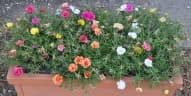
Portulaca grandiflora
Portulaca grandiflora
Family: Portulacaceae
Cultivation
Although a perennial when grown in warmer climates, the plant is best treated as a half-hardy annual in temperate regions. Plants are adaptable to most soils, though they prefer a rather dry poor soil in full sun. Succeeds in a hot dry position, and dislikes wet soils.
Full cultivation guide →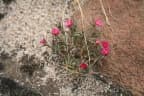

Portulaca lutea
Portulaca lutea
Family: Portulacaceae
Cultivation
Succeeds in the wild on a variety of soils, including lava, coral and sand dunes.
Full cultivation guide →

Portulaca oleracea
Portulaca oleracea
Family: Portulacaceae
Cultivation
Purslane can be cultivated from the temperate zone to the tropics so long as there is a growing season of at least 3 months. In the tropics it can be grown at elevations up to 1,700 metres. It grows best in areas where annual daytime temperatures are within the range 18 - 32°c, but can tolerate 7 - 36°c.
Full cultivation guide →
Portulaca oleracea sativa
Portulaca oleracea sativa
Family: Portulacaceae
Cultivation
Purslane can be cultivated from the temperate zone to the tropics so long as there is a growing season of at least 3 months. In the tropics it can be grown at elevations up to 1,700 metres. It grows best in areas where annual daytime temperatures are within the range 18 - 32°c, but can tolerate 7 - 36°c.
Full cultivation guide →
Portulaca quadrifida
Portulaca quadrifida
Family: Portulacaceae
Cultivation
The plant is widespread in the tropics. It grows best in areas where annual daytime temperatures are within the range 22 - 32°c, but can tolerate 16 - 36°c. It prefers a mean annual rainfall in the range 1,500 - 2,000mm, but tolerates 1,000 - 2,500mm.
Full cultivation guide →Portulaca retusa
Portulaca retusa
Family: Portulacaceae
Cultivation
We have very little information on this species and do not know if it will succeed outdoors in Britain, though we feel it should be possible to grow it either as a hardy or a half-hardy annual. According to the Flora of N. America, this species is no more than a synonym of P. oleracea.
Full cultivation guide →