Pittosporum — 32 species
Botanical species in the genus Pittosporum recorded in the PlantPeers database.

Pittosporum angustifolium
Pittosporum angustifolium
Family: Pittosporaceae
Cultivation
Pittosporum angustifolium is native to the semi-arid and arid regions of Australia, being found from the warm temperate zone to the tropics. It is not very cold-hardy, tolerating short periods with temperatures down to about -5°c when it is dormant. Plants succeed outdoors in the southwest of England, though they need greenhouse protection in other parts of the country.
Full cultivation guide →Pittosporum balansae
Pittosporum balansae
Family: Pittosporaceae
Cultivation
Pittosporum species generally grow best in a sunny position, but tolerate light shade. They succeed in most well-drained soils, including dry soils, preferably in a sunny position but also succeeding in light shade. Very amenable to pruning, plants can be cut right back into old wood if required.
Full cultivation guide →Pittosporum bicolor
Pittosporum bicolor
Family: Pittosporaceae
Cultivation
Pittosporum bicolor is not very hardy away from the mildest regions of the temperate zone, generally tolerating short periods with temperatures falling to around -5°c. Plants require winter protection at Kew Gardens London (zone 7 - 8) but grow well outdoors in the southern and western maritime counties of Britan, where some specimens have reached 10 metres tall. Succeeds in any well-drained soil, including dry soils, preferably in a sunny position but also succeeding in light shade.
Full cultivation guide →Pittosporum brackenridgei
Pittosporum brackenridgei
Family: Pittosporaceae
Cultivation
Pittosporum species generally grow best in a sunny position, but tolerate light shade. They succeed in most well-drained soils. Although flowers usually appear to be hermaphrodite, many species of Pittosporum are functionally dioecious, with individual specimens bearing mainly or totally flowers of one sex only.
Full cultivation guide →Pittosporum brevicalyx
Pittosporum brevicalyx
Family: Pittosporaceae
Cultivation
Pittosporum species generally grow best in a sunny position, but tolerate light shade. They succeed in most well-drained soils. Established plants are moderately drought tolerant.
Full cultivation guide →Pittosporum coriaceum
Pittosporum coriaceum
Family: Pittosporaceae
Cultivation
Pittosporum coriaceum can be grown in warm temperate to subtropical climates. It is not very frost tolerant. Pittosporum species generally grow best in a sunny position, but tolerate light shade.
Full cultivation guide →Pittosporum crassifolium
Pittosporum crassifolium
Family: Pittosporaceae
Cultivation
Pittosporum crassifolium is not very cold-hardy, when dormant it can tolerate short periods with temperatures falling to around -5°c. Succeeds in any well-drained soil, including dry soils, preferably in a sunny position but also succeeding in light shade. Plants are very resistant to maritime exposure.
Full cultivation guide →Pittosporum crispulum
Pittosporum crispulum
Family: Pittosporaceae
Cultivation
Pittosporum species generally grow best in a sunny position, but tolerate light shade. They succeed in most well-drained soils. Although flowers usually appear to be hermaphrodite, many species of Pittosporum are functionally dioecious, with individual specimens bearing mainly or totally flowers of one sex only.
Full cultivation guide →Pittosporum eugenioides
Pittosporum eugenioides
Family: Pittosporaceae
Cultivation
Pittosporum eugenioides is not very hardy in the temperate zone, tolerating temperatures down to about -5°c when fully dormant. Plants succeed outdoors in Cornwall, though they need greenhouse protection in other parts of the country. Succeeds in any well-drained soil, including dry soils, preferably in a sunny position but also succeeding in light shade.
Full cultivation guide →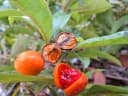
Pittosporum ferrugineum
Pittosporum ferrugineum
Family: Pittosporaceae
Cultivation
Pittosporum species generally grow best in a sunny position, but tolerate light shade. They succeed in most well-drained soils. Although flowers usually appear to be hermaphrodite, many species of Pittosporum are functionally dioecious, with individual specimens bearing mainly or totally flowers of one sex only.
Full cultivation guide →Pittosporum glabratum
Pittosporum glabratum
Family: Pittosporaceae
Cultivation
Pittosporum glabratum is native to the warm temperate and topical regions of southern China. It is not very cold-hardy, but can tolerate Pittosporum species generally grow best in a sunny position, but tolerate light shade. They succeed in most well-drained soils.
Full cultivation guide →Pittosporum heterophyllum
Pittosporum heterophyllum
Family: Pittosporaceae
Cultivation
Pittosporum heterophyllum is a moderately cold-hardy plant, tolerating temperatures down to about -10 to -15°c when fully dormant. Pittosporum species generally grow best in a sunny position, but tolerate light shade. They succeed in most well-drained soils.
Full cultivation guide →Pittosporum huttonianum
Pittosporum huttonianum
Family: Pittosporaceae
Cultivation
Pittosporum huttonianum is native to the warm temperate climate of North Island in New Zealand. It is not very cold-hard, but is able to tolerate short-lived lows down to around -5°c. Pittosporum species generally grow best in a sunny position, but tolerate light shade.
Full cultivation guide →Pittosporum illicioides
Pittosporum illicioides
Family: Pittosporaceae
Cultivation
Pittosporum illicioides is somewhat winter hardy, known to tolerate occasional temperatures down to around -8°c when fully dormant. Pittosporum species generally grow best in a sunny position, but tolerate light shade. They succeed in most well-drained soils, this species preferring one that is slightly acid.
Full cultivation guide →Pittosporum kerrii
Pittosporum kerrii
Family: Pittosporaceae
Cultivation
Pittosporum species generally grow best in a sunny position, but tolerate light shade. They succeed in most well-drained soils. Although flowers usually appear to be hermaphrodite, many species of Pittosporum are functionally dioecious, with individual specimens bearing mainly or totally flowers of one sex only.
Full cultivation guide →Pittosporum napaulense
Pittosporum napaulense
Family: Pittosporaceae
Cultivation
The plant is grown as an ornamental in the Pacific states of USA. Pittosporum species generally grow best in a sunny position, but tolerate light shade. They succeed in most well-drained soils.
Full cultivation guide →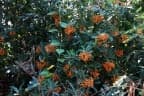
Pittosporum pentandrum
Pittosporum pentandrum
Family: Pittosporaceae
Cultivation
Pittosporum species generally grow best in a sunny position, but tolerate light shade. They succeed in most well-drained soils. The tree has escaped from cultivation in Florida, where it has invaded native pine forests.
Full cultivation guide →Pittosporum perryanum
Pittosporum perryanum
Family: Pittosporaceae
Cultivation
Pittosporum species generally grow best in a sunny position, but tolerate light shade. They succeed in most well-drained soils. Although flowers usually appear to be hermaphrodite, many species of Pittosporum are functionally dioecious, with individual specimens bearing mainly or totally flowers of one sex only.
Full cultivation guide →Pittosporum podocarpum
Pittosporum podocarpum
Family: Pittosporaceae
Cultivation
Pittosporum species generally grow best in a sunny position, but tolerate light shade. They succeed in most well-drained soils. Although flowers usually appear to be hermaphrodite, many species of Pittosporum are functionally dioecious, with individual specimens bearing mainly or totally flowers of one sex only.
Full cultivation guide →
Pittosporum pullifolium
Pittosporum pullifolium
Family: Pittosporaceae
Cultivation
Pittosporum species generally grow best in a sunny position, but tolerate light shade. They succeed in most well-drained soils. Although flowers usually appear to be hermaphrodite, many species of Pittosporum are functionally dioecious, with individual specimens bearing mainly or totally flowers of one sex only.
Full cultivation guide →Pittosporum ralphii
Pittosporum ralphii
Family: Pittosporaceae
Cultivation
Pittosporum ralphii is native to the warm temperate climate of North Island, New Zealand. It is not very cold-hardy, tolerating occasional temperatures down to about -5°c. Requires a well-drained light loamy soil and a sunny position.
Full cultivation guide →
Pittosporum resiniferum
Pittosporum resiniferum
Family: Pittosporaceae
Cultivation
A plant of moderate to high elevations in the moist to wet tropics, where it can be found at elevations from 600 - 2,400 metres. It grows best in areas where the mean annual temperature is within the range 18 - 28°c. It prefers a mean annual rainfall in the range 1,500 - 5,000mm.
Full cultivation guide →Pittosporum rhombifolium
Pittosporum rhombifolium
Family: Pittosporaceae
Cultivation
Pittosporum rhombifolium is native to the subtropical and tropical climates of eastern Australia. It is not very cold-tolerant, but can be grown outdoors in the mildest parts of the temperate zone. Pittosporum species generally grow best in a sunny position, but tolerate light shade.
Full cultivation guide →Pittosporum rhytidocarpum
Pittosporum rhytidocarpum
Family: Pittosporaceae
Cultivation
Pittosporum species generally grow best in a sunny position, but tolerate light shade. They succeed in most well-drained soils. Although flowers usually appear to be hermaphrodite, many species of Pittosporum are functionally dioecious, with individual specimens bearing mainly or totally flowers of one sex only.
Full cultivation guide →Pittosporum senacia
Pittosporum senacia
Family: Pittosporaceae
Cultivation
Pittosporum species generally grow best in a sunny position, but tolerate light shade. They succeed in most well-drained soils. Although flowers usually appear to be hermaphrodite, many species of Pittosporum are functionally dioecious, with individual specimens bearing mainly or totally flowers of one sex only.
Full cultivation guide →Pittosporum sinuatum
Pittosporum sinuatum
Family: Pittosporaceae
Cultivation
Pittosporum species generally grow best in a sunny position, but tolerate light shade. They succeed in most well-drained soils. Although flowers usually appear to be hermaphrodite, many species of Pittosporum are functionally dioecious, with individual specimens bearing mainly or totally flowers of one sex only.
Full cultivation guide →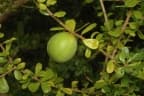
Pittosporum spinescens
Pittosporum spinescens
Family: Pittosporaceae
Cultivation
A plant of the subtropical to tropical zones. Its exact hardiness is unknown, but it appears to be capable of withstanding occasional temperatures down to at least -6°c. Succeeds in full sun and in partial shade.
Full cultivation guide →Pittosporum tenuifolium
Pittosporum tenuifolium
Family: Pittosporaceae
Cultivation
Pittosporum tenuifolium is hardy to about -10°c, it is tender outside the milder areas of Britain, but often self-sows when happy. Plants have reached a height of 9 metres in a sheltered position in eastern England. Succeeds in most well-drained soils of reasonably good quality in full sun or light shade.
Full cultivation guide →Pittosporum tobira
Pittosporum tobira
Family: Pittosporaceae
Cultivation
Pittosporum tobira is a moderately cold-hardy plant, tolerating temperatures down to about -10°c when fully dormant. Succeeds in most well-drained soils of reasonably good quality in full sun or light shade. Succeeds in dry soils.
Full cultivation guide →Pittosporum trigonocarpum
Pittosporum trigonocarpum
Family: Pittosporaceae
Cultivation
Pittosporum species generally grow best in a sunny position, but tolerate light shade. They succeed in most well-drained soils. The yellow flowers are fragrant.
Full cultivation guide →Pittosporum undulatum
Pittosporum undulatum
Family: Pittosporaceae
Cultivation
Pittosporum undulatum is native to the temperate and subtropical climate of eastern Australia. It is not very cold-hardy, tolerating temperatures down to about -5°c. Succeeds in most well-drained soils of reasonably good quality in full sun or light shade.
Full cultivation guide →
Pittosporum viridiflorum
Pittosporum viridiflorum
Family: Pittosporaceae
Cultivation
Plants can tolerate some frost. Succeeds in full sun or semi-shade. Prefers a well-drained, reasonably moist soil, though it can tolerate some drought.
Full cultivation guide →