Opuntia — 60 species
Botanical species in the genus Opuntia recorded in the PlantPeers database.

Opuntia austrina
Opuntia austrina
Family: Cactaceae
Cultivation
In cultivation, Cactus plants generally will not succeed in moist climates. They usually require a sunny position in a well-drained, circumneutral soil and to be kept more or less dry in the dormant season.
Full cultivation guide →Opuntia basilaris
Opuntia basilaris
Family: Cactaceae
Cultivation
Opuntia basilaris is a plant of semi-arid to very arid regions of southwest N. America that receive most of their rainfall in the winter. Plants are capable of withstanding temperatures falling as low as -18°c in arid climates.
Full cultivation guide →Opuntia chiangiana
Opuntia chiangiana
Family: Cactaceae
Cultivation
When the fruits mature they often remain attached to the plant in edible condition for a year or more.
Full cultivation guide →Opuntia chlorotica
Opuntia chlorotica
Family: Cactaceae
Cultivation
In cultivation, Cactus plants generally will not succeed in moist climates. They usually require a sunny position in a well-drained, circumneutral soil and to be kept more or less dry in the dormant season.
Full cultivation guide →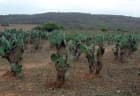
Opuntia cochenillifera
Opuntia cochenillifera
Family: Cactaceae
Cultivation
Opuntia cochenillifera is a plant of arid and semi-arid areas in the tropics and subtropics, where it is found at elevations up to 1,500 metres, sometimes higher. Requires a sunny position. Thriving on neglect, the plant can tolerate almost any conditions so long as the soil is well-drained.
Full cultivation guide →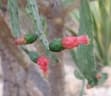
Opuntia elata
Opuntia elata
Family: Cactaceae
Cultivation
This species has become an invasive wed in areas such as the Mediterranean and Australia.
Full cultivation guide →Opuntia engelmannii
Opuntia engelmannii
Family: Cactaceae
Cultivation
In cultivation, Cactus plants generally will not succeed in moist climates. They usually require a sunny position in a well-drained, circumneutral soil and to be kept more or less dry in the dormant season.
Full cultivation guide →
Opuntia ficus-indica
Opuntia ficus-indica
Family: Cactaceae
Cultivation
Opuntia ficus-indica is a plant of the cool, semi-arid tropics and subtropics, where it can be found at elevations up to 2,600 metres, it can also be grown in warm temperate areas, especially those with a Mediterranean-type climate. Requires a sandy or very well-drained soil. Prefers a pH in the range 7 to 7.5, tolerating 6.5 - 8.2.
Full cultivation guide →Opuntia fragilis
Opuntia fragilis
Family: Cactaceae
Cultivation
Opuntia fragilis is natve to continental N. America, where it is found further north than any other cactus species. It is very cold tolerant, and also tolerant of periods of heavy rain, but it needs hot, dry summers and a very free-draining soil.
Full cultivation guide →Opuntia gosseliniana
Opuntia gosseliniana
Family: Cactaceae
Cultivation
In cultivation, Cactus plants generally will not succeed in moist climates. They usually require a sunny position in a well-drained, circumneutral soil and to be kept more or less dry in the dormant season.
Full cultivation guide →Opuntia humifusa
Opuntia humifusa
Family: Cactaceae
Cultivation
Opuntia humifusa is very cold-hardy, tolerating temperatures down to about -30°c. It is tolerant of a variety of conditions, being able to thrive in areas with heavy rainfall for part of the year and then hot and dry for other parts of the year. It can also tolerate considerable cold and winter snow so long as the soil is very free-draining.
Full cultivation guide →Opuntia hyptiacantha
Opuntia hyptiacantha
Family: Cactaceae
Cultivation
The mature fruit is persistent on the plant, it has been observed to remain on the cladodes for 12 months or more in edible condition
Full cultivation guide →Opuntia joconostle
Opuntia joconostle
Family: Cabombaceae
Cultivation
The mature fruit is persistent on the plant, it has been observed to remain on the cladodes for 12 months or more in edible condition
Full cultivation guide →Opuntia lagunae
Opuntia lagunae
Family: Cactaceae
Cultivation
In cultivation, Cactus plants generally will not succeed in moist climates. They usually require a sunny position in a well-drained, circumneutral soil and to be kept more or less dry in the dormant season.
Full cultivation guide →Opuntia lasiacantha
Opuntia lasiacantha
Family: Cactaceae
Cultivation
The mature fruit is persistent on the plant, it has been observed to remain on the cladodes for 12 months or more in edible condition.
Full cultivation guide →Opuntia leucotricha
Opuntia leucotricha
Family: Cactaceae
Cultivation
Opuntia leucotricha is native to subtropical and tropical semi-arid regions of Mexico. It has also become naturalized in the Mediterranean climate of various countries, including Italy, Portugal and Spain. In cultivation, Cactus plants generally will not succeed in moist climates.
Full cultivation guide →Opuntia littoralis
Opuntia littoralis
Family: Cactaceae
Cultivation
Requires a sandy or very well-drained soil. Prefers a pH in the range 6 to 7.5. Plants must be kept fairly dry in the winter but they like a reasonable supply of water in the growing season.
Full cultivation guide →Opuntia macrorhiza
Opuntia macrorhiza
Family: Cactaceae
Cultivation
Opuntia macrorhiza is a fairly cold tolerant plant, requiring an arid or semi-arid climate with hot summers. Requires a sandy or very well-drained soil. Prefers a pH in the range 6 to 7.5.
Full cultivation guide →Opuntia matudae
Opuntia matudae
Family: Cactaceae
Cultivation
The mature fruit is persistent on the plant, it has been observed to remain on the cladodes for 12 months or more in edible condition
Full cultivation guide →Opuntia megarrhiza
Opuntia megarrhiza
Family: Cactaceae
Cultivation
The cladodes of this species die back in the winter months and regrow in the spring as an adaptation to withstand freezing and the impacts of fire.
Full cultivation guide →
Opuntia monacantha
Opuntia monacantha
Family: Cactaceae
Cultivation
A plant of drier areas in the tropics and subtropics. The plant has escaped from cultivation and become a noxious weed in many areas.
Full cultivation guide →Opuntia pachyrrhiza
Opuntia pachyrrhiza
Family: Cactaceae
Cultivation
The cladodes of this species can die back in the winter months and regrow in the spring, this is an adaptation to freezing and the impacts of fires.
Full cultivation guide →Opuntia phaeacantha
Opuntia phaeacantha
Family: Cactaceae
Cultivation
Opuntia phaeacantha is native to arid and semi-arid climates in southwestern N. America. It is fairly cold tolerant, with reports of it surviving short periods with temperatures falling as low as -18°c, but requires a hot, non-humid climate if it is to thrive.
Full cultivation guide →Opuntia polyacantha
Opuntia polyacantha
Family: Cactaceae
Cultivation
Opuntia polyacantha is very tolerant of winter cold and snow, being found as far north as southern Canada. However, it needs hot summers and a faily dry climate in order to thrive, though a wet period of the year can be tolerated. Requires a sandy or very well-drained soil.
Full cultivation guide →Opuntia pottsii
Opuntia pottsii
Family: Cactaceae
Cultivation
In cultivation, Cactus plants generally will not succeed in moist climates. They usually require a sunny position in a well-drained, circumneutral soil and to be kept more or less dry in the dormant season. This is a difficult species to grow, so it is not cultivated for the horticultural trade.
Full cultivation guide →Opuntia pubescens
Opuntia pubescens
Family: Cactaceae
Cultivation
The spines are strongly barbed, and thus the stem segments easily become attached to passing animals or objects and are transported from one locality to another.
Full cultivation guide →Opuntia quitensis
Opuntia quitensis
Family: Cactaceae
Cultivation
The flowers are functionally unisexual; both male and female flowering forms will need to be grown if fruit and seed are required.
Full cultivation guide →Opuntia robusta
Opuntia robusta
Family: Cactaceae
Cultivation
Opuntia robusta is a plant of arid and semi-arid regions in the subtropical and tropical regions of Mexico. The plant is often cultivated, and has become naturalized in many areas as a weed. The mature fruit is persistent on the plant, it has been observed to remain on the cladodes for 12 months or more in edible condition
Full cultivation guide →Opuntia spinulifera
Opuntia spinulifera
Family: Cactaceae
Cultivation
In cultivation, Cactus plants generally will not succeed in moist climates. They usually require a sunny position in a well-drained, circumneutral soil and to be kept more or less dry in the dormant season. The mature fruit is persistent on the plant, it has been observed to remain on the cladodes for 12 months or more in edible condition
Full cultivation guide →Opuntia stenopetala
Opuntia stenopetala
Family: Cactaceae
Cultivation
Unlke most Opuntias, the flowers of this species are functionally unisexual.
Full cultivation guide →Opuntia streptacantha
Opuntia streptacantha
Family: Cactaceae
Cultivation
The mature fruit is persistent on the plant, it has been observed to remain on the cladodes for 12 months or more in edible condition
Full cultivation guide →
Opuntia stricta
Opuntia stricta
Family: Cactaceae
Cultivation
Requires a sunny position and a well-drained soil. Opuntia stricta hybridizes with Oountia engelmannii (apparently var. lindheimeri) forming Opuntia × alta Griffiths (as species) along the coast of southeastern Texas and adjacent Louisiana. The hexaploid hybrid is arborescent to 3 metres; it has stem segments subcircular to oblong-ovate, with a glochid pattern intermediate of the putative parents, all yellow spines, and light green stigma lobes.
Full cultivation guide →Opuntia tezontepecana
Opuntia tezontepecana
Family: Cactaceae
Cultivation
The mature fruit is persistent on the plant, it has been observed to remain on the cladodes for 15 months or more in edible condition
Full cultivation guide →Opuntia tortispina
Opuntia tortispina
Family: Cactaceae
Cultivation
In cultivation, Cactus plants generally will not succeed in moist climates. They usually require a sunny position in a well-drained, circumneutral soil and to be kept more or less dry in the dormant season.
Full cultivation guide →
Opuntia zamudioi
Opuntia zamudioi
Family: Cactaceae
Cultivation
The mature fruit is persistent on the plant, it has been observed to remain on the cladodes for 12 months or more in edible condition
Full cultivation guide →