Meliosma — 16 species
Botanical species in the genus Meliosma recorded in the PlantPeers database.

Meliosma alba
Meliosma alba
Family: Sabiaceae
Cultivation
Meliosma alba is not a very cold-hardy plant, tolerating temperatures down to around -5°c when dormant. It can succeed outdoors in the mildest regions of the temperate zone. The tree is often grown by wayside shrines and in temple grounds in China.
Full cultivation guide →Meliosma angustifolia
Meliosma angustifolia
Family: Sabiaceae
Cultivation
The plant is found in the wild on sandy as well as on clayish and loamy soils, usually in dry, but also in moist places, such as along streams. The pollen ripens and the anther-cells burst while the flower is still in bud, but the pollen is still unable to escape from the anther-cells as these are locked in the cavities of the staminodes. When the bud is fully mature, it explodes at the slightest touch, the stamens snapping backwards and flinging a puff of pollen into the air.
Full cultivation guide →Meliosma cuneifolia
Meliosma cuneifolia
Family: Sabiaceae
Cultivation
Meliosma cuneifolia is not a very cold-hardy plant, tolerating temperatures down to around -8°c when dormant. The plant is moderately hardy and is grown as an ornamental in the open under mild temperate climatical conditions; it is cultivated in N. America and in Europe, amongst others in the Kew Botanic Gardens.
Full cultivation guide →Meliosma fordii
Meliosma fordii
Family: Sabiaceae
Cultivation
The pollen ripens and the anther-cells burst while the flower is still in bud, but the pollen is still unable to escape from the anther-cells as these are locked in the cavities of the staminodes. When the bud is fully mature, it explodes at the slightest touch, the stamens snapping backwards and flinging a puff of pollen into the air. When the flower is open, petals and stamens, having done their duty, very soon drop off; hence in a Meliosma panicle almost only buds and passed flowers are found, but very few intact open flowers.
Full cultivation guide →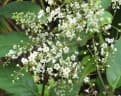
Meliosma henryi
Meliosma henryi
Family: Sabiaceae
Cultivation
The pollen ripens and the anther-cells burst while the flower is still in bud, but the pollen is still unable to escape from the anther-cells as these are locked in the cavities of the staminodes. When the bud is fully mature, it explodes at the slightest touch, the stamens snapping backwards and flinging a puff of pollen into the air. When the flower is open, petals and stamens, having done their duty, very soon drop off; hence in a Meliosma panicle almost only buds and passed flowers are found, but very few intact open flowers.
Full cultivation guide →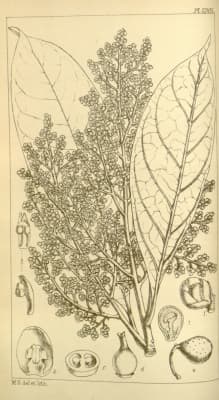
Meliosma itatiaiae
Meliosma itatiaiae
Family: Sabiaceae
Cultivation
Succeeds in full sun to moderately dense shade. Prefers a well-drained soil. Young plants have a moderately fast rate of growth.
Full cultivation guide →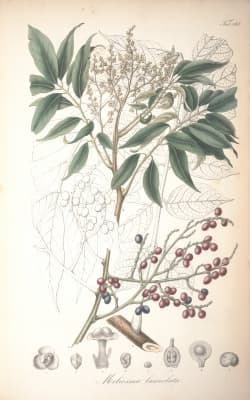
Meliosma lanceolata
Meliosma lanceolata
Family: Sabiaceae
Cultivation
The pollen ripens and the anther-cells burst while the flower is still in bud, but the pollen is still unable to escape from the anther-cells as these are locked in the cavities of the staminodes. When the bud is fully mature, it explodes at the slightest touch, the stamens snapping backwards and flinging a puff of pollen into the air. When the flower is open, petals and stamens, having done their duty, very soon drop off; hence in a Meliosma panicle almost only buds and passed flowers are found, but very few intact open flowers.
Full cultivation guide →Meliosma oldhamii
Meliosma oldhamii
Family: Sabiaceae
Cultivation
Meliosma oldhamii is not a very cold-hardy plant, tolerating temperatures down to around -8°c when dormant Trees from the Central China population (var. oldhamii) are moderately hardy and are grown as ornamentals in the open under mild temperate climatical conditions; the subspecies is cultivated in N. America and in Europe, amongst others in the Kew Botanic Gardens. The pollen ripens and the anther-cells burst while the flower is still in bud, but the pollen is still unable to escape from the anther-cells as these are locked in the cavities of the staminodes.
Full cultivation guide →Meliosma parviflora
Meliosma parviflora
Family: Sabiaceae
Cultivation
Meliosma parviflora is not a very cold-hardy plant, tolerating temperatures down to around -8°c when dormant The pollen ripens and the anther-cells burst while the flower is still in bud, but the pollen is still unable to escape from the anther-cells as these are locked in the cavities of the staminodes. When the bud is fully mature, it explodes at the slightest touch, the stamens snapping backwards and flinging a puff of pollen into the air. When the flower is open, petals and stamens, having done their duty, very soon drop off; hence in a Meliosma panicle almost only buds and passed flowers are found, but very few intact open flowers.
Full cultivation guide →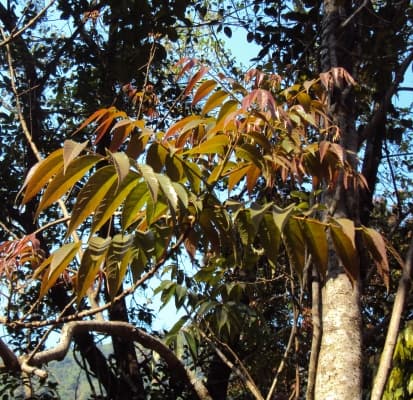
Meliosma pinnata
Meliosma pinnata
Family: Sabiaceae
Cultivation
Meliosma pinnata is a very diverse species and can be found from the warm temperate zone through to the moist tropics at elevations from sea level to around 3,000 metres. The pollen ripens and the anther-cells burst while the flower is still in bud, but the pollen is still unable to escape from the anther-cells as these are locked in the cavities of the staminodes. When the bud is fully mature, it explodes at the slightest touch, the stamens snapping backwards and flinging a puff of pollen into the air.
Full cultivation guide →Meliosma rigida
Meliosma rigida
Family: Sabiaceae
Cultivation
Meliosma rigida is native to subtropical and tropical regions, from sea level to elevations of up to 3,000 metres. It is not a very cold-hardy plant, tolerating short-lived temperatures down to around -5°c when dormant, but usually succeeds outdoors in the milder regions of the temperate zone Found in the wild on a range of different soils, in dry as well as wet places. The pollen ripens and the anther-cells burst while the flower is still in bud, but the pollen is still unable to escape from the anther-cells as these are locked in the cavities of the staminodes.
Full cultivation guide →
Meliosma sellowii
Meliosma sellowii
Family: Sabiaceae
Cultivation
Succeeds in dense to dappled shade. Prefers a soil rich in organic matter.
Full cultivation guide →
Meliosma simplicifolia
Meliosma simplicifolia
Family: Sabiaceae
Cultivation
Meliosma simplicifolia is a very variable species, found in a range of habitats and environments from the subtropics to the tropics at elevations from sea level to 3,000 metres. The pollen ripens and the anther-cells burst while the flower is still in bud, but the pollen is still unable to escape from the anther-cells as these are locked in the cavities of the staminodes. When the bud is fully mature, it explodes at the slightest touch, the stamens snapping backwards and flinging a puff of pollen into the air.
Full cultivation guide →Meliosma sumatrana
Meliosma sumatrana
Family: Sapindaceae
Cultivation
The pollen ripens and the anther-cells burst while the flower is still in bud, but the pollen is still unable to escape from the anther-cells as these are locked in the cavities of the staminodes. When the bud is fully mature, it explodes at the slightest touch, the stamens snapping backwards and flinging a puff of pollen into the air. When the flower is open, petals and stamens, having done their duty, very soon drop off; hence in a Meliosma panicle almost only buds and passed flowers are found, but very few intact open flowers.
Full cultivation guide →Meliosma thorelii
Meliosma thorelii
Family: Sabiaceae
Cultivation
The pollen ripens and the anther-cells burst while the flower is still in bud, but the pollen is still unable to escape from the anther-cells as these are locked in the cavities of the staminodes. When the bud is fully mature, it explodes at the slightest touch, the stamens snapping backwards and flinging a puff of pollen into the air. When the flower is open, petals and stamens, having done their duty, very soon drop off; hence in a Meliosma panicle almost only buds and passed flowers are found, but very few intact open flowers.
Full cultivation guide →