Manilkara — 16 species
Botanical species in the genus Manilkara recorded in the PlantPeers database.

Manilkara bidentata
Manilkara bidentata
Family: Sapotaceae
Cultivation
A plant of lowland moist to wet areas in the tropics and subtropics. It grows best in areas where the mean annual rainfall ranges from 1,500 - 4,000mm, though it has been grown in areas with up to 7,000mm. It prefers a mean annual temperature within the range 16 - 31°c.
Full cultivation guide →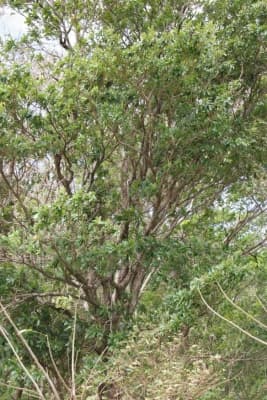



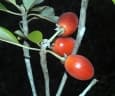
Manilkara kauki
Manilkara kauki
Family: Sapotaceae
Cultivation
A plant of the lowland tropics, also succeeding in subtropical areas. It is usually found in drier areas and below elevations of 500 metres. Plants are tolerant of light frosts.
Full cultivation guide →Manilkara maxima
Manilkara maxima
Family: Sapotaceae
Cultivation
Young plants grow best in the dappled shade of the woodland, but become increasingly tolerant of light, accepting full sun as they grow larger. Prefers a well-drained soil. The fruits are a popular food for the native fauna.
Full cultivation guide →

Manilkara obovata
Manilkara obovata
Family: Sapotaceae
Cultivation
A suitable tree for planting on stream and river banks and in swampy areas.
Full cultivation guide →Manilkara salzmannii
Manilkara salzmannii
Family: Sapotaceae
Cultivation
Succeeds in full sun and in dappled shade. Plants have a moderate rate of growth. The plant tends to fruit every other year.
Full cultivation guide →

Manilkara subsericea
Manilkara subsericea
Family: Sapotaceae
Cultivation
Succeeds in full sun and in dappled shade. Young plants have a moderate rate of growth.
Full cultivation guide →

Manilkara zapota
Manilkara zapota
Family: Sapotaceae
Cultivation
Sapodilla can grow well in a wide range of climatic conditions from the wet tropics to dry cool subtropical areas; but they prefer a moist hot climate similar to that found at medium to low elevations, usually below 600 metres, in tropical areas, such as in coastal regions. Commercial crops can be obtained at elevations up to 900 metres in the tropics, with the tree producing at least some fruit up to 2,500 metres. It grows best in areas where annual daytime temperatures are within the range 20 - 34°c, but can tolerate 11 - 42°c.
Full cultivation guide →