Mahonia — 33 species
Botanical species in the genus Mahonia recorded in the PlantPeers database.

Mahonia amplectens
Mahonia amplectens
Family: Berberidaceae
Cultivation
Species in this genus tend to be easily grown plants that thrive in any good garden soil, including heavy clays. They generally prefer a semi-shaded woodland position in a damp, slightly acid to neutral humus-rich soil. Plants are generally very tolerant of pruning and can be cut right back into old wood if they have outgrown their welcome.
Full cultivation guide →Mahonia aquifolium
Mahonia aquifolium
Family: Berberidaceae
Cultivation
Mahonia aquifolium is a very tolerant plant, capable of growing in a wide range ot temperate climates. Plants are hardy to about -20°c. A very easy plant to grow, thriving in any good garden soil, though preferring acid soils It prefers semi-shade, but can tolerate full sun and dense shade under trees.
Full cultivation guide →Mahonia bealei
Mahonia bealei
Family: Berberidaceae
Cultivation
Mahonia bealei is very winter hardy, when fully dormant it can tolerate temperatures down to about -20°c, though the young growth in spring is much more sensitive and can be damaged by temperatures around 0°c. Thrives in any good garden soil. Grows well in heavy clay soils.
Full cultivation guide →Mahonia bodinieri
Mahonia bodinieri
Family: Berberidaceae
Cultivation
Species in this genus tend to be easily grown plants that thrive in any good garden soil, including heavy clays. They generally prefer a semi-shaded woodland position in a damp, slightly acid to neutral humus-rich soil. Plants are generally very tolerant of pruning and can be cut right back into old wood if they have outgrown their welcome.
Full cultivation guide →Mahonia calamicaulis
Mahonia calamicaulis
Family: Berberidaceae
Cultivation
Species in this genus tend to be easily grown plants that thrive in any good garden soil, including heavy clays. They generally prefer a semi-shaded woodland position in a damp, slightly acid to neutral humus-rich soil. Plants are generally very tolerant of pruning and can be cut right back into old wood if they have outgrown their welcome.
Full cultivation guide →Mahonia decipiens
Mahonia decipiens
Family: Berberidaceae
Cultivation
Species in this genus tend to be easily grown plants that thrive in any good garden soil, including heavy clays. They generally prefer a semi-shaded woodland position in a damp, slightly acid to neutral humus-rich soil. Plants are generally very tolerant of pruning and can be cut right back into old wood if they have outgrown their welcome.
Full cultivation guide →Mahonia dictyota
Mahonia dictyota
Family: Berberidaceae
Cultivation
Species in this genus tend to be easily grown plants that thrive in any good garden soil, including heavy clays. They generally prefer a semi-shaded woodland position in a damp, slightly acid to neutral humus-rich soil. Plants are generally very tolerant of pruning and can be cut right back into old wood if they have outgrown their welcome.
Full cultivation guide →Mahonia duclouxiana
Mahonia duclouxiana
Family: Berberidaceae
Cultivation
We have very little information on this species, though we know it should tolerate temperatures down to about -5°c, and so should be hardy at least in the milder areas of Britain. The following notes are based on the general needs of the genus. Species in this genus tend to be easily grown plants that thrive in any good garden soil, including heavy clays.
Full cultivation guide →Mahonia eurybracteata
Mahonia eurybracteata
Family: Berberidaceae
Cultivation
Mahonia eurybracteata can tolerate temperatures down to about -10°c. The young growth in spring, however, is more sensitive and can be damaged by emperatures around 0°c. Only introduced to Europe in 1980, the plant grew so well that within six years it was being distributed commercially from home-produced seedlings.
Full cultivation guide →Mahonia fordii
Mahonia fordii
Family: Berberidaceae
Cultivation
Species in this genus tend to be easily grown plants that thrive in any good garden soil, including heavy clays. They generally prefer a semi-shaded woodland position in a damp, slightly acid to neutral humus-rich soil. Plants are generally very tolerant of pruning and can be cut right back into old wood if they have outgrown their welcome.
Full cultivation guide →
Mahonia fortunei
Mahonia fortunei
Family: Berberidaceae
Cultivation
A plant mainly of the warm temperate zone, it can tolerate occasional, short-lived temperatures falling as low as -5 to -10°c. The young growth in spring is even more sensitive, and can be damaged by ltemperatures around 0°c. The plant is commonly cultivated and has become naturalized in the tropics of western Java, where it is grown at elevations around 1,000 metres.
Full cultivation guide →Mahonia fremontii
Mahonia fremontii
Family: Berberidaceae
Cultivation
Mahonia fremontii is native to the hot and semi-arid regions of southwestern N. America and often does not grow so well in more humid climates. It can tolerate temperatures down to about -10°c.
Full cultivation guide →Mahonia gracilipes
Mahonia gracilipes
Family: Berberidaceae
Cultivation
Mahonia gracilipes is native to the warm temperate region of southern China where it can tolerate occasional temperatures down to about -10°c. An easily grown shrub, it thrives in any good garden soil including heavy clays. Prefers a semi-shaded woodland position in a damp, slightly acid to neutral humus-rich soil.
Full cultivation guide →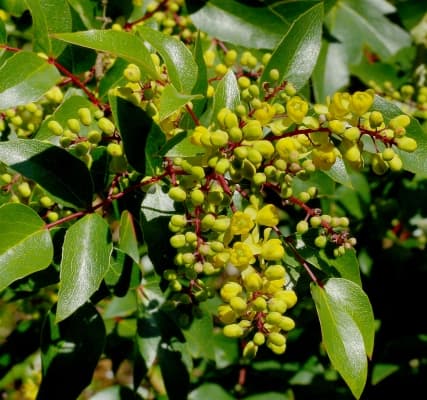
Mahonia gracilis
Mahonia gracilis
Family: Berberidaceae
Cultivation
Mahonia gracilis is mainly native to the warm temperate and subtropical climate of northern Mexico, just entering into the tropics at higher elevations of 1,350 metres or more. Plants are not very cold tolerant, but can tolerate short-lived temperatures down to about -5°c when fully dormant. The young growth in spring is much more sensitive and can be damaged by temperatures around 0°c Unlike most members of this genus, this species requires a dry, well-drained soil in a shady position.
Full cultivation guide →Mahonia haematocarpa
Mahonia haematocarpa
Family: Berberidaceae
Cultivation
Mahonia haematocarpa is native to semi-arid regions of southwestern N. America. It only hardy in the milder areas of the temperate zone, tolerating short-lived temperatures down to about -10°c when fully dormant.
Full cultivation guide →Mahonia hancockiana
Mahonia hancockiana
Family: Berberidaceae
Cultivation
Species in this genus tend to be easily grown plants that thrive in any good garden soil, including heavy clays. They generally prefer a semi-shaded woodland position in a damp, slightly acid to neutral humus-rich soil. Plants are generally very tolerant of pruning and can be cut right back into old wood if they have outgrown their welcome.
Full cultivation guide →Mahonia japonica
Mahonia japonica
Family: Berberidaceae
Cultivation
Mahonia japonica is a very cold tolerant plant. When fully dormant, it can tolerate temperatures down to about -20°c, though the young growth in spring is much more sensitive and can be damaged by temperatures around 0°c. An easily grown shrub, it thrives in any good garden soil including heavy clays.
Full cultivation guide →Mahonia napaulensis
Mahonia napaulensis
Family: Berberidaceae
Cultivation
Mahonia napaulensis is only hardy in the milder regions of the temperate zone, under performing in areas where temperatures regularly fall below -10°c. In addition, the young growth in spring is very frost sensitive and can be damaged by temperatures around 0°c. An easily grown plant, it thrives in any good garden soil.
Full cultivation guide →Mahonia nervosa
Mahonia nervosa
Family: Berberidaceae
Cultivation
An easily grown plant, it thrives in any good garden soil but also succeeds in poor dry ones. Another report says that it is best on a lime-free soil. Grows well in heavy clay soils.
Full cultivation guide →Mahonia nevinii
Mahonia nevinii
Family: Berberidaceae
Cultivation
Mahonia nevinii is native to semi-arid regions in the warm temperate and subtropical climate of southwestern N. America, Plants are not fully hardy in much of the temperate zone, they probably tolerate occasional temperatures down to about -10°c when fully dormant, though the young growth in spring is more sensitive and can be damaged by temperatures falling to around 0°c. Unlike most members of the genus, this species requires a dry, perfectly drained position in full sun, a gritty slightly acid soil is best.
Full cultivation guide →Mahonia oiwakensis
Mahonia oiwakensis
Family: Berberidaceae
Cultivation
Mahonia oiwakensis is native to the waem temperate zone of southern China. It can tolerate occasional temperatures down to about -10°c when it is fully dormant, though young growth in the spring is more sensitive and can be damaged at temperatures around 0°c. Succeeds in any good garden soil.
Full cultivation guide →Mahonia philippinensis
Mahonia philippinensis
Family: Berberidaceae
Cultivation
A plant of moderate elevations in the tropics, where it is found from 1,400 - 1,800 metres.
Full cultivation guide →Mahonia pinnata
Mahonia pinnata
Family: Berberidaceae
Cultivation
Mahonia pinnata is not hardy outside the milder regions of the temperate zone, being able to tolerate occasional temperatures falling as low as -10°c. The young growth in spring is more sensitive, and can be damaged by temperatures around 0°c. An easily grown plant, it thrives in any good garden soil.
Full cultivation guide →Mahonia piperiana
Mahonia piperiana
Family: Berberidaceae
Cultivation
Species in this genus tend to be easily grown plants that thrive in any good garden soil, including heavy clays. They generally prefer a semi-shaded woodland position in a damp, slightly acid to neutral humus-rich soil. Plants are generally very tolerant of pruning and can be cut right back into old wood if they have outgrown their welcome.
Full cultivation guide →Mahonia pumila
Mahonia pumila
Family: Berberidaceae
Cultivation
Mahonia pumila is hardy to about -15°c if growing in a sheltered position. An easily grown plant, it thrives in any good well-drained garden soil, preferring one on the dryish side. Prefers a sunny position, but also succeeds in the light shade of trees.
Full cultivation guide →Mahonia repens
Mahonia repens
Family: Berberidaceae
Cultivation
Mahonia repens is a fairly hardy plant, able to tolerate occasional temperatures downto about -15°c if growing in a sheltered position. The young growth in spring, however, is not so hardy and can be damaged by temperatures around 0°c. It can succeed with a mean annual rainfall within the range 300 - 3,550mm.
Full cultivation guide →Mahonia shenii
Mahonia shenii
Family: Berberidaceae
Cultivation
Species in this genus tend to be easily grown plants that thrive in any good garden soil, including heavy clays. They generally prefer a semi-shaded woodland position in a damp, slightly acid to neutral humus-rich soil. Plants are generally very tolerant of pruning and can be cut right back into old wood if they have outgrown their welcome.
Full cultivation guide →Mahonia sheridaniana
Mahonia sheridaniana
Family: Berberidaceae
Cultivation
Species in this genus tend to be easily grown plants that thrive in any good garden soil, including heavy clays. They generally prefer a semi-shaded woodland position in a damp, slightly acid to neutral humus-rich soil. Plants are generally very tolerant of pruning and can be cut right back into old wood if they have outgrown their welcome.
Full cultivation guide →Mahonia subimbricata
Mahonia subimbricata
Family: Berberidaceae
Cultivation
Species in this genus tend to be easily grown plants that thrive in any good garden soil, including heavy clays. They generally prefer a semi-shaded woodland position in a damp, slightly acid to neutral humus-rich soil. Plants are generally very tolerant of pruning and can be cut right back into old wood if they have outgrown their welcome.
Full cultivation guide →Mahonia swaseyi
Mahonia swaseyi
Family: Berberidaceae
Cultivation
Mahonia swaseyi is native to the semi-arid, warm temperate zone in southern N. America and is not hardy in the colder areas of the temperate zone. It can tolerate occasional temperatures down to between -5 and -10°c.
Full cultivation guide →Mahonia trifoliolata
Mahonia trifoliolata
Family: Berberidaceae
Cultivation
Mahonia trifoliolata grows wild in the semi-arid, warm temperate zone of southwestern N. America. It can tolerate occasional temperatures falling to around -10 to -15°c, though the young growth in spring is more sensitive and can be damaged by temperatures around 0°c.
Full cultivation guide →Mahonia wilcoxii
Mahonia wilcoxii
Family: Berberidaceae
Cultivation
Species in this genus tend to be easily grown plants that thrive in any good garden soil, including heavy clays. They generally prefer a semi-shaded woodland position in a damp, slightly acid to neutral humus-rich soil. Plants are generally very tolerant of pruning and can be cut right back into old wood if they have outgrown their welcome.
Full cultivation guide →Mahonia x media
Mahonia x media
Family: Berberidaceae
Cultivation
The fully dormant plant is hardy to about -15°c, though the young growth in spring is more susceptible and can be damaged by temperatures around 0°c. An easily grown shrub, it thrives in any good garden soil including heavy clays. Prefers a semi-shaded woodland position in a damp, slightly acid to neutral humus-rich soil.
Full cultivation guide →