Lupinus — 25 species
Botanical species in the genus Lupinus recorded in the PlantPeers database.

Lupinus affinis
Lupinus affinis
Family: Fabaceae
Cultivation
Members of this genus are mainly found in dry habitats, often on stony and low fertility soils. In cultivation they generally grow well if given a sunny position in a deep, well-drained, moderately fertile soil with a neutral to slightly acid pH. This species has a symbiotic relationship with certain soil bacteria; these bacteria form nodules on the roots and fix atmospheric nitrogen.
Full cultivation guide →Lupinus albifrons
Lupinus albifrons
Family: Fabaceae
Cultivation
Lupinus albifrons is not a very cold-hardy plant, able to tolerate short-lived temperatures down to around -8°c when fully dormant. It grows best in areas with hot summers. In areas with cooler summers (even if the winters are mild), such as the maritime regions of the temperate zone, it often grows poorly, failing to properly ripen its wood and suffering frost damage over the winter.
Full cultivation guide →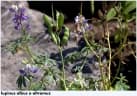
Lupinus albus
Lupinus albus
Family: Fabaceae
Cultivation
White lupin is primarily a plant of the temperate zone, though it has been successfullty cultivated in the tropics, often at higher elevations up to 3,000 metres. It is usually grown at mean monthly temperatures during the growing season of 15 - 25°c, the optimum being 18 - 24°c; higher temperatures and moisture stress hinder flowering and pod setting. The plant is cold-tolerant, but temperatures of -6 to -8°c are harmful at germination, whilst temperatures of -3 to -5°c are harmful at flowering.
Full cultivation guide →Lupinus angustifolius
Lupinus angustifolius
Family: Fabaceae
Cultivation
Lupinus angustifolius is a plant of the Mediterranean region, where it is found at elevations up to 1,500 metres. It can be cultivated as a summer annual in temperate regions, and is sometimes cultivated at higher elevations in the tropics (from 1,500 - 2,500 metres). It grows best in areas where annual daytime temperatures are within the range 12 - 18°c, but can tolerate 4 - 26°c.
Full cultivation guide →Lupinus arboreus
Lupinus arboreus
Family: Fabaceae
Cultivation
Lupinus arboreus is winter hardy to about -15°c. Plants are hardy in all but severe winters in Britain, though they become less hardy with age. Requires a well-drained dry or moist soil in a sunny position.
Full cultivation guide →Lupinus argenteus
Lupinus argenteus
Family: Fabaceae
Cultivation
Lupinus argenteus is a very cold-hardy plant, able to tolerate temperatures down to around -30°c when fully dormant. Members of this genus are mainly found in dry habitats, often on stony and low fertility soils. In cultivation they generally grow well if given a sunny position in a deep, well-drained, moderately fertile soil with a neutral to slightly acid pH.
Full cultivation guide →Lupinus bogotensis
Lupinus bogotensis
Family: Fabaceae
Cultivation
Lupinus bogotensis is a plant of high elevations in the tropical zone of the Andes, where it is known to experience widely different diurnal temperatures, sometimes with frost.
Full cultivation guide →Lupinus brevicaulis
Lupinus brevicaulis
Family: Fabaceae
Cultivation
Members of this genus are mainly found in dry habitats, often on stony and low fertility soils. In cultivation they generally grow well if given a sunny position in a deep, well-drained, moderately fertile soil with a neutral to slightly acid pH.
Full cultivation guide →Lupinus cosentinii
Lupinus cosentinii
Family: Fabaceae
Cultivation
Lupinus cosentinii is a plant of the Mediterranean region which has also been cultivated in cooler regions of the temperate zone. It grows best in areas where annual daytime temperatures are within the range 20 - 28°c, but can tolerate 15 - 32°c. It prefers a mean annual rainfall in the range 400 - 850mm, but tolerates 300 - 1,700mm.
Full cultivation guide →Lupinus densiflorus
Lupinus densiflorus
Family: Fabaceae
Cultivation
Members of this genus are mainly found in dry habitats, often on stony and low fertility soils. In cultivation they generally grow well if given a sunny position in a deep, well-drained, moderately fertile soil with a neutral to slightly acid pH. The plant is sometimes grown as an ornamental, there are some named varieties.
Full cultivation guide →Lupinus kingii
Lupinus kingii
Family: Fabaceae
Cultivation
Members of this genus are mainly found in dry habitats, often on stony and low fertility soils. In cultivation they generally grow well if given a sunny position in a deep, well-drained, moderately fertile soil with a neutral to slightly acid pH. This species has a symbiotic relationship with certain soil bacteria; these bacteria form nodules on the roots and fix atmospheric nitrogen.
Full cultivation guide →Lupinus latifolius
Lupinus latifolius
Family: Fabaceae
Cultivation
Lupinus latifolius is a moderately cold-hardy plant, able to tolerate temperatures down to around -15°c when fully dormant. Members of this genus are mainly found in dry habitats, often on stony and low fertility soils. This species, however, is more common on moister, but well-drained, soils.
Full cultivation guide →Lupinus littoralis
Lupinus littoralis
Family: Fabaceae
Cultivation
Lupinus littoralis is a moderately cold-hardy plant, able to tolerate temperatures down to around -15°c when fully dormant. An easily grown plant, succeeding in any moderately good soil in a sunny position. It strongly dislikes excessive winter wet.
Full cultivation guide →Lupinus luteolus
Lupinus luteolus
Family: Fabaceae
Cultivation
Members of this genus are mainly found in dry habitats, often on stony and low fertility soils. In cultivation they generally grow well if given a sunny position in a deep, well-drained, moderately fertile soil with a neutral to slightly acid pH.
Full cultivation guide →Lupinus luteus
Lupinus luteus
Family: Fabaceae
Cultivation
Lupinus luteus is a plant of the Mediterranean region, where it is found at elevations up to 1,100 metres. It is cultivated in much of the temperate zone, and can also be cultivated at higher elevations (from 2,000 - 3,300 metres) in the tropics It grows best in areas where annual daytime temperatures are within the range 18 - 24°c, but can tolerate 6 - 30°c. The plant can survive occasional temperatures down to about -3°c.
Full cultivation guide →Lupinus lyallii
Lupinus lyallii
Family: Fabaceae
Cultivation
Members of this genus are mainly found in dry habitats, often on stony and low fertility soils. In cultivation they generally grow well if given a sunny position in a deep, well-drained, moderately fertile soil with a neutral to slightly acid pH. This species has a symbiotic relationship with certain soil bacteria; these bacteria form nodules on the roots and fix atmospheric nitrogen.
Full cultivation guide →
Lupinus mutabilis
Lupinus mutabilis
Family: Fabaceae
Cultivation
Lupinus mutabilis is a plant of higher elevations up to 4,000 metres in the tropics. It can also be cultivated in the subtropics and temperate zones so long as there is a sufficiently long growing season. It grows best in areas where annual daytime temperatures are within the range 18 - 24°c, but can tolerate 6 - 30°c.
Full cultivation guide →Lupinus nootkatensis
Lupinus nootkatensis
Family: Fabaceae
Cultivation
Lupinus nootkatensis is a very cold-hardy plant, able to tolerate temperatures down to around -30°c when fully dormant. An easily grown plant, succeeding in any moderately good soil in a sunny position. Members of this genus are mainly found in dry habitats, often on stony and low fertility soils.
Full cultivation guide →Lupinus perennis
Lupinus perennis
Family: Fabaceae
Cultivation
Lupinus perennis is a very cold-hardy plant, able to tolerate temperatures down to around -25°c when fully dormant. An easily grown plant, succeeding in any moderately good soil in a sunny position. Grows well in a poor sandy soil.
Full cultivation guide →Lupinus pilosus
Lupinus pilosus
Family: Fabaceae
Cultivation
Lupinus pilosus is a plant of the Mediterranean region, where it is found at elevations up to 800 metres. It grows best in areas where annual daytime temperatures are within the range 12 - 18°c, but can tolerate 6 - 26°c. It prefers a mean annual rainfall in the range 450 - 1,000mm, but tolerates 350 - 2,000mm.
Full cultivation guide →Lupinus polyphyllus
Lupinus polyphyllus
Family: Fabaceae
Cultivation
Lupinus polyphyllus is a very cold-hardy plant, able to tolerate temperatures down to around -35°c when fully dormant. An easily grown plant, succeeding in any moderately good soil in a sunny position. It strongly dislikes excessive winter wet.
Full cultivation guide →Lupinus pusillus
Lupinus pusillus
Family: Fabaceae
Cultivation
Members of this genus are mainly found in dry habitats, often on stony and low fertility soils. In cultivation they generally grow well if given a sunny position in a deep, well-drained, moderately fertile soil with a neutral to slightly acid pH. This species has a symbiotic relationship with certain soil bacteria; these bacteria form nodules on the roots and fix atmospheric nitrogen.
Full cultivation guide →Lupinus rivularis
Lupinus rivularis
Family: Fabaceae
Cultivation
Lupinus rivularis is not a very cold-hardy plant, able to tolerate temperatures down to around -8°c when fully dormant, though probably hadier than this if the summers are hot. It is found at elevations up to 1,800 metres, growing in areas where the mean annual rainfall can range from 450 - 2,500mm. Requires a sunny position.
Full cultivation guide →Lupinus sericeus
Lupinus sericeus
Family: Fabaceae
Cultivation
Lupinus sericeus is found in areas where the mean annual rainfall is in the region 250 - 500mm or more. Members of this genus are mainly found in dry habitats, often on stony and low fertility soils. This species prefers a sunny position, tolerating partial shade, and is adapted to a broad range of soil textures but found most commonly on coarse textured and well drained, non-saline soils.
Full cultivation guide →Lupinus sulphureus
Lupinus sulphureus
Family: Fabaceae