Lespedeza — 13 species
Botanical species in the genus Lespedeza recorded in the PlantPeers database.

Lespedeza bicolor
Lespedeza bicolor
Family: Fabaceae
Cultivation
Lespedeza bicolor is a very cold-hardy plant, the rootstock is able to tolerate temperatures down to about -25°c when fully dormant. The top growth is much less hardy, however, and will be killed back to near the roots in all but very mild winters. However, plants will generally resprout freely from the base in the following spring and then flower in late summer.
Full cultivation guide →Lespedeza buergeri
Lespedeza buergeri
Family: Fabaceae
Cultivation
Lespedeza buergeri is a moderately cold-hardy plant, the rootstock being able to tolerate temperatures down to about -20°c when fully dormant. The top growth is much less hardy, however, and will be killed back to near the roots in all but very mild winters. However, plants will generally resprout freely from the base in the following spring and then flower in late summer.
Full cultivation guide →Lespedeza capitata
Lespedeza capitata
Family: Fabaceae
Cultivation
Lespedeza capitata is a very cold-hardy plant, able to tolerate temperatures down to around -30°c when fully dormant. Prefers a position in full sun, tolerating partial shade. Easily grown in a light to medium, well-drained loam.
Full cultivation guide →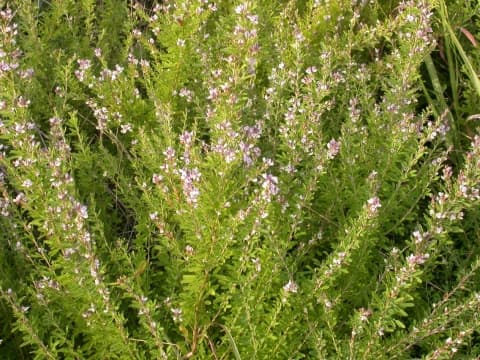
Lespedeza cuneata
Lespedeza cuneata
Family: Fabaceae
Cultivation
A plant mainly of the subtropics to the tropics, it can survive milder winters in temperate areas (although top growth is usually killed back to the ground) but is more generally grown as a summer annual in temperate areas. It can be found at elevations up to 2,400 metres in the tropics. It grows best in areas where annual daytime temperatures are within the range 16 - 26°c, but can tolerate 6 - 36°c.
Full cultivation guide →Lespedeza cyrtobotrya
Lespedeza cyrtobotrya
Family: Fabaceae
Cultivation
Lespedeza cyrtobotrya is a moderately cold-hardy plant, the rootstock being able to tolerate temperatures down to about -20°c when fully dormant. The top growth is much less hardy, however, and will be killed back to near the roots in all but very mild winters. However, plants will generally resprout freely from the base in the following spring and then flower in late summer.
Full cultivation guide →Lespedeza davidii
Lespedeza davidii
Family: Fabaceae
Cultivation
Lespedeza davidii is native from the warm temperate to subtropical zones of southern and eastern China, where it is likely to experience winter temperatures falling as low as -10°c in parts of its range. Other members of this genus, when grown in cooler climates, will often have their top-growth killed back to near the roots in all but very mild winters. However, the plants will generally resprout freely from the base in the following spring and then flower in late summer.
Full cultivation guide →Lespedeza floribunda
Lespedeza floribunda
Family: Fabaceae
Cultivation
Lespedeza floribunda is native from the temperate to subtropical zones of China, where it is likely to experience winter temperatures falling at least as low as -20°c in parts of its range. Other members of this genus, when grown in cooler climates, will often have their top-growth killed back to near the roots in all but very mild winters. However, the plants will generally resprout freely from the base in the following spring and then flower in late summer.
Full cultivation guide →Lespedeza juncea
Lespedeza juncea
Family: Fabaceae
Cultivation
Lespedeza juncea is a very cold-hardy plant, the rootstock being able to tolerate temperatures down to about -25°c when fully dormant. The top growth is much less hardy, however, and will be killed back to near the roots in all but very mild winters. However, plants will generally resprout freely from the base in the following spring and then flower in late summer.
Full cultivation guide →Lespedeza maximowiczii
Lespedeza maximowiczii
Family: Fabaceae
Cultivation
Lespedeza maximowiczii is a very cold-hardy plant, the rootstock being able to tolerate temperatures down to about -25°c when fully dormant. The top growth is much less hardy, however, and will be killed back to near the roots in all but very mild winters. However, plants will generally resprout freely from the base in the following spring and then flower in late summer.
Full cultivation guide →Lespedeza pilosa
Lespedeza pilosa
Family: Fabaceae
Cultivation
Lespedeza pilosa is native to temperate and subtropical regions of China, experiencing winter temperatures falling to around -15 to -20°c in at least part of its range. Species in this genus generally grow best in a sunny position but are tolerant of some shade. They grow well in soils of a medium to light nature, tolerating dry conditions and low fertility.
Full cultivation guide →Lespedeza potaninii
Lespedeza potaninii
Family: Fabaceae
Cultivation
Lespedeza potaninii is a very cold-hardy plant, the rootstock being able to tolerate temperatures down to about -30°c when fully dormant. The top growth is much less hardy, however, and will be killed back to near the roots in all but very mild winters. However, plants will generally resprout freely from the base in the following spring and then flower in late summer.
Full cultivation guide →Lespedeza thunbergii
Lespedeza thunbergii
Family: Fabaceae
Cultivation
Lespedeza thunbergii is a moderately cold-hardy plant, the rootstock being able to tolerate temperatures down to about -20°c when fully dormant. The top growth is much less hardy, however, and will be killed back to near the roots in all but very mild winters. However, plants will generally resprout freely from the base in the following spring and then flower in late summer and early autumn.
Full cultivation guide →Lespedeza tomentosa
Lespedeza tomentosa
Family: Fabaceae
Cultivation
Lespedeza tomentosa is a very cold-hardy plant, the rootstock being able to tolerate temperatures down to about -30°c when fully dormant. The top growth is much less hardy, however, and will be killed back to near the roots in all but very mild winters. However, plants will generally resprout freely from the base in the following spring and then flower in late summer.
Full cultivation guide →