Lepidium — 24 species
Botanical species in the genus Lepidium recorded in the PlantPeers database.
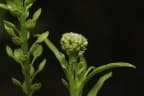

Lepidium apetalum
Lepidium apetalum
Family: Brassicaceae
Cultivation
We have almost no information on this species and do not know if it will be hardy in Britain, though judging by its native range it should succeed outdoors in most parts of the country. This species is closely related to L. ruderale. The following notes are based on the general needs of the genus.
Full cultivation guide →Lepidium chilense
Lepidium chilense
Family: Brassicaceae
Cultivation
We have almost no information on this species and do not know if it will be hardy in Britain. The following notes are based on the general needs of the genus. Succeeds in most soils.
Full cultivation guide →Lepidium coronopus
Lepidium coronopus
Family: Brassicaceae
Cultivation
See the plants native habitat for ideas on its cultivation needs.
Full cultivation guide →
Lepidium didymum
Lepidium didymum
Family: Brassicaceae
Cultivation
After germination, Lepidium didymum plants develop rapidly. They often complete their life cycle within a few months. The whole plant has a foetid smell.
Full cultivation guide →Lepidium diffusum
Lepidium diffusum
Family: Brassicaceae
Cultivation
We have almost no information on this species and do not know if it will be hardy in Britain, though judging by its native range it should succeed outdoors in most parts of the country. There is also some doubt over the validity of this name. The following notes are based on the general needs of the genus.
Full cultivation guide →Lepidium draba
Lepidium draba
Family: Brassicaceae
Cultivation
Lepidium draba is a moderately cold-hardy plant, being able to tolerate temperatures falling to around -20°c. Lepidium draba is a very versatile plant, though it needs a sunny position if it is to thrive. It succeds in most soils, though it favours neutral to alkaline conditions.
Full cultivation guide →Lepidium fremontii
Lepidium fremontii
Family: Brassicaceae
Cultivation
We have almost no information on this species and do not know if it will be hardy in Britain, though judging by its native range it should succeed outdoors at least in the milder parts of the country. The following notes are based on the general needs of the genus. Succeeds in most soils.
Full cultivation guide →Lepidium graminifolium
Lepidium graminifolium
Family: Brassicaceae
Cultivation
We have almost no information on this species and do not know if it will be hardy in Britain, though judging by its native range it should succeed outdoors at least in the milder parts of the country. The following notes are based on the general needs of the genus. Succeeds in most soils.
Full cultivation guide →Lepidium hyssopifolium
Lepidium hyssopifolium
Family: Brassicaceae
Cultivation
We have almost no information on this species and do not know if it will be hardy in Britain. The following notes are based on the general needs of the genus. Succeeds in most soils.
Full cultivation guide →Lepidium iberis
Lepidium iberis
Family: Brassicaceae
Cultivation
We have almost no information on this species and do not know if it will be hardy in Britain, though judging by its native range it should succeed outdoors at least in the milder parts of the country. The following notes are based on the general needs of the genus. Succeeds in most soils.
Full cultivation guide →Lepidium incisum
Lepidium incisum
Family: Brassicaceae
Cultivation
We have almost no information on this species and do not know if it will be hardy in Britain, though judging by its native range it should succeed outdoors in many parts of the country. It is quite possibly no more than a form of L. capitatum. The following notes are based on the general needs of the genus.
Full cultivation guide →Lepidium intermedium
Lepidium intermedium
Family: Brassicaceae
Cultivation
We have almost no information on this species and do not know if it will be hardy in Britain, though judging by its native range it should succeed outdoors in most parts of the country. This species is almost certainly a synonym for L. virginianum. The following notes are based on the general needs of the genus.
Full cultivation guide →Lepidium latifolium
Lepidium latifolium
Family: Brassicaceae
Cultivation
A very easily grown plant, it succeeds in most soils in sun or light shade. Plants have been surviving quite happily with us, and are still spreading freely, in dense grass that is rarely cut. Dittander was formerly cultivated as a food condiment in Britain and in ancient Greece.
Full cultivation guide →
Lepidium meyenii
Lepidium meyenii
Family: Brassicaceae
Cultivation
Maca grows at high altitudes in the Andes in an inhospitable region of intense sunlight, violent winds and below freezing weather. With its extreme temperatures and poor rocky soil, the area rates among the world's worst farmland, yet over the centuries, Maca has learned to flourish under these conditions. It grows best in areas where annual daytime temperatures are within the range 12 - 18°c, but can tolerate 3 - 22°c.
Full cultivation guide →Lepidium nitidum
Lepidium nitidum
Family: Brassicaceae
Cultivation
We have almost no information on this species and do not know if it will be hardy in Britain, though judging by its native range it should succeed outdoors at least in the milder parts of the country. The following notes are based on the general needs of the genus. Succeeds in most soils.
Full cultivation guide →Lepidium oleraceum
Lepidium oleraceum
Family: Brassicaceae
Cultivation
We have very little information on this species and are not sure if it will be hardy in Britain, though one report says that it has been cultivated for its edible leaves in Britain. Assuming it is hardy, then it is likely to be very easily grown and will succeed in most soils in full sun or light shade.
Full cultivation guide →Lepidium perfoliatum
Lepidium perfoliatum
Family: Brassicaceae
Cultivation
Succeeds in most soils. The plant is occasionally cultivated as a vegetable in China.
Full cultivation guide →Lepidium rotundum
Lepidium rotundum
Family: Brassicaceae
Cultivation
Lepidium rotundum is native to the Mediterranean-type climate of southeastern Australia and is unlikely to tolerate temperatures falling much below -5°c. Lepidium species generally succeed in a sunny position in a wide range of soils. This species is also found in somewhat saline soils and close to the coast.
Full cultivation guide →
Lepidium sativum
Lepidium sativum
Family: Brassicaceae
Cultivation
Lepidium sativum is cultivated from the temperate zone (as a spring to autumn crop) to the tropics, where it succeeds all year round but generally grows best in the cool season or at higher elevations around 2,400 metres. Plants will require some protection if temperatures fall below -5°c. An easily grown plant, it succeeds in most soils.
Full cultivation guide →