Hymenaea — 8 species
Botanical species in the genus Hymenaea recorded in the PlantPeers database.

Hymenaea courbaril
Hymenaea courbaril
Family: Fabaceae
Cultivation
Hymenaea courbaril grows well in lowland tropical and subtropical areas up to an elevation of aroud 900 metres. It prefers a mean annual temperature in the range 20 - 30°c, with a mean annual rainfall of 1,500 - 3,000mm, which can be evenly distributed through the year or monsoonal. It can tolerate 4 months or more of drought.
Full cultivation guide →
Hymenaea intermedia
Hymenaea intermedia
Family: Fabaceae
Cultivation
Although many species within the family Fabaceae have a symbiotic relationship with soil bacteria, this species is said to be devoid of such a relationship and therefore does not fix atmospheric nitrogen.
Full cultivation guide →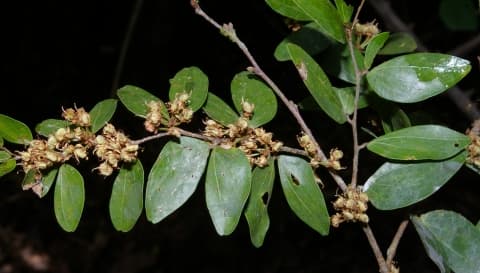
Hymenaea martiana
Hymenaea martiana
Family: Fabaceae
Cultivation
Grows best in a sunny position. Grows in the wild on moist, clay soils. The plant has a slow rate of growth, even when small.
Full cultivation guide →
Hymenaea parvifolia
Hymenaea parvifolia
Family: Fabaceae
Cultivation
Although many species within the family Fabaceae have a symbiotic relationship with soil bacteria, this species is said to be devoid of such a relationship and therefore does not fix atmospheric nitrogen.
Full cultivation guide →Hymenaea reticulata
Hymenaea reticulata
Family: Fabaceae
Cultivation
Although many species within the family Fabaceae have a symbiotic relationship with soil bacteria, this species is said to be devoid of such a relationship and therefore does not fix atmospheric nitrogen.
Full cultivation guide →
Hymenaea stigonocarpa
Hymenaea stigonocarpa
Family: Fabaceae
Cultivation
Prefers a sunny position. Requires a well-drained soil. Established plants are somewhat drought tolerant.
Full cultivation guide →
Hymenaea verrucosa
Hymenaea verrucosa
Family: Fabaceae
Cultivation
The flowers are very attractive to bees. This plant is the closest living species to the extinct species Hymenaea mexicana, which was found in amber from the mines of Chiapas, Mexico. This fact indicates a former physical connection between the land mass of Africa and that of S.
Full cultivation guide →