Gnetum — 18 species
Botanical species in the genus Gnetum recorded in the PlantPeers database.

Gnetum africanum
Gnetum africanum
Family: Gnetaceae
Cultivation
A plant of humid, lowland tropical rainforests, being found at elevations from sea level to 1,200 metres. It grows best in areas where the annual rainfall is around 3,000 mm. Succeeds in dappled shade in the woodland.
Full cultivation guide →
Gnetum buchholzianum
Gnetum buchholzianum
Family: Gnetaceae
Cultivation
A plant of humid, lowland tropical rainforests, being found at elevations from sea level to 1,200 metres. It grows best in areas where the annual rainfall is around 3,000 mm. Succeeds in dappled shade in the woodland.
Full cultivation guide →
Gnetum costatum
Gnetum costatum
Family: Gnetaceae
Cultivation
A plant of the moist tropics, where it is found at elevations up to 1,350 metres. Areas experiencing both wet and dry seasons seem to be ideal for the species. Species in this genus usually prefer a position in light to deep shade, growing best in a moist but well-drained, humus-rich soil.
Full cultivation guide →
Gnetum edule
Gnetum edule
Family: Gnetaceae
Cultivation
Species in this genus usually prefer a position in light to deep shade, growing best in a moist but well-drained, humus-rich soil. A dioecious species, both male and female forms need to be grown if fruit and seed are required.
Full cultivation guide →Gnetum formosum
Gnetum formosum
Family: Gnetaceae
Cultivation
Found in the wild on rocky soils over granite. Species in this genus usually prefer a position in light to deep shade, growing best in a moist but well-drained, humus-rich soil. A dioecious species, both male and female forms need to be grown if fruit and seed are required.
Full cultivation guide →
Gnetum gnemon
Gnetum gnemon
Family: Gnetaceae
Cultivation
Grows best in humid tropical areas at elevations up to 1,200 metres. Very tolerant of different levels of rainfall, succeeding with a mean annual rainfall in the range 750 - 5,000mm. Prefers a position in semi shade in a humus-rich, moist soil.
Full cultivation guide →
Gnetum gnemonoides
Gnetum gnemonoides
Family: Gnetaceae
Cultivation
Found in the wild on clayey as well as sandy soils. Species in this genus usually prefer a position in light to deep shade, growing best in a moist but well-drained, humus-rich soil. A dioecious species, both male and female forms need to be grown if fruit and seed are required.
Full cultivation guide →Gnetum klossii
Gnetum klossii
Family: Gnetaceae
Cultivation
Species in this genus usually prefer a position in light to deep shade, growing best in a moist but well-drained, humus-rich soil. The species is found in the wild on sandy to clayey soil and has been found in forests on limestone, but also on mor soil over sandstone base rock. A dioecious species, both male and female forms need to be grown if fruit and seed are required.
Full cultivation guide →
Gnetum latifolium
Gnetum latifolium
Family: Gnetaceae
Cultivation
Species in this genus usually prefer a position in light to deep shade, growing best in a moist but well-drained, humus-rich soil. Plants have been found in the wild growing on yellow clayish soils, sandy soil of volcanic tuff, and on dark brown soils. A dioecious species, both male and female forms need to be grown if fruit and seed are required.
Full cultivation guide →Gnetum leptostachyum
Gnetum leptostachyum
Family: Gnetaceae
Cultivation
Found growing wild on clayey-rocky or medium schistose as well as over limestone. Species in this genus usually prefer a position in light to deep shade, growing best in a moist but well-drained, humus-rich soil. A dioecious species, both male and female forms need to be grown if fruit and seed are required.
Full cultivation guide →
Gnetum macrostachyum
Gnetum macrostachyum
Family: Gnetaceae
Cultivation
Species in this genus usually prefer a position in light to deep shade, growing best in a moist but well-drained, humus-rich soil. A dioecious species, both male and female forms need to be grown if fruit and seed are required.
Full cultivation guide →
Gnetum montanum
Gnetum montanum
Family: Gnetaceae
Cultivation
Found in the wild on sandy loam soils. Species in this genus usually prefer a position in light to deep shade, growing best in a moist but well-drained, humus-rich soil. A dioecious species, both male and female forms need to be grown if fruit and seed are required.
Full cultivation guide →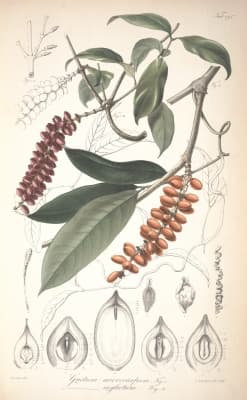
Gnetum neglectum
Gnetum neglectum
Family: Gnetaceae
Cultivation
Found wild over sandstone and shale, and on podsolised white sand terraces. Species in this genus usually prefer a position in light to deep shade, growing best in a moist but well-drained, humus-rich soil. A dioecious species, both male and female forms need to be grown if fruit and seed are required.
Full cultivation guide →
Gnetum nodiflorum
Gnetum nodiflorum
Family: Gnetaceae
Cultivation
Species in this genus usually prefer a position in light to deep shade, growing best in a moist but well-drained, humus-rich soil. A dioecious species, both male and female forms need to be grown if fruit and seed are required.
Full cultivation guide →Gnetum oblongum
Gnetum oblongum
Family: Gnetaceae
Cultivation
Species in this genus usually prefer a position in light to deep shade, growing best in a moist but well-drained, humus-rich soil. A dioecious species, both male and female forms need to be grown if fruit and seed are required.
Full cultivation guide →
Gnetum parvifolium
Gnetum parvifolium
Family: Gnetaceae
Cultivation
Found in the wild on sandy soils. Species in this genus usually prefer a position in light to deep shade, growing best in a moist but well-drained, humus-rich soil. A dioecious species, both male and female forms need to be grown if fruit and seed are required.
Full cultivation guide →Gnetum tenuifolium
Gnetum tenuifolium
Family: Gnetaceae
Cultivation
Species in this genus usually prefer a position in light to deep shade, growing best in a moist but well-drained, humus-rich soil. A dioecious species, both male and female forms need to be grown if fruit and seed are required.
Full cultivation guide →
Gnetum urens
Gnetum urens
Family: Gnetaceae
Cultivation
Species in this genus usually prefer a position in light to deep shade, growing best in a moist but well-drained, humus-rich soil. A dioecious species, both male and female forms need to be grown if fruit and seed are required.
Full cultivation guide →