Erythrophleum — 6 species
Botanical species in the genus Erythrophleum recorded in the PlantPeers database.

Erythrophleum africanum
Erythrophleum africanum
Family: Fabaceae
Cultivation
Plants grow in the wild in sandy soils and fine gravels. The plant is sometimes coppiced or pollarded, though coppicing can give poor results. The plant is able to survive bush fires.
Full cultivation guide →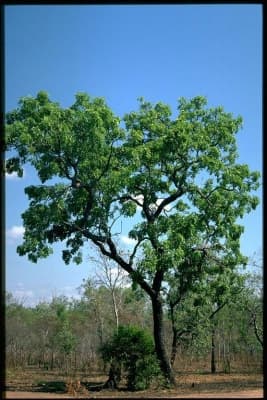
Erythrophleum chlorostachys
Erythrophleum chlorostachys
Family: Fabaceae
Cultivation
A plant of the drier to moist tropics, where it is found at elevations from 100 - 1,100 metres. It grows best in areas where annual daytime temperatures are within the range 22 - 28°c, but can tolerate 13 - 43°c. It prefers a mean annual rainfall in the range 1,000 - 1,400mm, but tolerates 300 - 1,700mm.
Full cultivation guide →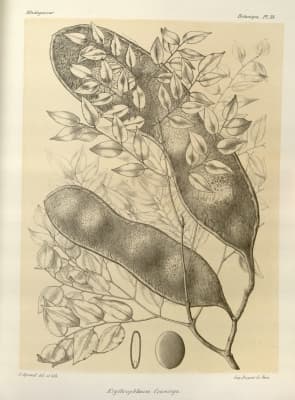
Erythrophleum couminga
Erythrophleum couminga
Family: Fabaceae
Cultivation
Found in the wild on sandy soils. The plant can survive bush fires. This species has a symbiotic relationship with certain soil bacteria, these bacteria form nodules on the roots and fix atmospheric nitrogen.
Full cultivation guide →

Erythrophleum ivorense
Erythrophleum ivorense
Family: Fabaceae
Cultivation
Requires a sunny position. In Cote d'Ivoire the mean annual bole diameter increment has been recorded as 6.5mm; in the Central African Republic it is 4.5mm. The logs sink in water and so cannot be transported by floating along a river.
Full cultivation guide →
Erythrophleum suaveolens
Erythrophleum suaveolens
Family: Fabaceae
Cultivation
Natural regeneration is best in fairly open forest. Attempts have been made to grow this species in plantations, but growth was slow. This species has a symbiotic relationship with certain soil bacteria, these bacteria form nodules on the roots and fix atmospheric nitrogen.
Full cultivation guide →