Cuphea — 23 species
Botanical species in the genus Cuphea recorded in the PlantPeers database.

Cuphea aequipetala
Cuphea aequipetala
Family: Lythraceae
Cultivation
Species in this genus generally prefer a position in full sun, but are tolerant of partial shade. They generally grow best in average, medium moisture, well-drained soils. The seed of Cuphea species is generally a good source of medium length fatty acids, which have a range of industrial and cosmetic applications and can also be used in foods.
Full cultivation guide →Cuphea aperta
Cuphea aperta
Family: Lythraceae
Cultivation
Species in this genus generally prefer a position in full sun, but are tolerant of partial shade. They generally grow best in average, medium moisture, well-drained soils. The seed of Cuphea species is generally a good source of medium length fatty acids, which have a range of industrial and cosmetic applications and can also be used in foods.
Full cultivation guide →Cuphea calophylla
Cuphea calophylla
Family: Lythraceae
Cultivation
Species in this genus generally prefer a position in full sun, but are tolerant of partial shade. They generally grow best in average, medium moisture, well-drained soils. Called 'hog weed' and 'hog bush' in Belize, the plant often invades cultivated ground, and because of the large roots and the tough hard stems, can be very difficult to eradicate.
Full cultivation guide →Cuphea carthagenensis
Cuphea carthagenensis
Family: Lythraceae
Cultivation
Cuphea carthagenensis is a plant of the tropical regions of central N. America, but is said to be suitable for cultivation as an annual in parts of the temperate zone. Continental areas with hot summers, and Mediterranean regions have been specifically mentioned, the most important factors are the length of the growing season and the amount of summer heat required to ripen the crop.
Full cultivation guide →Cuphea epilobiifolia
Cuphea epilobiifolia
Family: Lythraceae
Cultivation
Species in this genus generally prefer a position in full sun, but are tolerant of partial shade. They generally grow best in average, medium moisture, well-drained soils. The seed of Cuphea species is generally a good source of medium length fatty acids, which have a range of industrial and cosmetic applications and can also be used in foods.
Full cultivation guide →
Cuphea glutinosa
Cuphea glutinosa
Family: Lythraceae
Cultivation
Cuphea glutinosa is native to the subtropics of south eastern S. America, just moving into the tropics. In trials in southeastern N.
Full cultivation guide →Cuphea hyssopifolia
Cuphea hyssopifolia
Family: Lythraceae
Cultivation
Species in this genus generally prefer a position in full sun, but are tolerant of partial shade. They generally grow best in average, medium moisture, well-drained soils. Often grown as an ornamental, the plant has sometimes escaped from cultivation and become naturalized.
Full cultivation guide →Cuphea ignea
Cuphea ignea
Family: Lythraceae
Cultivation
Cuphea ignea is a plant of the tropical regions of central N. America and is not tolerant of frost. However, it is said to be suitable for cultivation as an annual in parts of the temperate zone.
Full cultivation guide →Cuphea ingrata
Cuphea ingrata
Family: Lythraceae
Cultivation
Species in this genus generally prefer a position in full sun, but are tolerant of partial shade. They generally grow best in average, medium moisture, well-drained soils. The seed of Cuphea species is generally a good source of medium length fatty acids, which have a range of industrial and cosmetic applications and can also be used in foods.
Full cultivation guide →Cuphea laminuligera
Cuphea laminuligera
Family: Lythraceae
Cultivation
Cuphea laminuligera is a plant of the tropical regions of Central America and is not tolerant of frost. However, it is said to be suitable for cultivation as an annual in parts of the temperate zone. Whilst it can flower successfully for several months even in areas with relatively cool summers, Continental and Mediterranean regions with hot summers have been specifically mentioned - the most important factors being the length of the growing season and the amount of summer heat that is required in order to ripen the crop of seeds Prefers a position in full sun, but tolerant of light shade.
Full cultivation guide →Cuphea lanceolata
Cuphea lanceolata
Family: Lythraceae
Cultivation
Cuphea lanceolata is a plant of the tropical regions of central N. America, but is said to be suitable for cultivation as an annual in parts of the temperate zone. It is often grown in the temperate zone as a summer annual for its flowering display, but if a commercial crop of seed is to be produced then Continental areas with hot summers, and Mediterranean regions have been specifically mentioned - the most important factors being the length of the growing season and the amount of summer heat required to ripen the crop.
Full cultivation guide →Cuphea leptopoda
Cuphea leptopoda
Family: Lythraceae
Cultivation
Cuphea leptopoda is a plant of the tropical regions of central N. America, but is said to be suitable for cultivation as an annual in parts of the temperate zone. Continental areas with hot summers, and Mediterranean regions have been specifically mentioned, the most important factors are the length of the growing season and the amount of summer heat required to ripen the crop.
Full cultivation guide →Cuphea lutea
Cuphea lutea
Family: Lythraceae
Cultivation
Prefers a position in full sun, but tolerant of light shade. Succeeds in any reasonable, fertile soil. Cuphea has only been investigated as a potential commercial crop for a few years, and still has the characteristics of a wild plant.
Full cultivation guide →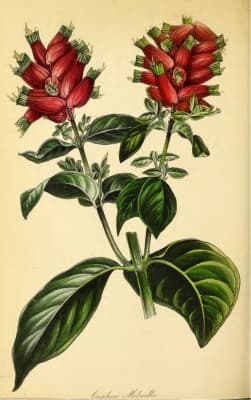
Cuphea melvilla
Cuphea melvilla
Family: Lythraceae
Cultivation
Species in this genus generally prefer a position in full sun, but are tolerant of partial shade. They generally grow best in average, medium moisture, well-drained soils. The seed of Cuphea species is generally a good source of medium length fatty acids, which have a range of industrial and cosmetic applications and can also be used in foods.
Full cultivation guide →Cuphea micropetala
Cuphea micropetala
Family: Lythraceae
Cultivation
Cuphea micropetala is a plant of the tropical regions of central N. America, but is said to be suitable for cultivation as an annual in parts of the temperate zone. Continental areas with hot summers, and Mediterranean regions have been specifically mentioned, the most important factors are the length of the growing season and the amount of summer heat required to ripen the crop.
Full cultivation guide →Cuphea paucipetala
Cuphea paucipetala
Family: Lythraceae
Cultivation
Cuphea paucipetala is a plant of the tropical regions of central N. America, but is said to be suitable for cultivation as an annual in parts of the temperate zone. Continental areas with hot summers, and Mediterranean regions have been specifically mentioned, the most important factors are the length of the growing season and the amount of summer heat required to ripen the crop.
Full cultivation guide →Cuphea procumbens
Cuphea procumbens
Family: Lythraceae
Cultivation
Cuphea procumbens is a plant of the tropical regions of central N. America, but is said to be suitable for cultivation as an annual in parts of the temperate zone. It is often grown in the temperate zone as a summer annual for its flowering display, but if a commercial crop of seed is to be produced then Continental areas with hot summers, and Mediterranean regions have been specifically mentioned - the most important factors being the length of the growing season and the amount of summer heat required to ripen the crop.
Full cultivation guide →Cuphea racemosa
Cuphea racemosa
Family: Lythraceae
Cultivation
Species in this genus generally prefer a position in full sun, but are tolerant of partial shade. They generally grow best in average, medium moisture, well-drained soils. The plant is considered to be an invasive weed in the Galapagos Islands.
Full cultivation guide →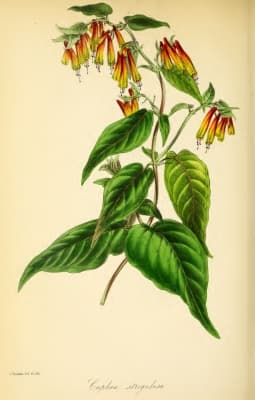
Cuphea strigulosa
Cuphea strigulosa
Family: Lythraceae
Cultivation
Species in this genus generally prefer a position in full sun, but are tolerant of partial shade. They generally grow best in average, medium moisture, well-drained soils. The seed of Cuphea species is generally a good source of medium length fatty acids, which have a range of industrial and cosmetic applications and can also be used in foods.
Full cultivation guide →Cuphea tolucana
Cuphea tolucana
Family: Lythraceae
Cultivation
Cuphea tolucana is a plant of the tropical regions of central N. America, but is said to be suitable for cultivation as an annual in parts of the temperate zone. Continental areas with hot summers, and Mediterranean regions have been specifically mentioned, the most important factors are the length of the growing season and the amount of summer heat required to ripen the crop.
Full cultivation guide →Cuphea utriculosa
Cuphea utriculosa
Family: Lythraceae
Cultivation
Species in this genus generally prefer a position in full sun, but are tolerant of partial shade. They generally grow best in average, medium moisture, well-drained soils. The seed of Cuphea species is generally a good source of medium length fatty acids, which have a range of industrial and cosmetic applications and can also be used in foods.
Full cultivation guide →Cuphea viscosissima
Cuphea viscosissima
Family: Lythraceae
Cultivation
Cuphea viscosissima is the hardiest member of a mainly tropical genus. It can be grown outdoors in much of the temperate zone, restricted mainly by its need for a hot summer in order to produce a good crop of seed. Succeeds in any reasonably fertile soil in full sun or part shade.
Full cultivation guide →Cuphea wrightii
Cuphea wrightii
Family: Lythraceae
Cultivation
Cuphea wrightii is a plant of the tropical regions of central N. America, but is said to be suitable for cultivation as an annual in parts of the temperate zone. Continental areas with hot summers, and Mediterranean regions have been specifically mentioned, the most important factors are the length of the growing season and the amount of summer heat required to ripen the crop.
Full cultivation guide →