Chamaecrista — 17 species
Botanical species in the genus Chamaecrista recorded in the PlantPeers database.

Chamaecrista absus
Chamaecrista absus
Family: Fabaceae
Cultivation
Plants are well adapted to the semi-arid tropics. The risk of this species becoming a weed should be taken into account before introducing it to areas where it does not occur naturally. This species has a symbiotic relationship with certain soil bacteria, these bacteria form nodules on the roots and fix atmospheric nitrogen.
Full cultivation guide →
Chamaecrista apoucouita
Chamaecrista apoucouita
Family: Fabaceae
Cultivation
This species has a symbiotic relationship with certain soil bacteria, these bacteria form nodules on the roots and fix atmospheric nitrogen. Some of this nitrogen is utilized by the growing plant but some can also be used by other plants growing nearby.
Full cultivation guide →
Chamaecrista biensis
Chamaecrista biensis
Family: Fabaceae
Cultivation
A plant of drier areas in the tropics and subtropics. Grows best in a sunny position in a sandy soil. This species has a symbiotic relationship with certain soil bacteria, these bacteria form nodules on the roots and fix atmospheric nitrogen.
Full cultivation guide →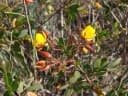

Chamaecrista diphylla
Chamaecrista diphylla
Family: Fabaceae
Cultivation
This species has a symbiotic relationship with certain soil bacteria, these bacteria form nodules on the roots and fix atmospheric nitrogen. Some of this nitrogen is utilized by the growing plant but some can also be used by other plants growing nearby.
Full cultivation guide →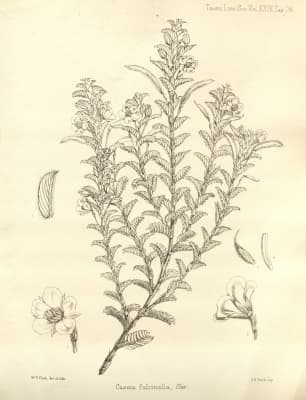
Chamaecrista falcinella
Chamaecrista falcinella
Family: Fabaceae
Cultivation
This species has a symbiotic relationship with certain soil bacteria; these bacteria form nodules on the roots and fix atmospheric nitrogen. Some of this nitrogen is utilized by the growing plant but some can also be used by other plants growing nearby.
Full cultivation guide →
Chamaecrista fasciculata
Chamaecrista fasciculata
Family: Fabaceae
Cultivation
Succeeds in most well-drained soils but prefers an open sandy loam in a sunny sheltered position. Established plants are drought tolerant. Succeeds in light shade, but the plant is much less vigorous when grown in dry shade.
Full cultivation guide →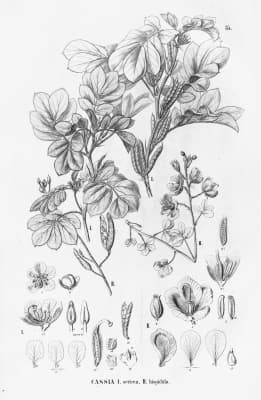
Chamaecrista lateriticola
Chamaecrista lateriticola
Family: Fabaceae
Cultivation
This species has a symbiotic relationship with certain soil bacteria; these bacteria form nodules on the roots and fix atmospheric nitrogen. Some of this nitrogen is utilized by the growing plant but some can also be used by other plants growing nearby.
Full cultivation guide →Chamaecrista lechenaultiana
Chamaecrista lechenaultiana
Family: Fabaceae
Cultivation
The plant responds well to pruning. The leaves react to touch in the same way as the sensitive plant (Mimosa pudica).
Full cultivation guide →
Chamaecrista mimosoides
Chamaecrista mimosoides
Family: Fabaceae
Cultivation
A plant of the drier areas of the tropics and subtropics. Succeeds in poor and dry soils. Plants are very drought resistant.
Full cultivation guide →
Chamaecrista nictitans
Chamaecrista nictitans
Family: Fabaceae
Cultivation
With its large area of distribution this species is amenable to a wide range of climatic conditions. In the south of its range (in Paraguay) it is found in areas with a mean annual rainfall in the range of 1,300 - 1,600, and an average annual temperature of 22 - 23°c. Native to a wide range of soil types, though it is most prevalent on free-draining sands of an acid to neutral reaction.
Full cultivation guide →
Chamaecrista nigricans
Chamaecrista nigricans
Family: Fabaceae
Cultivation
The plant has a wide distribution in the tropics, being found in a wide range of habitats at elevations up to 1,200 metres. It grows well in areas with a mean annual rainfall in the range 950 - 1,400mm spread over 5 - 6 months, as in the Sudano-Guinean zone of West Africa. The plant is especially common on heavy lateritic soils.
Full cultivation guide →
Chamaecrista pilosa
Chamaecrista pilosa
Family: Fabaceae
Cultivation
This species has a symbiotic relationship with certain soil bacteria; these bacteria form nodules on the roots and fix atmospheric nitrogen. Some of this nitrogen is utilized by the growing plant but some can also be used by other plants growing nearby.
Full cultivation guide →Chamaecrista pumila
Chamaecrista pumila
Family: Fabaceae
Cultivation
A plant of lowland areas in monsoon regions of the tropics. The plant is considered to be a weed in India, amongst crops such as sorghum. Transplanting nursery-sown plants is preferable to direct sowing.
Full cultivation guide →Chamaecrista zambesica
Chamaecrista zambesica
Family: Fabaceae
Cultivation
This species has a symbiotic relationship with certain soil bacteria; these bacteria form nodules on the roots and fix atmospheric nitrogen. Some of this nitrogen is utilized by the growing plant but some can also be used by other plants growing nearby.
Full cultivation guide →