Asparagus — 19 species
Botanical species in the genus Asparagus recorded in the PlantPeers database.

Asparagus acutifolius
Asparagus acutifolius
Family: Asparagaceae
Cultivation
Asparagus acutifolius is native to the Mediterranean region, with its hot, dry summers and cool, moist winters. It can tolerate winter temperatures dipping occasionally to between -5 and -10°c and grows well in the milder regions of the temperate zone. The young growth in spring however, even on mature plants, is frost-tender and so it is best to grow the plants in a position sheltered from the early morning sun.
Full cultivation guide →Asparagus adscendens
Asparagus adscendens
Family: Asparagaceae
Cultivation
We hve no specific information for this plant, but species in this genus are generally easily grown in any good garden soil. Prefers a rich sandy loam. A dioecious species - both male and female forms must be grown if fruit and seed are required.
Full cultivation guide →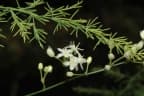
Asparagus africanus
Asparagus africanus
Family: Asparagaceae
Cultivation
A plant of the drier to semi-arid areas of the tropics and subtropics. It grows in areas where the mean annual rainfall is in the range 1,000 - 1,700mm. Thrives in a sunny position in a sandy, clay loam.
Full cultivation guide →Asparagus albus
Asparagus albus
Family: Asparagaceae
Cultivation
Asparagus albus is native to the Mediterranean region, with its hot, dry summers and cool, moist winters. It can tolerate winter temperatures dipping occasionally to between -5 and -10°c and grows well in the milder regions of the temperate zone. Easily grown in any good garden soil.
Full cultivation guide →Asparagus aphyllus
Asparagus aphyllus
Family: Asparagaceae
Cultivation
Asparagus aphyllus is native to the Mediterranean region, with its hot, dry summers and cool, moist winters. It can probably tolerate winter temperatures dipping occasionally to between -5 and -10°c and would probably succeed outdoors in the milder regions of the temperate zone. We hve no specific information for this plant, but species in this genus are generally easily grown in any good garden soil.
Full cultivation guide →
Asparagus cochinchinensis
Asparagus cochinchinensis
Family: Asparagaceae
Cultivation
A plant of the warm temperate, subtropical and tropical zones, being found in China in hardiness zones from 7 upwards. Plants are said to tolerate winter temperatures falling occasionally to between -10 and -15°c. Easily grown in any good garden soil.
Full cultivation guide →Asparagus dauricus
Asparagus dauricus
Family: Asparagaceae
Cultivation
Asparagus dauricus experiences very cold winters in the north of its range, where it can be found frowing in hardiness zone 2. It is also found as far south as hardiness zone 8. We hve no specific information for this plant, but species in this genus are generally easily grown in any good garden soil.
Full cultivation guide →
Asparagus densiflorus
Asparagus densiflorus
Family: Asparagaceae
Cultivation
Asparagus densiflorus is a plant of the subtropics and tropics, where it is found at elevations up to metres. It grows best in areas where annual daytime temperatures are within the range 21 - 27°c, but can tolerate 15 - 32°c. Mature plants can be killed by temperatures of -7°c or lower, although new growth can be severely damaged at 0°c.
Full cultivation guide →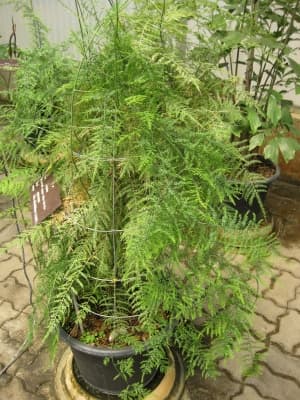
Asparagus filicinus
Asparagus filicinus
Family: Asparagaceae
Cultivation
Asparagus filicinus is a plant mainly of the warm temperate to subtropical zones, entering into the tropics in Vietnam, Myanmar and Thailand. Plants are hardy to between -10 and -15°c. Easily grown in any good garden soil.
Full cultivation guide →
Asparagus flagellaris
Asparagus flagellaris
Family: Asparagaceae
Cultivation
A plant of low to moderate elevations in the tropics. It grows in areas where the mean annual rainfall is in the range 1,000 - 1,800mm. Succeeds in a variety of soil types.
Full cultivation guide →Asparagus horridus
Asparagus horridus
Family: Asparagaceae
Cultivation
Asparagus horridus is native to the Mediterranean region, with its hot, dry summers and cool, moist winters. It can probably tolerate winter temperatures dipping occasionally to between -5 and -10°c and would probably succeed outdoors in the milder regions of the temperate zone. We hve no specific information for this plant, but species in this genus are generally easily grown in any good garden soil.
Full cultivation guide →Asparagus maritimus
Asparagus maritimus
Family: Asparagaceae
Cultivation
Easily grown in any good garden soil. Prefers a rich sandy loam. Plants are very salt tolerant.
Full cultivation guide →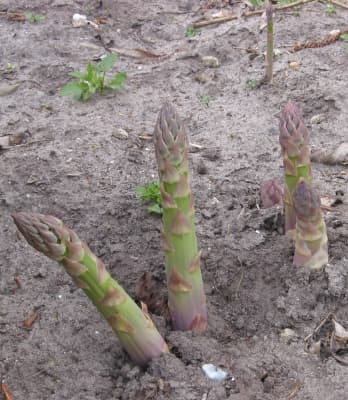
Asparagus officinalis
Asparagus officinalis
Family: Asparagaceae
Cultivation
Asparagus officinalis is a plant of mainly low elevations in the temperate zone, though it can also be cultivated at higher elevations from 1,000 metres up to 2,600 metres in the Tropics. It grows best in areas where annual daytime temperatures are within the range 15 - 30°c, but can tolerate 6 - 38°c. When dormant, the plant can survive temperatures down to about -15°c or lower, but young growth can be severely damaged at -1°c.
Full cultivation guide →
Asparagus racemosus
Asparagus racemosus
Family: Asparagaceae
Cultivation
Found in the subtropics to tropics, but usually avoiding the wetter regions. It requires a distinct dry season in order to flourish. It is not very frost-hardy and generally needs to be grown in a frost-free or fairly frost-free climate.
Full cultivation guide →Asparagus schoberioides
Asparagus schoberioides
Family: Asparagaceae
Cultivation
Asparagus schoberioides is native to the far east of Asia where it is found growing from hardiness zones 2 - 7. Easily grown in any good garden soil. Prefers a rich sandy loam.
Full cultivation guide →
Asparagus setaceus
Asparagus setaceus
Family: Asparagaceae
Cultivation
Easily grown in any good garden soil. Prefers a moist soil in a partially shaded position. The plant is commonly grown as an ornamental, and has escaped from cultivation in many areas.
Full cultivation guide →
Asparagus suaveolens
Asparagus suaveolens
Family: Asparagaceae
Cultivation
Easily grown in any good garden soil. Prefers a rich sandy loam. A dioecious species, both male and female forms must be grown if seed is required.
Full cultivation guide →Asparagus tenuifolius
Asparagus tenuifolius
Family: Asparagaceae
Cultivation
Asparagus tenuifolius is native mainly to the northern Mediterranean region, though it also moves further north into Europe. It generally experiences hot, dry summers and cool, moist winters. It can probably tolerate winter temperatures dipping occasionally to at least as low as -5 and -10°c and would probably succeed outdoors in the milder regions of the temperate zone.
Full cultivation guide →Asparagus verticillatus
Asparagus verticillatus
Family: Asparagaceae
Cultivation
Dormant plants are hardy to about -20°c. The young growth in spring however, even on mature plants, is frost-tender and so it is best to grow the plants in a position sheltered from the early morning spring sun. Easily grown in any good garden soil.
Full cultivation guide →