Antidesma — 23 species
Botanical species in the genus Antidesma recorded in the PlantPeers database.

Antidesma acidum
Antidesma acidum
Family: Phyllanthaceae
Cultivation
A plant of the moist tropics, favouring areas with a distinct dry season. The plant grows on sandy gravel in the Andaman and Nicobar Islands; on red volcanic soil in Java; on sand, silt or red lateritic soil, over limestone, granite and shale-granite in Thailand and Vietnam. A dioecious species, both male and female forms need to be grown if fruit and seed are required.
Full cultivation guide →
Antidesma alexiteria
Antidesma alexiteria
Family: Phyllanthaceae
Cultivation
A dioecious species, both male and female forms need to be grown if fruit and seed are required.
Full cultivation guide →
Antidesma bunius
Antidesma bunius
Family: Phyllanthaceae
Cultivation
Bignay grows best in the hot, humid tropical lowlands. It thrives at elevations up to 1,200 metres in Java. The tree is not strictly tropical for it has proved to be hardy up to central Florida.
Full cultivation guide →
Antidesma contractum
Antidesma contractum
Family: Phyllanthaceae
Cultivation
A dioecious species, both male and female forms need to be grown if fruit and seed are required.
Full cultivation guide →
Antidesma cuspidatum
Antidesma cuspidatum
Family: Phyllanthaceae
Cultivation
A dioecious species, both male and female forms need to be grown if fruit and seed are required.
Full cultivation guide →Antidesma edule
Antidesma edule
Family: Phyllanthaceae
Cultivation
A dioecious species, both male and female forms need to be grown if fruit and seed are required.
Full cultivation guide →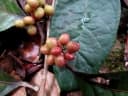
Antidesma excavatum
Antidesma excavatum
Family: Phyllanthaceae
Cultivation
Found wild on white sands, sandy loam soils, alluvial soils derived from granite, volcanic and ultrabasic soils, limestone rock. A dioecious species, both male and female forms need to be grown if fruit and seed are required.
Full cultivation guide →
Antidesma ghaesembilla
Antidesma ghaesembilla
Family: Phyllanthaceae
Cultivation
Grows in the wild on clay, sand, lateritic soil, black peat, limestone; sometimes on ultrabasic soil; over shale and granite bedrock. Occurs often in regularly burnt habitats and is said to be fire resistant. Dioecious.
Full cultivation guide →
Antidesma heterophyllum
Antidesma heterophyllum
Family: Phyllanthaceae
Cultivation
A dioecious species, both male and female forms need to be grown if fruit and seed are required.
Full cultivation guide →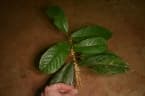
Antidesma laciniatum
Antidesma laciniatum
Family: Phyllanthaceae
Cultivation
A dioecious species, both male and female forms need to be grown if fruit and seed are required.
Full cultivation guide →
Antidesma membranaceum
Antidesma membranaceum
Family: Phyllanthaceae
Cultivation
A dioecious species, both male and female forms need to be grown if fruit and seed are required.
Full cultivation guide →
Antidesma montanum
Antidesma montanum
Family: Phyllanthaceae
Cultivation
Found in the wild on sand, clay, loam, peat, volcanic and ultrabasic soil, over limestone, sandstone or granite. A dioecious species, both male and female forms need to be grown if fruit and seed are required.
Full cultivation guide →
Antidesma neurocarpum
Antidesma neurocarpum
Family: Phyllanthaceae
Cultivation
Found in the wild on sand, clay, loam, lateritic or volcanic soil, over sandstone, limestone, shales, basalt or granite. A dioecious species, both male and female forms need to be grown if fruit and seed are required.
Full cultivation guide →Antidesma orthogyne
Antidesma orthogyne
Family: Phyllanthaceae
Cultivation
A dioecious species, both male and female forms need to be grown if fruit and seed are required.
Full cultivation guide →Antidesma petiolatum
Antidesma petiolatum
Family: Phyllanthaceae
Cultivation
A dioecious species, both male and female forms need to be grown if fruit and seed are required.
Full cultivation guide →
Antidesma platyphyllum
Antidesma platyphyllum
Family: Phyllanthaceae
Cultivation
A plant of the moister tropics. A dioecious species, both male and female forms need to be grown if fruit and seed are required.
Full cultivation guide →Antidesma pleuricum
Antidesma pleuricum
Family: Phyllanthaceae
Cultivation
A dioecious species, both male and female forms need to be grown if fruit and seed are required.
Full cultivation guide →
Antidesma stipulare
Antidesma stipulare
Family: Phyllanthaceae
Cultivation
Found in the wild on clay, loam, peat and sandy soils; often acidic, sometimes ultrabasic soil; over limestone, basalt, sandstone and shale. A dioecious species, both male and female forms need to be grown if fruit and seed are required.
Full cultivation guide →
Antidesma tetrandrum
Antidesma tetrandrum
Family: Phyllanthaceae
Cultivation
Found in the wild on clay soils. A dioecious species, both male and female forms need to be grown if fruit and seed are required.
Full cultivation guide →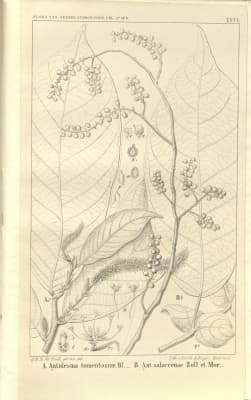
Antidesma tomentosum
Antidesma tomentosum
Family: Phyllanthaceae
Cultivation
A dioecious species, both male and female forms need to be grown if fruit and seed are required.
Full cultivation guide →
Antidesma velutinosum
Antidesma velutinosum
Family: Phyllanthaceae
Cultivation
A dioecious species, both male and female forms need to be grown if fruit and seed are required.
Full cultivation guide →Antidesma venenosum
Antidesma venenosum
Family: Phyllanthaceae
Cultivation
A dioecious species, both male and female forms need to be grown if fruit and seed are required.
Full cultivation guide →
Antidesma venosum
Antidesma venosum
Family: Phyllanthaceae
Cultivation
Found in low to middle elevations of the tropics in areas where there is low to moderate rainfall and a distinctive dry season. Within its native range, the plant can become invasive in fallow land. A dioecious species, both male and female forms need to be grown if fruit and seed are required.
Full cultivation guide →