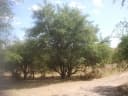
Ziziphus spina-christi
Ziziphus spina-christi
Safety & Hazards
None known
Cultivation Details
A plant of arid and semi-arid areas in hot tropical or subtropical areas, found at elevations up to 2,400 metres. It grows in areas where the mean annual rainfall is within the range 100 - 500mm with a dry season of up to 8 - 10 months; and the mean annual temperature is 19 - 28°c[1, 2]. The plant is very tolerant of high temperatures, but intolerant of frosts[1]. Requires a sunny position. It prefers alluvial plains with deep soils, but it can also grow on clay where water is available and in saline soils[1]. It prefers growing along the edges of ponds, river and wadi banks where groundwater is available[1]. Established plants are very drought tolerant[1]. Tolerant of up to 2 months seasonal inundation of the soil[1]. There are two forms of this plant:- Var. spina-christi is a tree with white branches. It produces fruits up to 2cm in diameter[1]. Var. microphylla Hochst ex A. Rich. Is a very bushy shrub. The fruits are up to 1cm in diameter[1].
Propagation
Seed - Cite as: Tropical Plants Database, Ken Fern. tropical.theferns.info. 2026-02-20. <tropical.theferns.info/viewtropical.php?id=Ziziphus+spina-christi>
Pollinators
Bees
References
- [1]World Agroforesty Centre — http://www.worldagroforestry.org/ ↩︎An excellent online database of a huge range of trees giving very good information on each plant - its uses, ecology, identity, propagation, pests etc.
- [2]Perennial Edible Fruits of the Tropics : an Inventory — Martin, F. W.; Campbell, C. W.; Rubertbe, R. M. · U.S. Dept. of Agriculture, Agricultural Research Service · 1987 ↩︎A booklet giving terse details of almost 300 species of edible fruits, plus regional lists of Botanical and Common names for over 2,500 less well-known edible fruits of the tropics.
- [3]The Useful Plants of West Tropical Africa. — Burkil. H. M. · Royal Botanic Gardens; Kew. · 1985 - 2004 ↩︎Brief descriptions and details of the uses of over 4,000 plants. A superb, if terse, resource, it is also available electronically on the Web - see http://www.aluka.org/
- [4]Mansfeld's Database of Agricultural and Horticultural Plants — http://mansfeld.ipk-gatersleben.de/pls/htmldb_pgrc/f?p=185:3:4292127278597336 ↩︎Terse details of a huge range of useful plants.
- [5]Trees and Shrubs of the Sahel. Their Characteristics and Uses. — von Maydell H. · Deutsche Gesellschaft fur Technische Zusammenarbeit; Germany · 1990 · ISBN 3-8236-1198-4 ↩︎A well-researched book, usually with more than one photograph of each species and good information on the plant and its uses.
- [6]Contribution to an evaluation of tree species using the new CITES Listing Criteria — UNEP-WCMC; Cambridge. · 1999 · http://sea.unep-wcmc.org/species/tree_study/ ↩︎A document produced by UNEP World Conservation Monitoring Centre in 1999. It contains fact sheets on more than 200 tree species from around the globe.
- [7]Cornucopia II — Facciola. S. · Kampong Publications, California. · 1998 · ISBN 0-9628087-2-5 ↩︎The second edition of an excellent guide to the edible uses of plants, though it does not give any details of cultivation etc.
- [8]Inhibition of Meliodogyne incognita Egg Hatching by Herbal Extracts — Elbadri G.A.A.; Dong Woon Lee; Jung Chan Park; Ho Yul Choo; · 2008 ↩︎