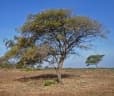
Ziziphus mauritiana
Ziziphus mauritiana
Safety & Hazards
None known
Cultivation Details
Indian jujube is a hardy tree that copes with extreme temperatures and thrives under rather dry conditions[1]. It is suited to humid climates and also to hot, dry climates[2]. In its natural habitat the annual rainfall ranges from 125 mm to over 2,000 mm. The maximum temperature is about 37 - 48°c and the minimum temperature is about 7 - 13°c[3]. A mature tree can tolerate occasional lows in dry weather down to about -15°c, but any young growth will be killed at about -1°c[4]. Fruit quality is best under hot, sunny and dry conditions, but there should be a rainy season to support extension growth and flowering, ideally leaving enough residual soil moisture to carry the fruit to maturity[1]. Succeeds in a sunny position in any well-drained soil, including limy soils[2]. The tree prefers fairly light, deep soils, but it can be grown on marginal land, alkaline, saline or slightly acid, light or heavy, drought-susceptible or occasionally waterlogged soils[3]. Prefers a pH in the range 5.5 - 7.5, tolerating 5 - 8.5[4]. Established plants have very strongly developed root systems and are very drought tolerant[1, 5]. Plants are resistant to salt-laden winds[5]. Ziziphus mauritiana is a fast growing, spiny, thicket-forming shrub or tree, which can fruit prolifically and disperse seeds over a wide area using mammalian and avian vectors. It is a declared noxious weed in three Australian states and is noted as invasive in parts of southern Africa and on a number of Pacific and Indian Ocean islands. It is hard to control because of vigorous resprouting and has the ability to resist fire and mechanical treatments[6]. A fast-growing species, under favourable conditions height increment on loose soil is 75 cm in 1 year and 1.2 metres in 2 years[1]. The plant coppices well and grows vigorously from stumps and root suckers[1]. Commercial cultivation usually extends up to 1,000 metres[1]. Beyond this elevation trees do not perform well, and cultivation becomes less economical[1]. Fruit set depends on cross-pollination by insects attracted by the fragrance and nectar. Cross-incompatibility occurs, and cultivars have to be matched for good fruit set. Some cultivars, however, produce good crops parthenocarpically[1]. Fruiting starts after 3 - 5 years and is usually very abundant[1]. There are several named varieties[3].
Propagation
Storage of the seed for 4 months to let it after-ripen improves germination[1]. If facilities are available, stratification in sand for 60 - 90 days at 5°c is recommended[1]. Scarification, extracting the seed from the stone, and treating it with sulphuric acid has also been recommended[1]. To germinate, seeds need full sunlight[1]. Seed should germinate in 3 - 4 weeks when the seed is left in stone, quicker if it is cracked, and only 1 week if it is carefully extracted[1]. The seed should be sown in full light in trays or beds, and the seedlings pricked out when 2 pairs of true leaves have developed[1]. It is likely that seedlings will need about 15 months in the nursery[1]. Root cuttings. Cite as: Tropical Plants Database, Ken Fern. tropical.theferns.info. 2026-02-20. <tropical.theferns.info/viewtropical.php?id=Ziziphus+mauritiana>
Pollinators
Bees, Wasps
References
- [1]World Agroforesty Centre — http://www.worldagroforestry.org/ ↩︎An excellent online database of a huge range of trees giving very good information on each plant - its uses, ecology, identity, propagation, pests etc.
- [2]The New RHS Dictionary of Gardening. 1992. — Huxley. A. · MacMillan Press · 1992 · ISBN 0-333-47494-5 ↩︎Excellent and very comprehensive, though it contains a number of silly mistakes. Readable yet also very detailed.
- [3]Under-Utilized Tropical Fruits of Thailand. RAP — Suranant Subhadrabandhu · F. A. O., The United Nations, Bangkok. · 2001 · http://www.fao.org/3/a-ab777e.pdf ↩︎A detailed report on 35 fruit species that could have potential for increased production in Thailand. The report can be downloadd as a PDF from the internet.
- [4]Ecocrop — http://ecocrop.fao.org/ecocrop/srv/en/home ↩︎Basic information on a wide range of useful plants, plus details of environmental needs where available.
- [5]Tropical and Subtropical Trees - A Worldwide Encyclopaedic Guide. — Barwick. M. · Thames & Hudson, London · 2004 · ISBN 0-500-51181-0 ↩︎A superb book, very concise and well written, giving a wealth of information on 400 or more species including descriptions, habitat, cultivation details and plant uses. A wealth of colour photographs bring each plant vividly to life.
- [6]Invasive Species Compendium — http://www.cabi.org ↩︎An immense resource - in depth information on over 900 species of invasive plants (it also has information on animals, fungi etc).
- [7]Flora of China — Missouri Botanical Garden Press; St. Louis. · 1994 · http://flora.huh.harvard.edu/china/ ↩︎An excellent, comprehensive resource in 25 volumes. In addition to the botanical information the flora also gives basic information on habitat and some uses. An on-line version is also available.
- [8]Plant Resources of Southeast Asia — http://proseanet.org/ ↩︎Lots of information on the uses of the plants of SE Asia.
- [9]Edible Wild Plants of Tanzania — Ruffo, C.K.: Birnie, A. & Tengnas, B. · Regional Land Management Unit; Nairobi. · 2002 · ISBN 9966-896-60-0 ↩︎A very well presented, simple guide to growing and utilizing wild food plants in Tanzania, with line drawings of each plant, a description, habitat and range, non-food as well as food uses, plus basic information on growing the plants.
- [10]Ethnic Food Plants and Ethnic Food Preparation in Eastern Ghats and adjacent Deccan Region — Sadasivaiah B. & Pullaiah T. · Apple Academic Press; Oakville, Canada · 2017 · ISBN 978-1-77188-339-9 ↩︎
- [11]The Encyclopedia of Medicinal Plants — Chevallier. A. · Dorling Kindersley. London · 1996 · ISBN 9-780751-303148 ↩︎An excellent guide to over 500 of the more well known medicinal herbs from around the world.
- [12]Medicinal Plants in the Republic of Korea — World Health Organisation, Manila · 1998 · ISBN 92 9061 120 0 ↩︎An excellent book with terse details about the medicinal uses of the plants with references to scientific trials. All plants are described, illustrated and brief details of habitats given.
- [13]A Modern Herbal. — Grieve. · Penguin · 1984 · ISBN 0-14-046-440-9 ↩︎Not so modern (1930's?) but lots of information, mainly temperate plants.
- [14]Handbook of Chinese Herbs and Formulas. — Yeung. Him-Che. · Institute of Chinese Medicine, Los Angeles · 1985 · ISBN - ↩︎An excellent Chinese herbal giving information on over 500 species. Rather technical and probably best suited to the more accomplished user of herbs.
- [15]Medicinal Plants of China — Duke. J. A. and Ayensu. E. S. · Reference Publications, Inc. · 1985 · ISBN 0-917256-20-4 ↩︎Details of over 1,200 medicinal plants of China and brief details of their uses. Often includes an analysis, or at least a list of constituents. Heavy going if you are not into the subject.
- [16]Glossary of Indian Medicinal Plants (Including the Supplement). — Chopra. R. N., Nayar. S. L. and Chopra. I. C. · Council of Scientific and Industrial Research, New Delhi. · 1986 · ISBN - ↩︎Very terse details of medicinal uses of plants with a wide range of references and details of research into the plants chemistry. Not for the casual reader.
- [17]Encyclopaedia of Herbs and their Uses. — Bown. D. · Dorling Kindersley, London. · 1995 · ISBN 0-7513-020-31 ↩︎A very well presented and informative book on herbs from around the globe. Plenty in it for both the casual reader and the serious student. Just one main quibble is the silly way of having two separate entries for each plant.
- [18]A Dictionary of Plants Used by Man. — Usher. G. · Constable · 1974 · ISBN 0094579202 ↩︎Forget the sexist title, this is one of the best books on the subject. Lists a very extensive range of useful plants from around the world with very brief details of the uses. Not for the casual reader.
- [19]A Barefoot Doctors Manual. — ? · Running Press; Philadelphica. · 1977 · ISBN 0-914294-92-X ↩︎A very readable herbal from China, combining some modern methods with traditional chinese methods.
- [20]Medicinal Plants in Vietnam — Nguyen Van Dan & Doan Thi Nhu · World Health Organisation · 1989 · ISBN 92 9061 101 4 ↩︎An excellent book, giving information on over 200 plants, their medicinal compounds and applications.
- [21]Dictionary of Economic Plants. — Uphof. J. C. Th. · Weinheim · 1959 · ISBN - ↩︎An excellent and very comprehensive guide but it only gives very short descriptions of the uses without any details of how to utilize the plants. Not for the casual reader.