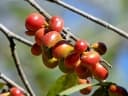
Xylopia sericea
Xylopia sericea
Safety & Hazards
None known
Cultivation Details
A plant of mainly low elevations in the moist tropics, where it can be found at elevations up to 1,000 metres. Prefers a sunny position[1]. Succeeds in dry soils of low fertility[1]. Established plants are drought tolerant[1]. Newly planted young trees are slow to establish and grow away[1].
Propagation
Seed - germination rates and time are improved if the seed is scarified by lightly abrading the seedcoat prior to sowing. Sow the seeds in a nursery seedbed. Germination rates are usually low, with sprouting taking place within 30 - 60 days. Transplant the seedlings into individual containers when they are 4 - 6cm tall. Seedlings are quite slow growing and it will take 9 - 11 months from germination until they are ready to plant into their permanent positions[1]. Cite as: Tropical Plants Database, Ken Fern. tropical.theferns.info. 2026-02-20. <tropical.theferns.info/viewtropical.php?id=Xylopia+sericea>
Pollinators
Data unavailable
References
- [1]Brazilian Trees. Volume 1. 4th Edition. — Lorenzi. H. · Instituto Plantarum De Estudos Da Flora; Brazil. · 2002 · ISBN 85-86714-17-8 ↩︎Information on 350 species of Brazilian trees. Stunning photographs of each species, brief details on the plant, its uses and how to grow it from seed. A superb work, with the minor irritation that the translation from Portuguese is not of the best.
- [2]Root Crops — Kay. D.E. Revised by Gooding. E.G.B. · Tropical Development and Crop Research: London. · 1987 ↩︎Detailed information on about 40 species of tropical root crops.
- [3]Inventory of Seeds and Plants Imported. Vol. 38 — USDA Government Printing Office; Washington DC. · 1917 · http://www.biodiversitylibrary.org ↩︎Details of seeds and plants imported for trials by the United States Department of Agriculture in the first quarter of 1914, often detailing the uses of the plant and various other miscellaneous information. It can be downloaded from the Internet.
- [4]Inventory of Seeds and Plants Imported by the Office of Foreign Seed and Plant Introduction, April 1 to June 30, 19 — Bureau of Plant Industry, USDA., Washington · 1917 ↩︎
- [5]Dictionary of Economic Plants. — Uphof. J. C. Th. · Weinheim · 1959 · ISBN - ↩︎An excellent and very comprehensive guide but it only gives very short descriptions of the uses without any details of how to utilize the plants. Not for the casual reader.
- [6]Medicinal Plants of Brazil — Mors W.B.; Rizzini C.T.; Pereira N.A. · Reference Publications; Michigan. · 2000 · ISBN 0-917256-42-5 ↩︎An extremely concise book, listing approximately 1,500 species and varieties of plants with their botanical name, common name in Brazil, regions in Brazil where the plant is found, a brief list of uses and any medically active compounds in the plant.
- [7]Useful Fiber Plants of the World — Dodge C.R. · USDA; Washington. · 1897 · http://www.biodiversitylibrary.org/ ↩︎A rather dated, but very comprehensive catalogue of fibre plants from around the world. The book can be downloaded from the Internet.