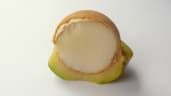
Ximenia americana
Ximenia americana
Safety & Hazards
None known
Cultivation Details
Tallow wood can grow in a range of climatic conditions from hot tropical lowlands to the warm subtropics[1]. It is found at altitudes up to 2,000 metres in the drier to moist tropics[2]. It grows best in areas where annual daytime temperatures are within the range 14 - 30°c, but can tolerate 10 - 36°c[3]. It is tolerant of occasional light frosts[1]. It prefers a mean annual rainfall in the range 400 - 1,250mm, but tolerates 300 - 1,500mm[3]. Grows well in full sun to light shade[3]. Succeeds on a range of soils and conditions including poor and dry, clays, clay loam, loamy sands, sandy clay loam and sands[2]. Prefers a pH in the range 5 - 7, tolerating 4.5 - 7.5[3]. Plants are drought tolerant once established[2]. Plants are sometimes semi-parasitic - able to take water and nutrients from other plants through the roots, but not dependant upon this for survival[2, 4]. Seedling plants can commence fruiting when 3 - 4 years old[4, 1]. Plants can flower and fruit on several occasions each year[4, 1]. A dioecious species - both male and female forms need to be grown if fruit and seed are required[4].
Propagation
Seed - sown fresh it usually germinates well[2]. Cite as: Tropical Plants Database, Ken Fern. tropical.theferns.info. 2026-02-20. <tropical.theferns.info/viewtropical.php?id=Ximenia+americana>
Pollinators
Bees
References
- [1]Perennial Edible Fruits of the Tropics : an Inventory — Martin, F. W.; Campbell, C. W.; Rubertbe, R. M. · U.S. Dept. of Agriculture, Agricultural Research Service · 1987 ↩︎A booklet giving terse details of almost 300 species of edible fruits, plus regional lists of Botanical and Common names for over 2,500 less well-known edible fruits of the tropics.
- [2]World Agroforesty Centre — http://www.worldagroforestry.org/ ↩︎An excellent online database of a huge range of trees giving very good information on each plant - its uses, ecology, identity, propagation, pests etc.
- [3]Ecocrop — http://ecocrop.fao.org/ecocrop/srv/en/home ↩︎Basic information on a wide range of useful plants, plus details of environmental needs where available.
- [4]Seed Leaflets — Various · Forest & Landscape. Denmark · http://en.sl.life.ku.dk/Publikationer/Udgivelser/PopulaerPublikationer.aspx?katid={D28373CC-6EF3-4EF8-B097-6D83FABF209E}&serieid={9F1C3DB1-6E7B-4CF1-AF53-F480B0CB40EF}&sort=title ↩︎A series of leaflets, jointly produced by the University of Copenhagen and the Royal Botanic Gardens at Kew, focussing on seed information for a number species, but also giving a lot of other information about each plant.
- [5]Edible Wild Plants of Tanzania — Ruffo, C.K.: Birnie, A. & Tengnas, B. · Regional Land Management Unit; Nairobi. · 2002 · ISBN 9966-896-60-0 ↩︎A very well presented, simple guide to growing and utilizing wild food plants in Tanzania, with line drawings of each plant, a description, habitat and range, non-food as well as food uses, plus basic information on growing the plants.
- [6]Dictionary of Economic Plants. — Uphof. J. C. Th. · Weinheim · 1959 · ISBN - ↩︎An excellent and very comprehensive guide but it only gives very short descriptions of the uses without any details of how to utilize the plants. Not for the casual reader.
- [7]Mansfeld's Database of Agricultural and Horticultural Plants — http://mansfeld.ipk-gatersleben.de/pls/htmldb_pgrc/f?p=185:3:4292127278597336 ↩︎Terse details of a huge range of useful plants.
- [8]Nuts. — Howes. F. N. · Faber · 1948 · ISBN - ↩︎Rather old but still a masterpiece. Has sections on tropical and temperate plants with edible nuts plus a section on nut plants in Britain. Very readable.
- [9]Cornucopia II — Facciola. S. · Kampong Publications, California. · 1998 · ISBN 0-9628087-2-5 ↩︎The second edition of an excellent guide to the edible uses of plants, though it does not give any details of cultivation etc.
- [10]Flora Malesiana Series 1 — Various · Nationaal Herbarium Nederiand, Universiteit Leiden branch · http://www.archive.org ↩︎A massive treatment of the plants of the Malaysian Archipelago. Much of it has been made available to download from the Internet
- [11]Medicinal Plants of the Guianas — DeFilipps, R. A.; Maina, S. L.; & Crepin, J. · Smithsonian Museum · http://botany.si.edu/bdg/medicinal/index.html ↩︎A down-loadable PDF document of a book in pre-publication awaiting illustration. An excellent, if rather terse, guide to the traditional medicinal uses of the plants of the region
- [12]Gemsbok Bean and Kalahari Truffle — Leffers A. · Gamsberg MacMillan; Namibia. · 2003 · ISBN 99916-0-491-X ↩︎Details of the traditional uses of over 200 species of plants in northeastern Namibia. Written for the non-expert, there is usually at least one photograph with each plant entry.