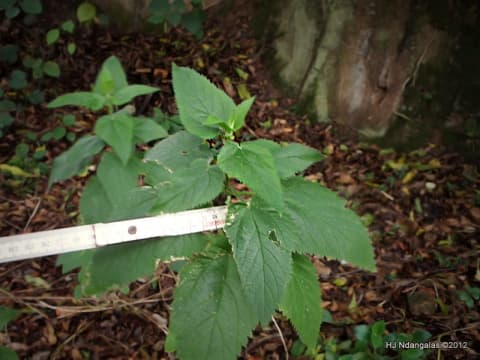
Cultivation Details
HabitPerennial
Growth—
Within its native range, the plant is regarded as a bad weed in pasture land, where it can be difficult to control[1]. Cutting back the older growth to ground level will stimulate the growth of new shoots that are more tender to eat[2]. A dioecious species, both male and female forms need to be grown if fruit and seed are required[2].
Propagation
Seed - Division of the rhizomes[1]. Cite as: Tropical Plants Database, Ken Fern. tropical.theferns.info. 2026-02-20. <tropical.theferns.info/viewtropical.php?id=Urtica+massaica>
Pollinators
Data unavailable
References
- [1]Edible Wild Plants of Tanzania — Ruffo, C.K.: Birnie, A. & Tengnas, B. · Regional Land Management Unit; Nairobi. · 2002 · ISBN 9966-896-60-0 ↩︎A very well presented, simple guide to growing and utilizing wild food plants in Tanzania, with line drawings of each plant, a description, habitat and range, non-food as well as food uses, plus basic information on growing the plants.
- [2]Protabase - Plant Resources of Tropical Africa. — http://www.prota.org ↩︎An excellent on-line database with detailed information on over 3,200 species of useful plants of Africa.
- [PFAF]Plants for a Future — pfaf.org ↩︎