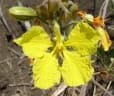
Tylosema fassoglense
Tylosema fassoglense
Safety & Hazards
The plant contains rotenone and has been used traditionally as a fish poison[1] - the rotenone kills or stuns the fish making them easy to catch, but the fish remain perfectly edible for mammals. Rotenone is classified by the World Health Organization as moderately hazardous. It is mildly toxic to humans and other mammals, but extremely toxic to many insects (hence its use as an insecticide) and aquatic life, including fish. This higher toxicity in fish and insects is because the lipophilic rotenone is easily taken up through the gills or trachea, but not as easily through the skin or the gastrointestinal tract. The lowest lethal dose for a child is 143 mg/kg, but human deaths from rotenone poisoning are rare because its irritating action causes vomiting. Deliberate ingestion of rotenone, however, can be fatal. The compound decomposes when exposed to sunlight and usually has an activity of six days in the environment.
Cultivation Details
Succeeds in sunny positions and dappled shade. In the wild, the plant grows well on poor, sandy soils, but is also found on rocky or clay soils[2]. Prefers a well-drained soil[3]. It is moderately tolerant to flooding and drought[2]. A very fast growing plant, the shoots can grow up to 5cm per day[2]. The plant regenerates very quickly from its tuberous rootstock if it is cut back by fire[2]. Unlike many legumes, this species does not form root nodules and so relies on soil nitrogen[2].
Propagation
Seed - Cite as: Tropical Plants Database, Ken Fern. tropical.theferns.info. 2026-02-20. <tropical.theferns.info/viewtropical.php?id=Tylosema+fassoglense>
Pollinators
Bees
References
- [1]Edible Wild Plants of Tanzania — Ruffo, C.K.: Birnie, A. & Tengnas, B. · Regional Land Management Unit; Nairobi. · 2002 · ISBN 9966-896-60-0 ↩︎A very well presented, simple guide to growing and utilizing wild food plants in Tanzania, with line drawings of each plant, a description, habitat and range, non-food as well as food uses, plus basic information on growing the plants.
- [2]Protabase - Plant Resources of Tropical Africa. — http://www.prota.org ↩︎An excellent on-line database with detailed information on over 3,200 species of useful plants of Africa.
- [3]Bihrmann's Caudiciforms — http://www.bihrmann.com/caudiciforms/ ↩︎An internet site giving information on caudiciform plants (plants with swollen stem bases such as the Baobab tree, cycads and many succulents). Excellent photos, usually of cultivated plants in pots.
- [4]The Useful Plants of West Tropical Africa. — Burkil. H. M. · Royal Botanic Gardens; Kew. · 1985 - 2004 ↩︎Brief descriptions and details of the uses of over 4,000 plants. A superb, if terse, resource, it is also available electronically on the Web - see http://www.aluka.org/
- [5]Lost Crops of Africa. Vol. 2 Vegetables. — National Academy Press · 2006 · ISBN 0309103339 ↩︎Masses of information on about 70 species of plants that have been utilized as vegetables in Africa.
- [6]The Leguminosae; A Source Book of Characteristics, Uses and Nodulation — Allen O.N.; Allen E.K. · University of Wisconsin · 1981 · ISBN 0-333-32221-5 ↩︎An amazing and comprehensive work, giving a brief guide to the many genera of the family Fabaceae and also the principle uses of the genus.
- [PFAF]Plants for a Future — pfaf.org ↩︎