Rubiaceae FAMILY
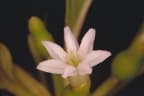
Timonius timon
Timonius timon
Edibility
3/5
Medicinal
2/5
Safety & Hazards
None known
Cultivation Details
HabitTree
Growth—
The plant has proved to be invasive in various areas where it has been introduced[1]. It is a ready invader of open, disturbed sites but, as time goes by, it seems to be overtopped and replaced by native species[1]. The bark is often rather corky, giving the tree some protection from forest fires[2].
Propagation
Seed - Cite as: Tropical Plants Database, Ken Fern. tropical.theferns.info. 2026-02-20. <tropical.theferns.info/viewtropical.php?id=Timonius+timon>
Pollinators
Data unavailable
References
- [1]Pacific Island Ecosystems at Risk — http://www.hear.org/pier/scientificnames/index.html ↩︎A very good website detailing weed species that have been introduced into the Pacific Islands.
- [2]Australian Tropical Rainforest Plants — http://www.anbg.gov.au/cpbr/cd-keys/rfk/index.html ↩︎An online resource giving botanical information, and a little bit about plant usage, for over 2,700 species of plants found in the Australian rainforest.
- [3]Florabase — https://florabase.dpaw.wa.gov.au/ ↩︎An excellent on-line database of Western Australian plants
- [4]Dictionary of Economic Plants. — Uphof. J. C. Th. · Weinheim · 1959 · ISBN - ↩︎An excellent and very comprehensive guide but it only gives very short descriptions of the uses without any details of how to utilize the plants. Not for the casual reader.
- [5]The Useful Native Plants of Australia. — Maiden J.H. · Turner & Co.; London. · 1889 · http://www.biodiversitylibrary.org ↩︎Terse details of the uses of many Australian plants and other species naturalised, or at least growing, in Australia. It can be downloaded from the Internet.
- [6]Medicinal Plants in Papua New Guinea — World Health Organisation · 2009 · ISBN 978-92-9061-249-0 ↩︎Traditional medicinal uses of 126 species from Papua New Guinea, including information on modern research into the plants.