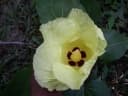
Thespesia populneoides
Thespesia populneoides
Safety & Hazards
None known
Cultivation Details
Portia tree is a plant of the moist to wet, lowland tropics and warm subtropics, where it is found at elevations up to 150 metres. It grows best in areas where annual daytime temperatures are within the range 20 - 30°c, but can tolerate 10 - 35°c[1]. The plant can survive temperatures down to about 4°c[1] and the occasional very light frost[2]. It prefers a mean annual rainfall in the range 1,000 - 3,000mm, but tolerates 800 - 5,000mm[1]. Prefers a moisture-retentive but well-drained soil and a position in full sun[3]. It also succeeds in dry locations and is highly tolerant of saline conditions[4]. Prefers a pH in the range 6.5 - 8, tolerating 6 - 8.5[1]. Established plants are very drought resistant and can tolerate a dry season of up to 8 months[2, 3]. Tolerant of occasional, short-lived inundation[2]. Plants are very wind-tolerant, withstanding even salt-laden winds[3]. The plant produces its seeds in a waterproof capsule that can float for a considerable time in salt water without losing viability. Thus it has managed to spread to the coasts of most areas of the tropics[3]. It has the potential to become a weed in new areas, so should not be introduced to areas outside its current range[5]. This species is often eradicated when found growing in cotton-producing areas, since it harbours the cotton-stainer beetle (Dysdercus spp.) which is a pest of the cotton plant[3]. Growth in height is rapid in the first few years, averaging 50 - 150cm per year, but it slows down when the tree is 7 - 10 years old. Stem diameter growth is 1 - 3cm per year[2]. Flowering can begin when the tree is only 1 - 2 years old[2]. In equatorial climates the plant will often flower all year round[2].
Propagation
Seed - generally easy, although direct sowings are generally a failure[4]. Germination can be difficult due to the hard seed coat, and is improved by scarification with a knife or sandpaper[2]. Germination takes 8 - 70 days[2]. Pot the seedlings up as soon as they are large enough to handle, planting them in pots deep enough to accomodate the taproot. Plants should be ready to plant out in 12 - 16 weeks[2]. Raising from seed is preferred as then the timber is knot free, straight, even grained and tough[4]. Cuttings of all sizes strike well, but it is preferable to plant small cuttings as trees raised from large cuttings are said to be short lived and liable to decay[4]. Cite as: Tropical Plants Database, Ken Fern. tropical.theferns.info. 2026-02-20. <tropical.theferns.info/viewtropical.php?id=Thespesia+populneoides>
Pollinators
Birds
References
- [1]Ecocrop — http://ecocrop.fao.org/ecocrop/srv/en/home ↩︎Basic information on a wide range of useful plants, plus details of environmental needs where available.
- [2]Protabase - Plant Resources of Tropical Africa. — http://www.prota.org ↩︎An excellent on-line database with detailed information on over 3,200 species of useful plants of Africa.
- [3]Tropical and Subtropical Trees - A Worldwide Encyclopaedic Guide. — Barwick. M. · Thames & Hudson, London · 2004 · ISBN 0-500-51181-0 ↩︎A superb book, very concise and well written, giving a wealth of information on 400 or more species including descriptions, habitat, cultivation details and plant uses. A wealth of colour photographs bring each plant vividly to life.
- [4]World Agroforesty Centre — http://www.worldagroforestry.org/ ↩︎An excellent online database of a huge range of trees giving very good information on each plant - its uses, ecology, identity, propagation, pests etc.
- [5]Traditional Trees of Pacific Islands — Elevitch. Craig. R. (Editor) · Permanent Agriculture Resources, Hawaii · 2006 · ISBN 0970254458 ↩︎Beautifully produced book with superb photos and detailed information on over 50 species of useful plants of the Pacific Islands.
- [6]The Useful Plants of the Island of Guam — Safford W.E. · Smithsonian Institute; Washington. · 1905 · http://www.biodiversitylibrary.org/ ↩︎A very comprehensive, if rather dated, guide to the plants of Guam. It can be downloaded from the Internet.
- [7]Cornucopia II — Facciola. S. · Kampong Publications, California. · 1998 · ISBN 0-9628087-2-5 ↩︎The second edition of an excellent guide to the edible uses of plants, though it does not give any details of cultivation etc.
- [8]Plant Resources of Southeast Asia — http://proseanet.org/ ↩︎Lots of information on the uses of the plants of SE Asia.
- [9]Medicinal Plants in the South Pacific — WHO Regional Publications, Manilla. · 1998 · ISBN 92-9061-118-9 ↩︎Excellent guide to 102 medicinal herbs of the Pacific Islands, with photographs of each plant and details of their constituents, biological activities and traditional uses. A description of each plant, together with habitat and distribution is given.
- [10]CosIng — http://ec.europa.eu/growth/tools-databases/cosing/ ↩︎CosIng is the European Commission database for information on cosmetic substances and ingredients.
- [11]Dictionary of Economic Plants. — Uphof. J. C. Th. · Weinheim · 1959 · ISBN - ↩︎An excellent and very comprehensive guide but it only gives very short descriptions of the uses without any details of how to utilize the plants. Not for the casual reader.